
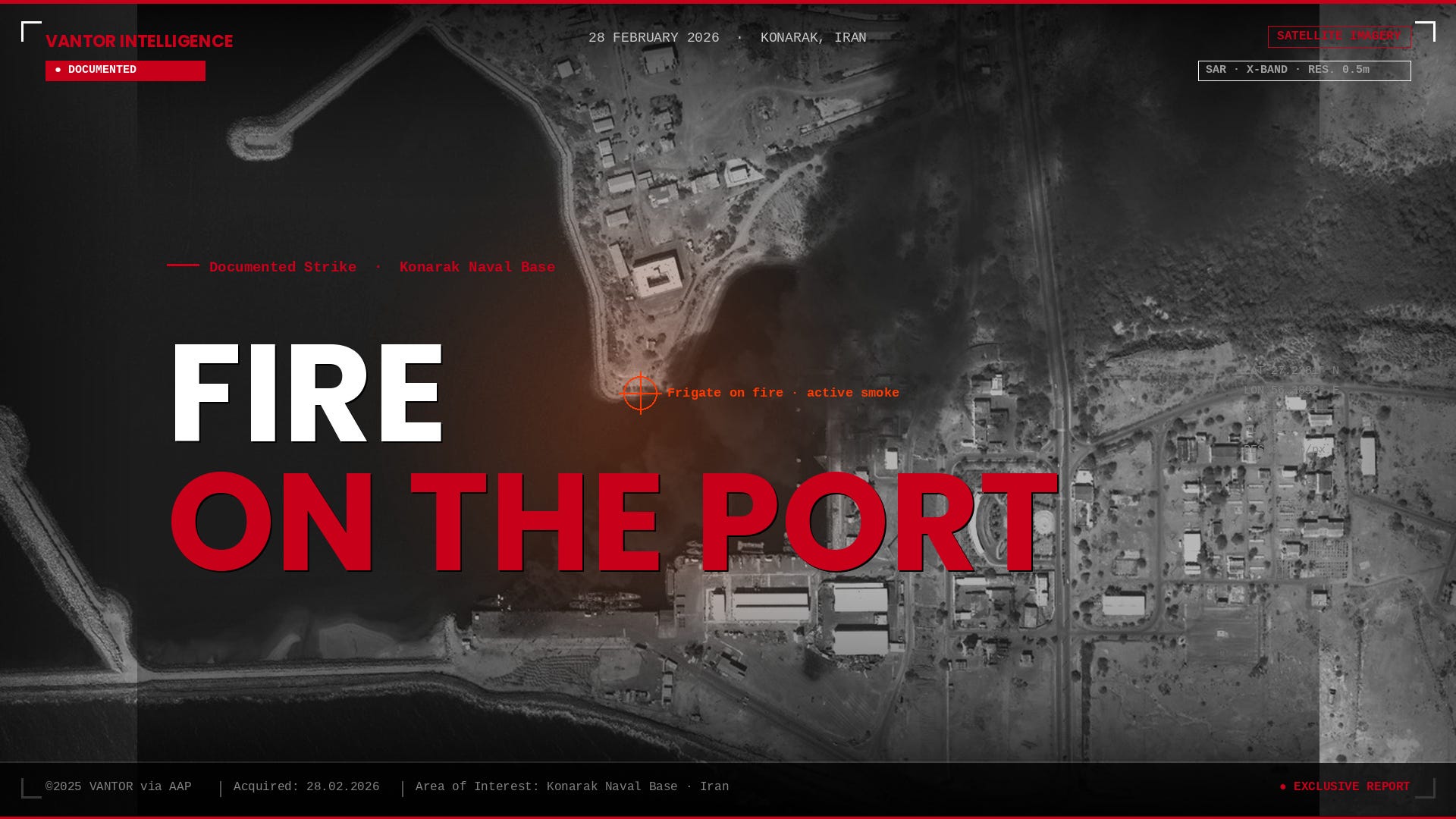
«It was a Saturday morning…»
The markets were closed — as they always are when someone decides to pull the trigger. Coincidence? Almost never. The timing of a military strike is never accidental, and attacking on a weekend, when financial markets can’t react in real time, is one of the oldest tricks in the geopolitical playbook.
I had been waiting for this moment for months. And I want to be precise about that word: waiting. Not hoping. Not celebrating. Waiting — the way you wait for the inevitable, for something that was written long before the first missile left its launcher.
And yet, when it finally happened, something still surprised me. Not that it happened. But how fast it moved.
“Finally” — And No, I’m Not a Warmonger
When I said finally, people pushed back. Hard.
So let me explain.
This is not about enthusiasm for destruction. It’s about recognising that what we witnessed was not the beginning of a conflict — it was closer to its final act. The opening shot of this broader confrontation was fired over four years ago, on February 24, 2022, when Russian helicopters crossed into Ukrainian territory heading south toward Kyiv.
Since then, the map of conflict has expanded — quietly, methodically — to Gaza, to Lebanon, to Venezuela. Each theatre different. Each narrative sold to the public as isolated, local, contained.
But here’s the question nobody seems to be asking: what if they’re not isolated at all?
What if we’ve been watching, for four years, a single war fought on multiple fronts — and we just didn’t have a wide enough frame to see it?
What Actually Happened Over Tehran
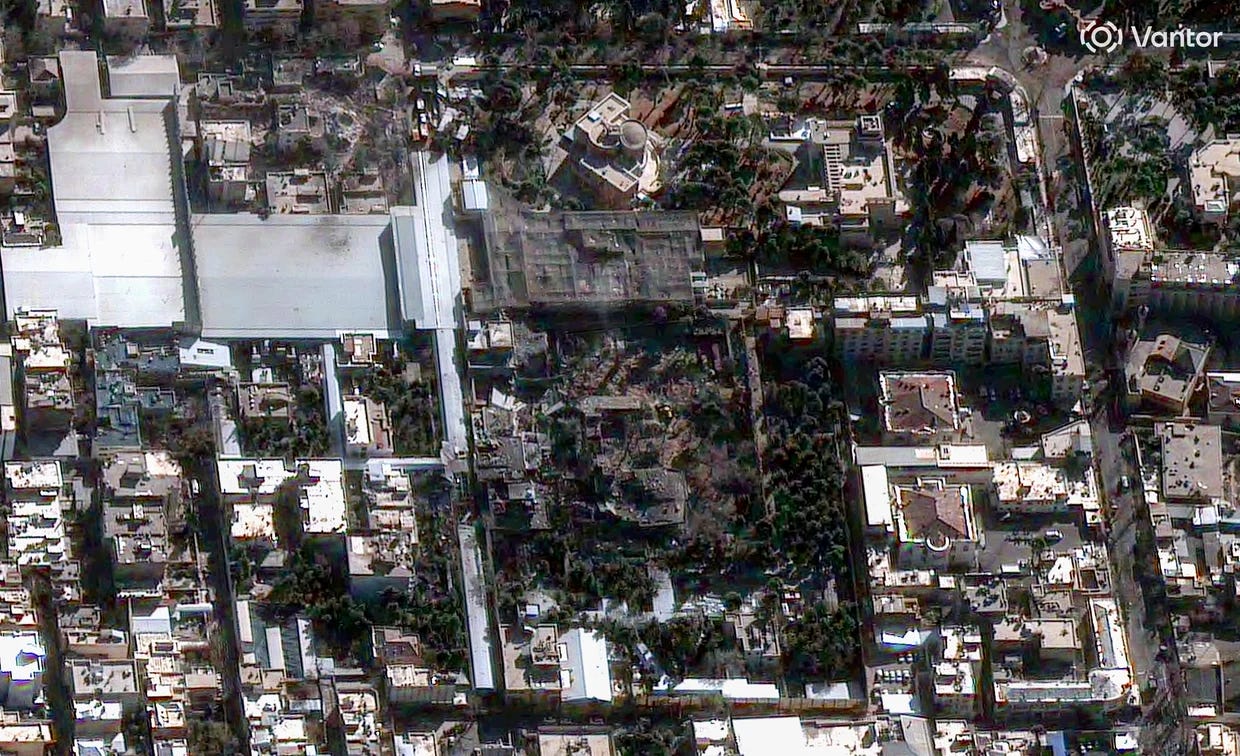
Let’s be concrete for a moment.
For weeks before the strikes, US naval and air assets had been quietly massing across the Middle East. Meanwhile, negotiations — the most hypocritical and theatrical negotiations in recent memory — continued in parallel. A performance designed not to succeed, but to demonstrate, on the record, that diplomacy had been attempted.
Then came the missiles.
Multiple cities and installations across Iranian territory were hit within hours. Including Tehran itself — the seat of power, the real target. Because in operations like this, the military objective is almost always the same: decapitate the leadership. It happened in Venezuela. Russia attempted it in the early days of Ukraine. And the declared goal of this campaign was precisely to neutralise the Ayatollah and the Iranian presidency.
Iran’s response was swift — and revealing.
Four Gulf nations were struck: Qatar, Kuwait, the UAE, and Bahrain. All of them home to critical American military infrastructure. And missiles were launched toward Israel, sending civilian populations underground as sirens wailed across the country.
But then something else happened. Something that, to me, said more than any official statement.
Drones Over Dubai — And What They Really Meant
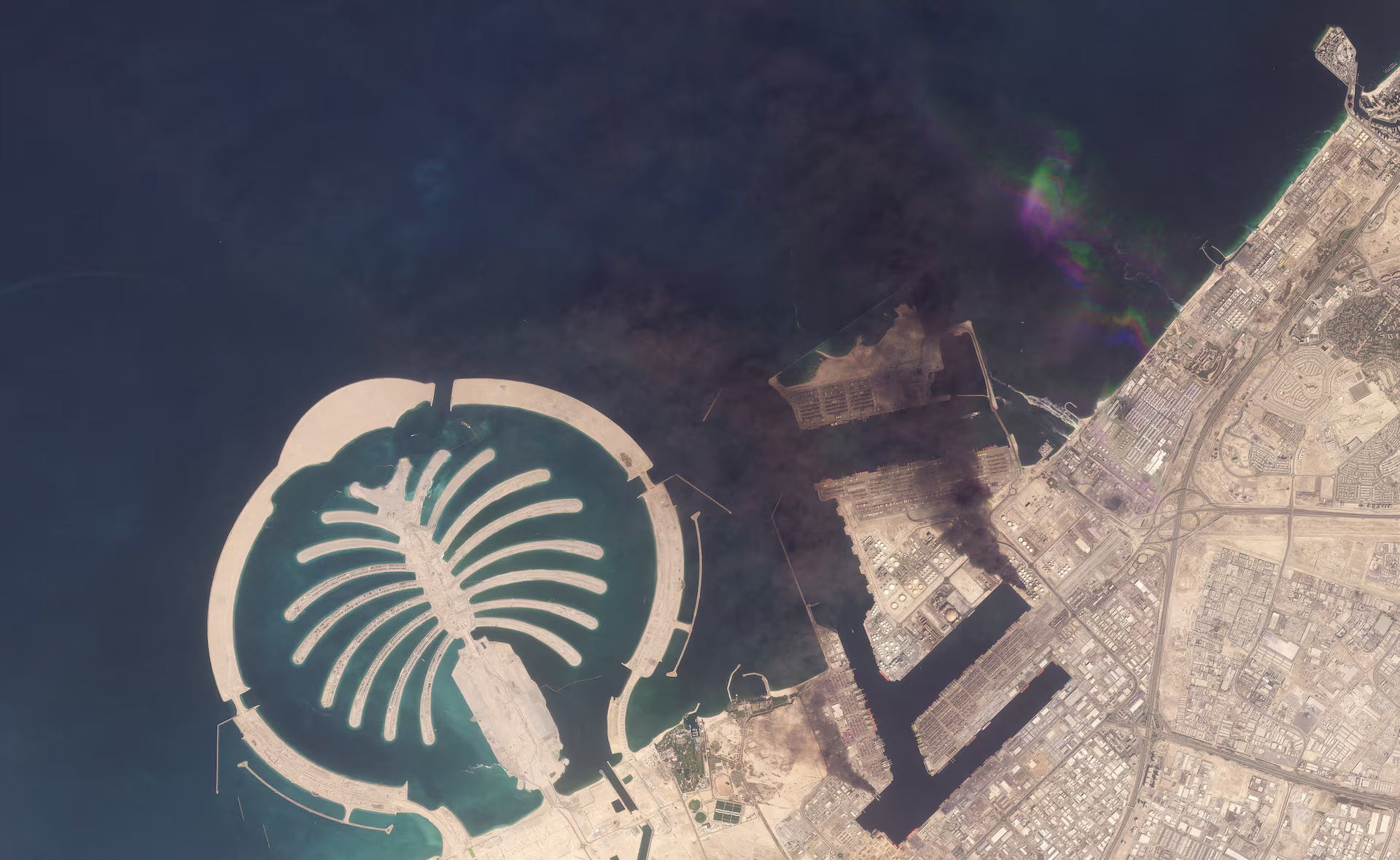
A drone was filmed circling the Burj Khalifa.
The video went viral within hours. People were shocked. Dubai? Really?
I wasn’t shocked. I was reading it as a signal.
I was talking to a Turkish friend around that time. He was stunned — he couldn’t understand why anyone would send drones over one of the most visible, most photographed skylines on earth. I told him: “It’s a good sign. Trust me.”
Here’s why.
Rational geopolitical actors don’t play their best cards first. When you see a state resorting to gestures that are more symbolic than strategic — drones over luxury skyscrapers, strikes on tourist areas alongside military ones — it suggests that the better options are no longer available.
It reminded me of an army switching from tanks to motorcycles mid-battle. You don’t do that because motorcycles are better. You do it because the tanks are gone.
The drone over Dubai looked, to me, like a regime making last moves. Impulsive ones. Decisions taken not from a position of strength and calculation, but from something closer to panic.
And it was precisely in that context that the reports about Khamenei started to feel credible.

If the Head Falls First
At first, the news was dismissed as disinformation. Fake news. Propaganda.
But the behaviour on the ground told a different story.
If the US military did succeed in neutralising the Iranian leadership in the very first wave of strikes — and that remains an open question — it would mean they managed to eliminate everyone with real decision-making power within a matter of hours. That’s an extraordinary outcome if true. And it would explain a great deal: the erratic responses, the symbolic gestures, the absence of a coherent Iranian counter-strategy.
A system doesn’t start playing desperate cards if it still has good ones.
Will the war continue without Khamenei? Almost certainly yes. Power structures don’t evaporate overnight — especially ones that have survived four decades of sanctions, isolation, and internal repression. But a regime that has lost its head is not the same regime it was before. The question is no longer whether it will fall, but what it takes to finish the job.
And this is where most Western analysis gets it badly wrong.
Why the Missiles Will Not Be Enough
Let’s state it clearly: bombing a country is not the same as conquering it.
Look at Ukraine. Four years of continuous bombardment — drones, cruise missiles, glide bombs. The kind of firepower that should, theoretically, break a nation’s will. And yet the government in Kyiv is still there. The army is still fighting. The country has not collapsed.
Why?
Because destroying infrastructure is not the same as taking control of territory.
Syria is perhaps the clearest example. For years, the Assad regime survived wave after wave of strikes, pressure, and destabilisation attempts. It held on — until ground forces, specifically Hayat Tahrir al-Sham, began taking cities one by one, physically occupying space, replacing one power structure with another.
The same pattern played out in Libya. In Iraq. The script is always the same:
Air power degrades. It destroys equipment, kills commanders, disrupts logistics.
But air power alone does not govern. It cannot hold a street, replace a bureaucracy, or convince a population that the old order is gone.
To topple a regime, you need one of two things: boots on the ground — which in Iran’s case would be an extraordinarily costly and politically toxic undertaking — or a population ready to fill the vacuum left by the strikes.
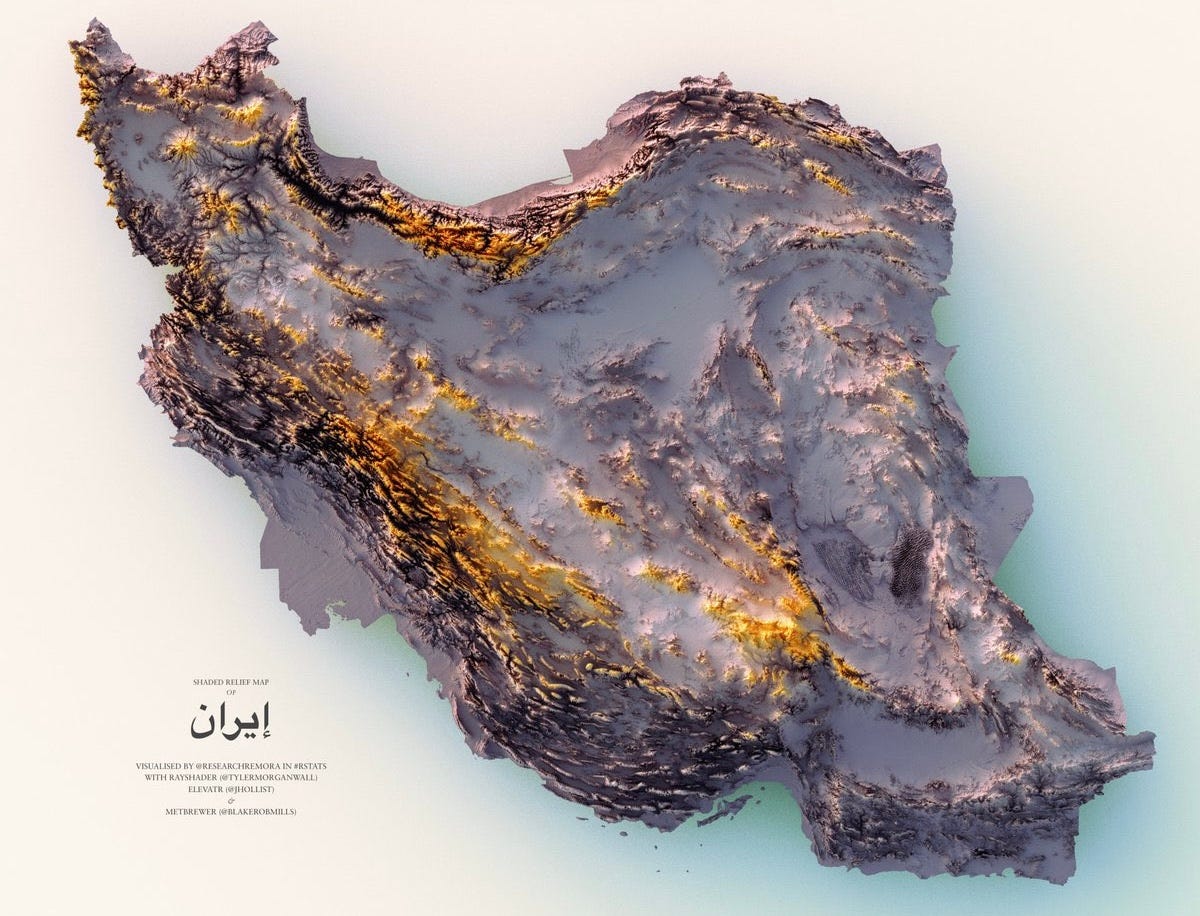
Invading Iran? Practically speaking, it’s not on the table. The country is massive, the terrain is brutal, the human cost would be staggering, and the political blowback would be enormous.
So what does that leave?
The only real variable is internal collapse. The hope — and it is a hope, not a certainty — is that the chaos generated by the strikes opens cracks in the regime that ordinary Iranians can exploit. That the pressure from outside finally ignites what has been simmering inside for years: the discontent of a population that has endured decades of repression, economic misery, and isolation.
Until that happens, we will continue to count destroyed targets and eliminated generals.
Not fallen regimes.
The Real Reason Nobody’s Telling You About
Now. Why is all of this happening?
The official narrative is straightforward: Iran is developing nuclear weapons, and the United States and Israel are determined to prevent that. This is true. But it is also, in the grand scheme of things, almost irrelevant.
Nuclear weapons are an excellent public justification. They’re visceral, they’re frightening, they require no further explanation. They’re the kind of reason you give your population when you need their support for something far more complex.
So let’s go deeper.
Iran is not just a regional power with “nuclear ambitions”. It is — unofficially, but unmistakably — a node in a broader alliance system. A system aligned against the United States. And at the centre of that system sits a single actor: China.
Think about it this way. Italy is part of NATO. Iran is part of something structurally similar, just less formalised. It has supplied Russia with the drones that have struck Ukrainian cities. North Korea has provided troops and ammunition. Venezuela, until recently, offered another foothold for Chinese influence in the Western hemisphere.
These are not coincidences. They are pieces of a strategic architecture.
Over the past four years, the United States — working through proxies and allies — has been systematically dismantling that architecture, piece by piece:
Russia is being bled dry in Ukraine, financed by European money and sustained by American weapons, draining its military capacity for a generation.
Hamas and Hezbollah, Iran’s main regional proxies, have been severely degraded by Israel.
Venezuela has been politically and economically neutered.
Iran itself is now the target.
Each move serves the same ultimate purpose: to isolate China.
The logic is coldly simple. China is the only power capable of genuinely threatening American global primacy. A future conflict over Taiwan — whether hot or cold — will be determined not just by military hardware, but by alliances, by resources, by who stands with whom.
If China enters that confrontation surrounded by strong, resource-rich allies, the balance shifts. If it enters isolated — without Iran’s oil, without Russia’s arms industry at full capacity, without proxy networks across the Middle East — it enters weak.
And a weak adversary thinks twice before attacking Taiwan.

The Bigger Picture We Keep Missing
We’ve been watching this war wrong.
We’ve been tracking individual battles — Bakhmut, Rafah, Tehran — as if each one were its own story. As if the world were a collection of separate crises happening to coincide in the same news cycle.
But zoom out, and something different appears.
What we are watching is a single, sustained Western strategic effort to reshape the global balance of power before the defining confrontation of the century. Every conflict, every proxy, every proxy of a proxy, is a move on the same board.
Iran is not the endgame. It’s the second-to-last piece.
The endgame is much further east.
And until we understand that, we’ll keep being surprised — by missiles on a Saturday morning, by drones over Dubai, by regimes that fall faster than expected and others that refuse to fall at all.
The frame matters more than the headline.
It always has.
If this piece made you think differently about what you’re reading in the news — share it. The signal gets drowned out by the noise every single day. Let’s fix that
Who I Am, What I Write About, And what you can learn

Hello, and thank you for stopping by my profile.