
Once again, You’ve Got Greenland Completely Wrong.
Trump manipulates the market. And he is making fools of all of us.

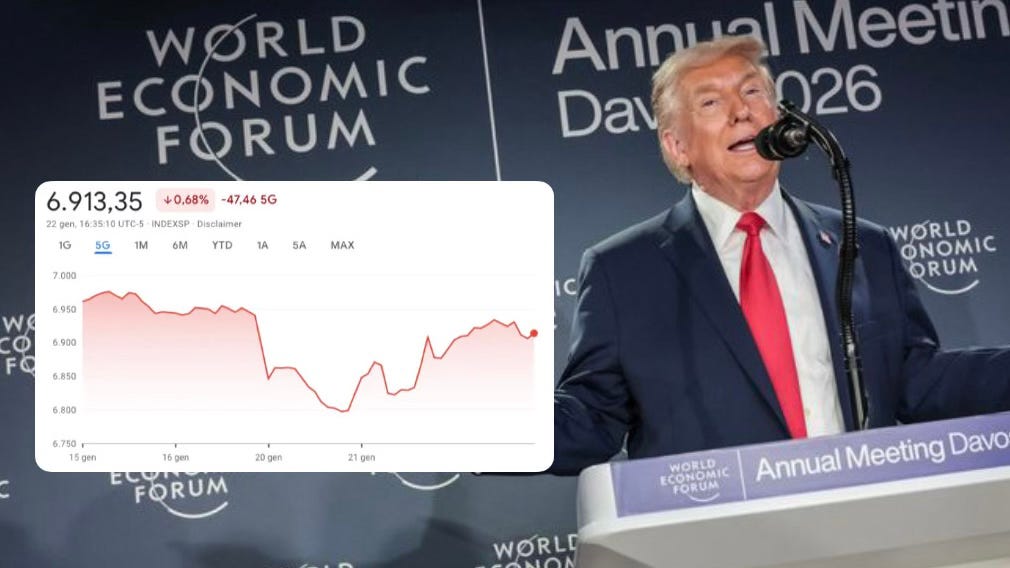
Do you know that bitter feeling, when you realize you’re being mocked, yet the world keeps laughing as if nothing were happening?
That’s exactly how I feel every single time Greenland and Donald Trump come up.
Just a week ago, I published an article here in which I tried to make sense of what looked like a presidential stunt. I explained that an attack on Greenland was highly unlikely, but that behind the provocation there were two very real moves:
aiming outrageously high to extract a small concession,
or forcing Europeans — Denmark in particular — to take better care of that stretch of the Arctic against future Russian interference.
The article received thousands of reads. And do you know what people told me?
Forget it. Don’t look for logic where there is none. Trump is crazy. An old narcissist acting on impulse. A bully banging his fists on the table.

And every time, I found myself thinking: do you really still believe that?
Because today, in plain sight, we have concrete proof that Trump is not insane at all, nor is he an improviser. He is lucid, calculating, and — worse still — fully aware of the power he wields over our collective naïveté.
Right now, as we continue to laugh at his outbursts, Trump is securing new concessions over Greenland: access to defense, resource exploitation rights, perhaps even deeper strategic leverage.
All of it without deploying a single soldier — just by playing with words and with the market.
And here, I’ll admit it, anger takes over.
Because while everyone rushes to reduce him to a caricature, he moves pieces and buys time.
While we call him “a senile fool,” he manipulates the market — and somewhere in the shadows, someone is making obscene amounts of money off that manipulation.
And us? We watch, distracted, convinced that the problem is his ego rather than his strategy.
He is not mad. He is lucid, methodical, and above all, he is winning.
And every time we dismiss him as a clown, we help him do exactly that.
Calling him crazy means failing to see him coming.
Calling him stupid means playing his game, not ours.
So let’s ask the real questions: what actually happened? Did Denmark bend? Was the market manipulated?
Yes.
And if we don’t start looking beyond the surface, we will keep getting played.
This, is not just geopolitics.
It is proof that madness is the perfect alibi for power.
And while we fume over the tone, he laughs — and cashes in.
Are you starting to see the pattern?
I spent the entire day yesterday listening to and reading every single word spoken in Davos, at the World Economic Forum.
Hours and hours of interviews, statements, and conferences, with the usual applause and the usual polite smiles. But, needless to say, everyone was waiting for him: Donald Trump. And when he finally took the stage, I felt that familiar chill run down my spine.
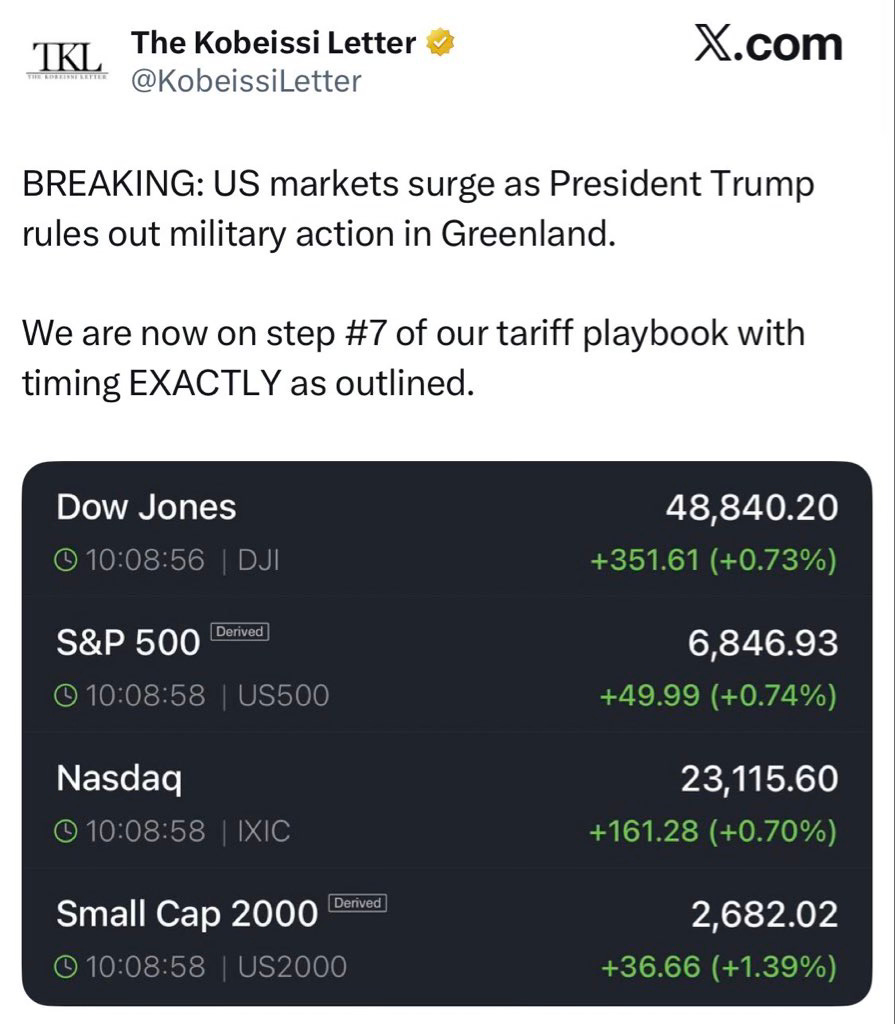
After a brief moment of relief — listening to the Canadian prime minister, measured and clear-headed — I tuned in to Trump’s speech. And right there, at the exact moment he ruled out a military intervention in Greenland, I realized something didn’t add up.
The hair on my arms stood on end. I couldn’t believe it. Once again, the very same script:
threat — and global panic — followed by retreat.
A perfect cycle. Predictable. Meticulously engineered.
I know what you’re thinking: “Right, that’s why they call him TACO.”
But, laughing is no longer enough.
We can’t keep dismissing everything with a meme-friendly nickname. Because this pattern is not an isolated incident: it has repeated itself at least three times in less than a year. Three times in which Trump made statements capable of shaking the world, only to backtrack at the last moment — like a poker player bluffing just to see how the table reacts.
In Italy we have a saying: “Thinking ill of others is a sin, but often you’re right.” And I, who don’t consider myself naïve, began to suspect that behind these scenes there was not only the strategy described in my previous article — “ask for 100 to get 10,” which did in fact happen — but something more.
I went looking online for opinions on the matter, and unfortunately… I’m not the only one who noticed.
Everything points to Trump using fear as a market lever. Every threat is not a communication blunder; it is a deliberate political tool — and above all, a financial one.
Let’s go back to Greenland. When he floated the idea of “buying the island,” it sounded like lunacy. Then the conversation shifted to resource exploitation rights and military defense — options that suddenly seemed almost elegant compared to the idea of invasion.
Look at the data.
Trump sends a provocative letter to the Norwegian prime minister, threatening that, since he did not receive the Nobel Peace Prize, he no longer feels bound by diplomacy.
Panic. Markets plunge.
At Davos, the president reverses course: no use of force, no conflict. Markets slowly recover. Those who knew in advance what would happen made enormous profits.
And this is not an isolated episode.
The exact same pattern appeared in April, during Liberation Day, and again months later with China. Same structure, same timing: first the threat, then chaos, then apparent calm. And each time, Trump gets something.
15% tariffs with Europe. Access to Chinese rare earths. And above all, confirmation that he holds sway over the entire world.
It’s all there, in plain sight.
His statements are not communication errors or impulsive improvisations. They are instruments of systematic manipulation. Every sentence, every denial, every threat is designed to generate swings, panic, volatility. And in that volatility, someone — not by chance — makes embarrassingly large sums of money.
What leaves me speechless is the lightness with which the world continues to shrug. We laugh, we joke, we psychoanalyze the character, while real power shifts by a few percentage points every time he opens his mouth. It’s a well-oiled theater, and we — a distracted audience — laugh at the wrong moment.
Perhaps it’s more comforting to believe he’s crazy, because believing he’s lucid is far more frightening. But the truth is that chaos is his strategy. And the more we mock him, the stronger we make him.
So where does the truth lie?
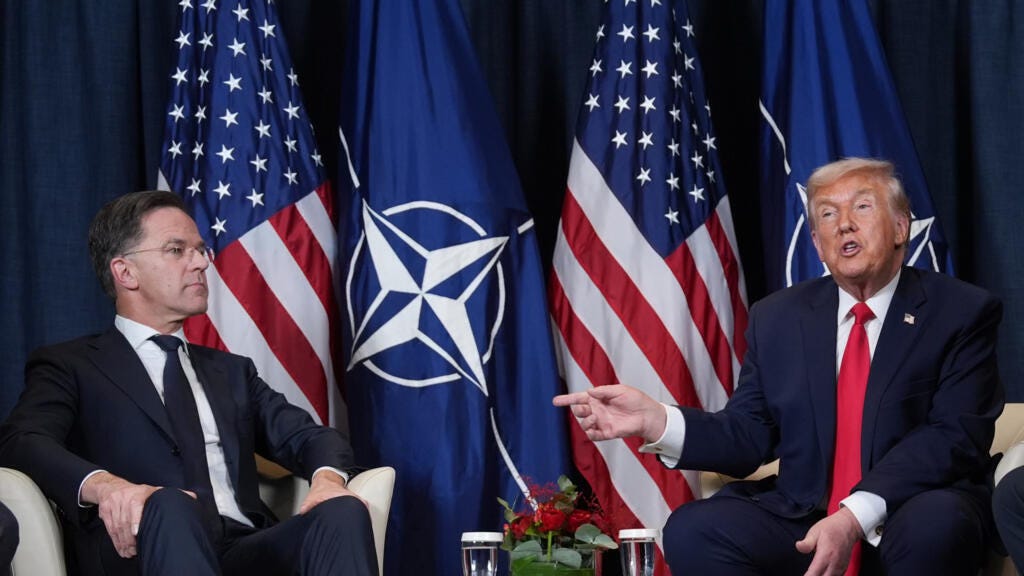
That Donald Trump’s words are influencing — and at times outright manipulating global markets — is no longer a suggestion. It is a visible, and sometimes painfully tangible, fact.
There is only one big, very big question:
Is he doing it deliberately?
Is this all part of a carefully engineered plan?
Are we witnessing a form of political insider trading?
Frankly, I don’t know.
Maybe yes. Maybe not.
It’s not for me to say with certainty. And perhaps, one day, it will be a judge who determines it — with rigor and evidence far more solid than any of our speculation.
That said, I must also admit one thing:
Trump, in practice, is achieving geopolitical results of enormous magnitude.
He has managed — despite all the criticism that can and should be directed at his methods — to obtain:
strategic rare earth access from China;
to impose significant tariffs on Europe, and to some extent use the tariff stick to bend trade balances;
to put pressure on the Iranian regime through sanctions and economic measures that strike directly at the heart of Tehran’s oil exports;
and to orchestrate actions in Venezuela which, beyond the controversy, aim to wrest one of the world’s major oil reserves away from Chinese influence — a move of enormous strategic value in a world where energy remains the currency of power.

It is difficult to deny that, beneath the apparent chaos, there is a powerful logic — and that in some cases what looks like sheer volatility translates into a capacity to achieve concrete objectives.
I live with a deep internal conflict:
I criticize his means — the aggressive rhetoric, the violent communication style, the ability to trigger market panic with a single sentence — yet I cannot ignore the results he has achieved.
This is the paradox of complexity: one can despise the form, while acknowledging the effectiveness of the substance.
I do not want to be a MAGA supporter, nor a hater.
What worries me most is not the constant noise of words and Truth Social posts, but rather the long-term consequences of this dynamic.
For example:
Will Europeans and Americans still be able to trust one another after this media and diplomatic storm?
Will we be able to preserve the global order built on alliances and multilateral institutions, or will it unravel into ego-driven temptations and national fragmentation?
And above all: will we still be able to invest calmly, plan our pensions, work toward a stable economic future — without every off-the-cuff remark by a leader turning into a financial earthquake?
These questions are not abstract. For me, they form the foundation of our economic and social security.
A financial system that reacts erratically is not just a chart spiking or collapsing — it is our past, present, and future money.
Trump is not fully aware of the long-term damage this may cause. He is powerful, certainly — but he is not a demiurge.
We still have three more years of this presidency ahead of us. Three more years in which we may witness statements capable of moving not only markets, but also alliances — with Europeans, Canadians, or even Israelis (at this point, I expect anything).
And if there is one lesson we must take from this experience, it is this:
do not be overwhelmed by the noise — focus on the signal. Learn to separate the often shameful declarations from the often effective actions, at least in geopolitics.
What do you think?
Is Trump manipulating the markets?

Thank you for reading this far.
I’ve recently started publishing on other social platforms as well.
If you’d like, you can find me on Substack, Medium, Instagram, TikTok, Twitter, and YouTube.
If you’d like to see my face — or simply stay more closely connected on a day-to-day basis — I’ll be happy to share more ideas with you there too.
Thank you, and see you soon. → LINK