
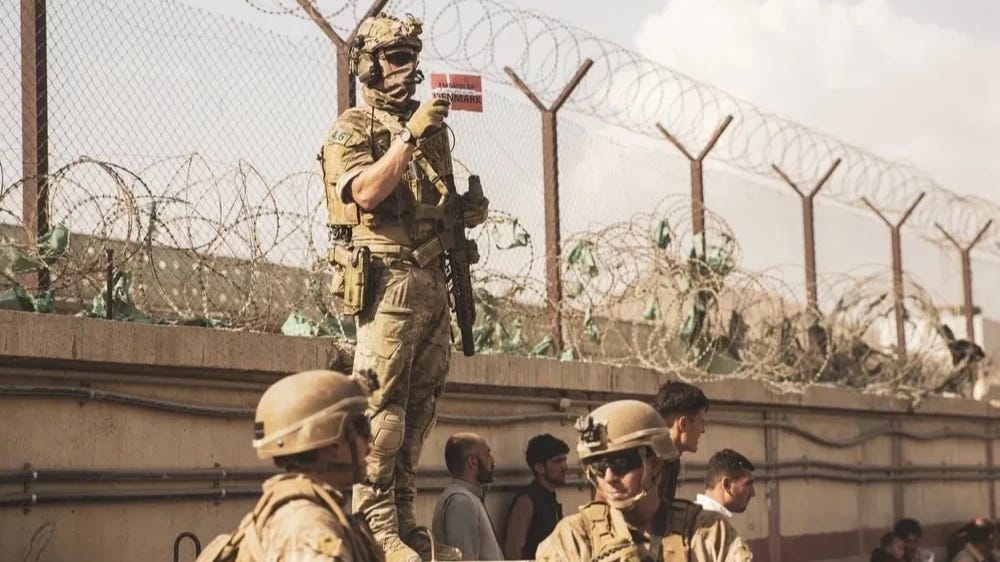

It was 2002 when Danish soldiers first arrived in Afghanistan. A quiet deployment, far from the spotlight, yet one destined to leave a profound mark on Denmark’s recent history.
The year before, the United States had launched what we now remember as the American war in Afghanistan: a conflict that lasted twenty years and ended in 2021, under the Biden administration, in the worst possible way. The Western withdrawal paved the way for the Taliban’s return to power, handing the country back to the very force that the United States and its allies had spent two decades trying to defeat.
It was in this context that, in 2002, the Danish government chose to respond to the American request for assistance, sending its troops to the other side of the world. This decision was driven less by a desire to fight a distant enemy than by the intention to support a historic ally—one that, decades earlier, had played a decisive role in restoring Denmark’s freedom by defeating the Nazism that had engulfed the entire European continent.
Between 2002 and 2013, around 9,500 Danish soldiers were deployed to Afghanistan. Of these, 43 never returned home. A figure that may seem modest when viewed in isolation, but which takes on enormous weight when measured against the size of the country: Denmark has just under six million inhabitants. Proportionally, it was the country with the highest number of casualties per capita among the NATO allies involved in the Afghan conflict.
Behind those numbers lie 43 families who permanently lost a son, a parent, a sibling. Irreversible losses that cut deep into the social fabric of a country generally perceived as peaceful, stable, prosperous, and among the happiest in Europe.
Much of this prosperity was also made possible by the American protection from which Denmark, along with other European countries, benefited during the Cold War. Italy, West Germany, and many other nations built their stability in the shadow of that security guarantee.
For a significant segment of European public opinion, the United States is not merely a clumsy giant or the sensationalist statements of Donald Trump, nor is it defined solely by the shadows of Guantánamo’s torture practices or the embargo on Cuba. The United States has been—and in part remains—a protector: an older brother who guaranteed freedom, prosperity, and rights to a continent that, at several points in its history, risked losing them forever.
In this sense, the war in Afghanistan was not only a hunt for the Taliban. It was also a political and symbolic message: proof that Europe, when it chooses to act, shows up. Perhaps with limited resources, perhaps with inadequate means—but it shows up.
The highest price, as we have seen, was paid by the Danes. And it is Denmark that today, years after that conflict, once again finds itself at the center of a media storm of threats, statements, and potential negotiations. A heavy legacy, rooted in choices made more than twenty years ago.
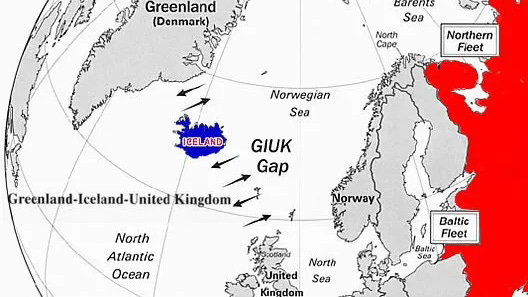
Greenland is a vast expanse of land and ice—much smaller than it appears on maps, yet still immense. A territory that formally belongs to the Kingdom of Denmark, often perceived as remote and marginal, and yet destined to play an increasingly central role in global power dynamics.
This seemingly desolate land lies close to the Arctic Circle, one of the most inhospitable regions in the world for human life. Ice has historically hindered both the development of many forms of life and the regular circulation of commercial shipping. But what for centuries was a constraint may soon turn into a strategic opportunity. Climate change, with the gradual melting of the ice, threatens to open up new maritime routes, enabling not only the passage of merchant vessels but also the projection of naval and military power into an area that has so far been shielded by its own natural hostility.
Let’s connect the dots.
February 24, 2022, marks a turning point. The first Russian helicopters cross into Ukraine, heading south toward Kyiv. From that moment on, the world embarks on a different trajectory. Less than four years later, at the beginning of 2026, the global landscape has changed profoundly compared to what it was before that February.
In those days, many would have bet on a swift Russian victory—I included. And yet, fewer than four years on, we are faced with a scenario that would have seemed unthinkable at the time: Assad’s Syria has collapsed, Iran is shaken by internal unrest and has lost its two main regional proxies, Russia has suffered enormous human losses, and even Venezuela—once considered a stable piece on the Chinese chessboard—now appears as a relic of the past, more symbolic than real.
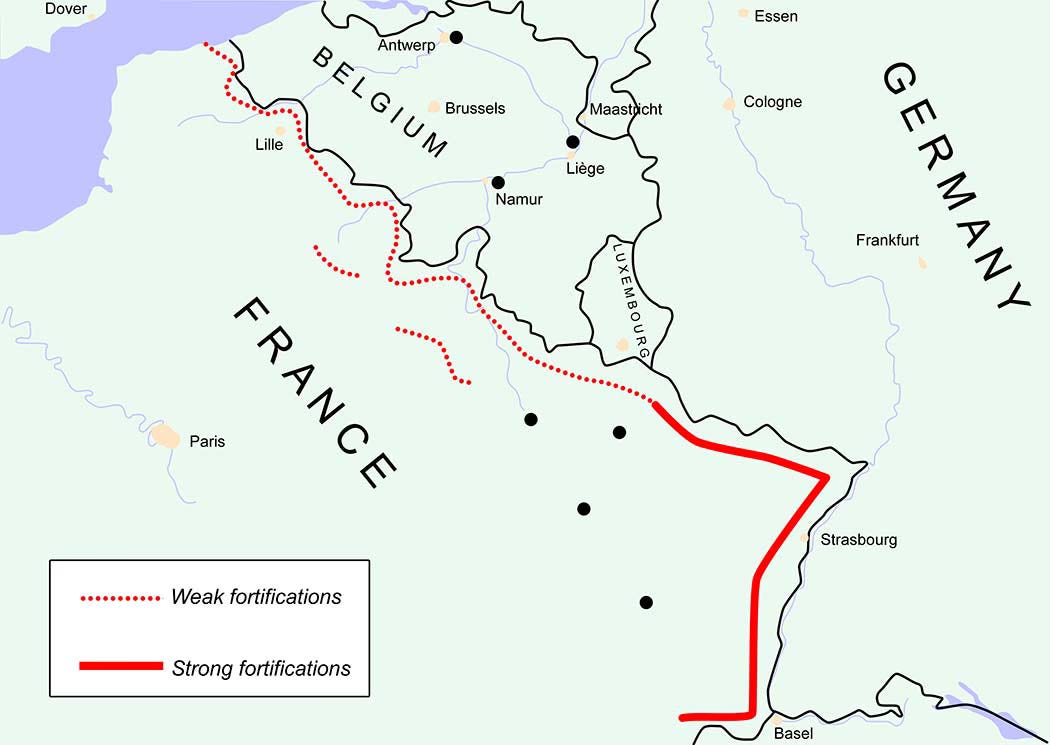
In this context, a “threatened” Greenland is far more than a simple territorial claim by the hegemon of the moment. It is not an imperial whim or an isolated episode. Rather, it is yet another segment of a much broader structure: a strategic wall that the United States, in cooperation with its allies, is gradually building on a global scale.
A kind of new Maginot Line.
Donald Trump, now a seasoned political figure—strange as that may sound—is someone that those who have followed him closely over time have learned to read differently. His words are rarely accidental, his actions follow a precise logic, and, contrary to what is often believed, they are neither improvised nor driven by madness.
Over the past four years, significant steps have been taken to strengthen this anti-Chinese barrier, working on multiple levels and involving the entire American alliance system. On the front line are strategic partners such as Israel and Ukraine.
Today, a direct clash between Europeans and Americans would mean not only burning the progress built over this four-year period, but also undermining at its very foundation the relationship of trust forged in the aftermath of the Second World War. A bond that led countries like Denmark to intervene in Afghanistan not to fight a distant enemy, but to support an ally—a protector, a liberator.
The United States earned the consent of much of Europe not through cannons and bombardments, but by exporting freedom and rights. Not out of altruism, but to ensure a stable presence in a continent that, during the Cold War, was preparing to return to the center of the world.
A confrontation at this stage would not only weaken efforts to keep Ukraine as a free, Western outpost. It would also represent an enormous strategic gift to those countries that, precisely in these years, the West has helped—deliberately and with considerable skill—to weaken or bring down.
Everyone knows this: Europeans, Danes, Americans alike.
And that is precisely why the question becomes unavoidable.
So what is Trump’s real game?
Perhaps we will find out in forty years. For now, what I feel able to say is that we may be looking at the same pattern already seen with tariff policy. A now well-tested dynamic: a 10,000% tariff is proposed—deliberately provocative, almost grotesque—only to then negotiate it down to 15%. The final outcome is still an increase in tariffs, yet those who bear the cost end up almost grateful, convinced they have avoided the worst.
Applying the same logic, proposing the invasion of Greenland may not be a genuine objective, but rather a tool of pressure. A way to force Denmark and Europe to grant the United States greater freedom of action, without ever actually reaching open confrontation.
Another, equally plausible hypothesis is that threatening territories such as Greenland is meant to push Europeans to invest more resources in their own defense. In recent years, the United States has effectively delegated the management of the Iranian dossier to Israel and the Russian one to the Europeans—or, to be precise, to the Ukrainians, kept artificially afloat thanks to rivers of €uros. Fragrant, gleaming yellow or purple banknotes.
In the same way, threatening a highly strategic area could further encourage Europe to take responsibility for its own security and to strengthen its key outposts.
The pattern is already familiar. Threatening to leave NATO or to withdraw support for Ukraine has led many European countries to increase military spending. Within this logic, Greenland becomes another instrument of pressure, not a final objective.
Personally, I find it hard to believe in a violent military intervention in Greenland. Creating hostility between Europeans and Americans would probably be the one thing we need least. And, above all, the last thing that could benefit both continents.
The two systems are now so deeply interconnected that separating them and forcing them into conflict with one another would mark the beginning of the end: the end of the American pax, the end of U.S. hegemony, the end of the Western world as our grandparents built it and as we are living it today.
I consider an open clash between Europe and the United States highly unrealistic. Perhaps this is mere wishful thinking, but I cannot identify a single strategic or long-term advantage that would stem from dividing Western consciences, economies, and military structures.
In practical terms, Europe is an integral part of the American empire. To think of it as a truly autonomous entity today is a misleading simplification. The hegemon of the moment would have no interest in handing such a central continent over to Russia or China, nor in pushing Europeans—driven by resentment or a sense of betrayal—to move closer to Moscow or to forge even tighter ties with Beijing.
Even within an empire, no people remains loyal if it is not satisfied. The history of the Poles and Ukrainians under the USSR demonstrates this clearly, as does what is happening in Iran in these very days. The United States has governed and influenced Europe not through tanks and cannons, but through consent, commitment, and recognition.
I would like to conclude this article by urging readers not to be misled by sensationalist statements or bellicose slogans. At the same time, however, it is impossible to ignore a historical truth: no empire and no civilization has lasted forever. Every empire has made irrational and foolish choices that, in the long run, accelerated its decline.
As much as I hope this analysis is correct, the risk of finding ourselves faced with the greatest strategic gift to China does exist, however small it may be.
Only time will tell whether we were right or not.
Per aspera ad astra.
Thank you for reading this far.
I’ve recently started publishing on all the other social platforms as well. If you’d like, you can find me on Substack, Instagram, TikTok, and Twitter.
If you’d like to see my face, or simply have a more day-to-day connection with me, I’ll be happy to share more ideas with you on my other social channels as well.
Thank you, and see you soon! → LINK social
I hope you’re right!