
Will Israel Be Invaded by Tens of Millions of Muslims, Sooner or Later?
Why Has Israel Committed Atrocities and Attacked Seven Countries in the Past Two Years?

Proclaim this among the nations:
Prepare for war!
Rouse the warriors!
Let all the fighting men draw near and attack.
Beat your plowshares into swords
and your pruning hooks into spears.
Let the weakling say,
“I am strong!”
Joel 3:9-10
The Bible is often a profoundly violent book — a text that should never be taken literally. Yet, unfortunately, it describes scenes of life that every generation throughout human history has known.
What we are witnessing today in the Middle East is nothing new, nothing that hasn’t already happened before. And yet, every time, it feels like the first — perhaps because, yes, it is the first time in our own lives.
Today, Israel stands as a free and independent nation thanks to its foresight.
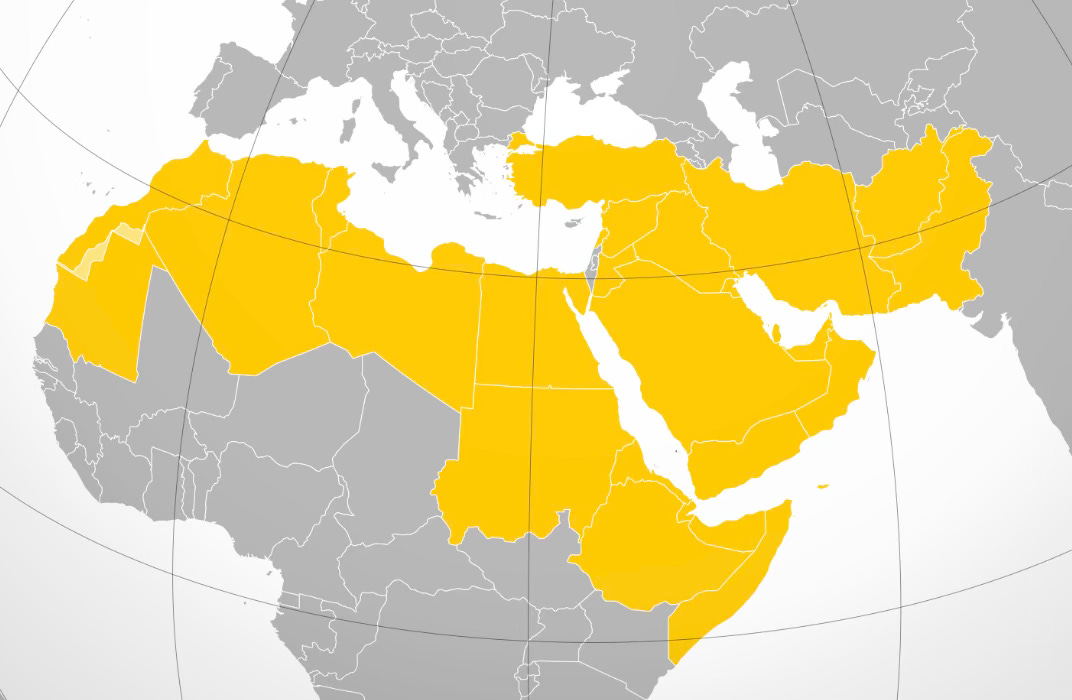
But have you ever wondered why, over the past two years, Israel has been repeatedly bombing seven neighboring countries? Why such aggression, violence, and destruction?
Those living in Europe — especially Western Europe — or in the United States, can hardly grasp what it means to be forced to live in a perpetual state of danger.
We are not used to coexisting daily with the threat of our neighbors: neither Canada, nor France, nor Germany poses any danger today.
Israel, on the other hand, has understood over the decades that in order to survive and secure a future for the generations to come, it needed cunning and, at times, violence. Israeli foresight has rested on three pillars: exceptional intelligence, nuclear capability, and its alliance with the United States.
But what will happen when the surrounding Arab countries — those with which Israel appears to be at peace today — no longer have anyone restraining them from “tearing apart” the Jewish state?
What will happen when the Americans can no longer arm Israel or keep in check those nations that together represent a billion people of Muslim faith?
Israel knows what awaits it. It knows that what is written in The Bible tends to repeat itself in cycles.
In Europe, public support is at historic lows. One day, the American empire will fade. Perhaps the war has already begun — and victory will belong to those who can be the most patient.
Israel is preparing for the worst.
Foresight in the Past
It was perhaps this very fear that drove Israel, from the very beginning, into the arms of the United States of America.
World War II had just ended: Israel declared its independence, won its own war of independence, and from that moment on, the relationship between the two nations grew increasingly close.
The arrangement was mutually beneficial.
Israel gained a powerful partner — in fact, the most powerful one. The United States provided money, weapons, intelligence, and political support.
In return, the United States gained a reliable ally, led by a capable and determined ruling class. Moreover, thanks to Israel, Washington could keep a firm foothold in the Middle East — a hot region since the dawn of time, strategically crucial for global balance.
The United States supplied weapons and resources; Israel developed, consolidated its security, and, as a result, indirectly helped the U.S. maintain control over the region.
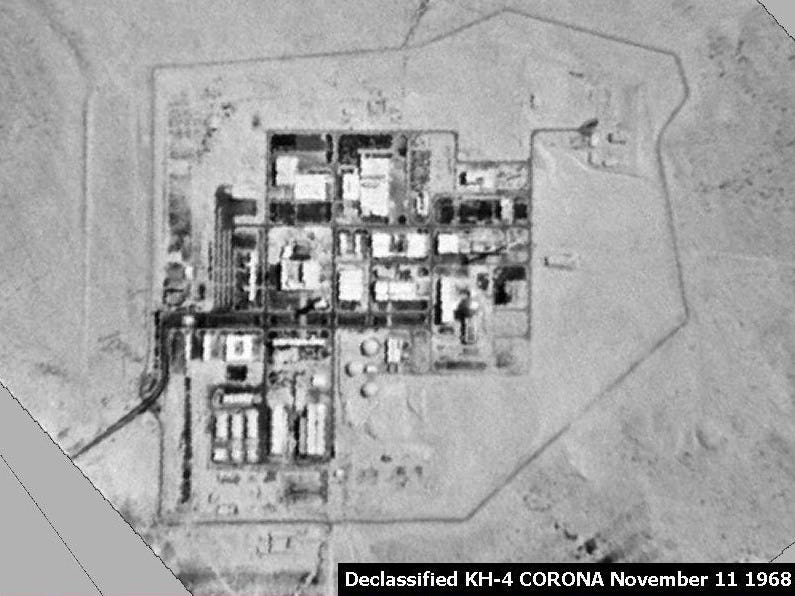
But Israeli foresight didn’t stop there. Israel soon understood it needed an ultimate deterrent: the nuclear weapon.
With France’s help, it initially acquired reactors for civilian use and, year after year, managed to independently develop its own nuclear arsenal.
Today, Israel is the only country in the Middle East that possesses atomic weapons.
A bit further east, Pakistan also holds them — but it’s far away. The main concerns and threats, both then and now, come from countries like Egypt, Saudi Arabia, Syria, Iraq, and Jordan.
What would Israel be today without its nuclear guarantee and without American support?
The Destruction Wrought by Israel in the Past Two Years
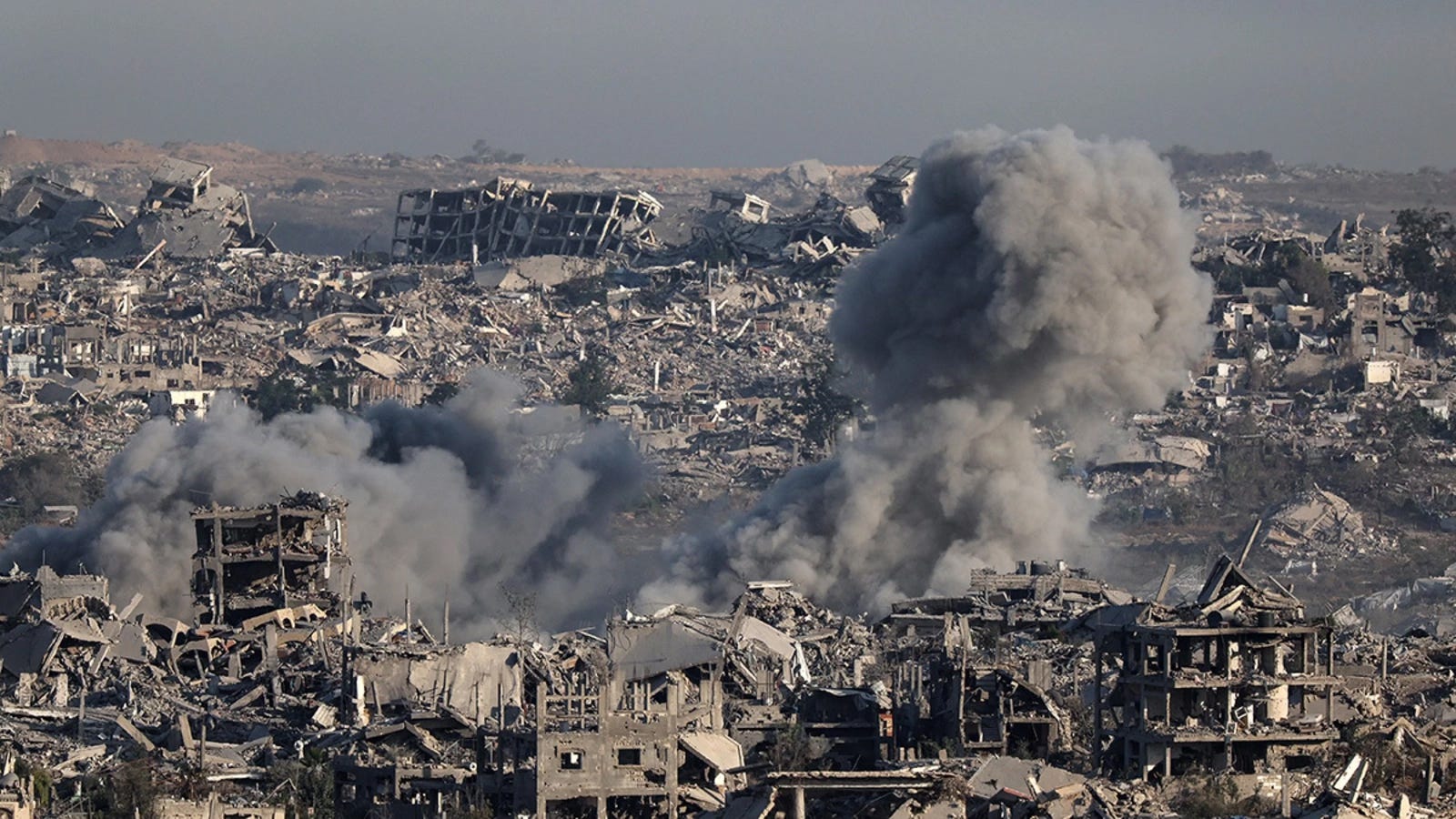
As of today, things are going remarkably well for Israel.
Since October 7, the country has managed to wipe out much of its opposition. Israel now finds itself in a significantly stronger geopolitical position than it was two years ago. Hezbollah and Hamas are almost entirely out of play.
In Syria, the government is led by a former member of al-Qaeda, who currently poses no real threat to Israel.
Iran, on the other hand, has been deeply weakened: it has lost not only its proxies but, above all, a large part of its air defenses. Today, it is licking the wounds left by the so-called Twelve-Day War.
All in all, everything suggests that, at least for now, the Jewish state is enjoying a period of major strategic advantage.
Thanks to unwavering U.S. support, significant progress has been made in just two years — and it’s unlikely that Israel will stop here. Why should it?
It’s plausible that it will try to capitalize on its current momentum to further extend control over new territories.
From this perspective, the Gaza Strip appears to be a Trojan horse — the necessary justification for striking and annihilating its enemies from the air.
However, caution is warranted: the enemies are real. Israel truly is under threat. Yet, while the world’s attention remains fixed on Gaza, Israel’s real victories have taken place elsewhere, far beyond that narrow strip of land.
The United States, predictably, can only benefit from this situation.
The Middle East remains engulfed in chaos — and for the Western world, that is not necessarily a bad thing.
When your adversary is busy managing internal turmoil, they cannot organize against you. And inevitably, you come out ahead.
By the same logic, a civil war in the U.S. would weaken the entire Western bloc.
Foresight in the Future
Yet, life is a wheel: today you are well, tomorrow you are not.
Today I fail at my work; tomorrow I will succeed.
In the same way, Israel, even if it is in a position of advantage today, will not remain so forever.
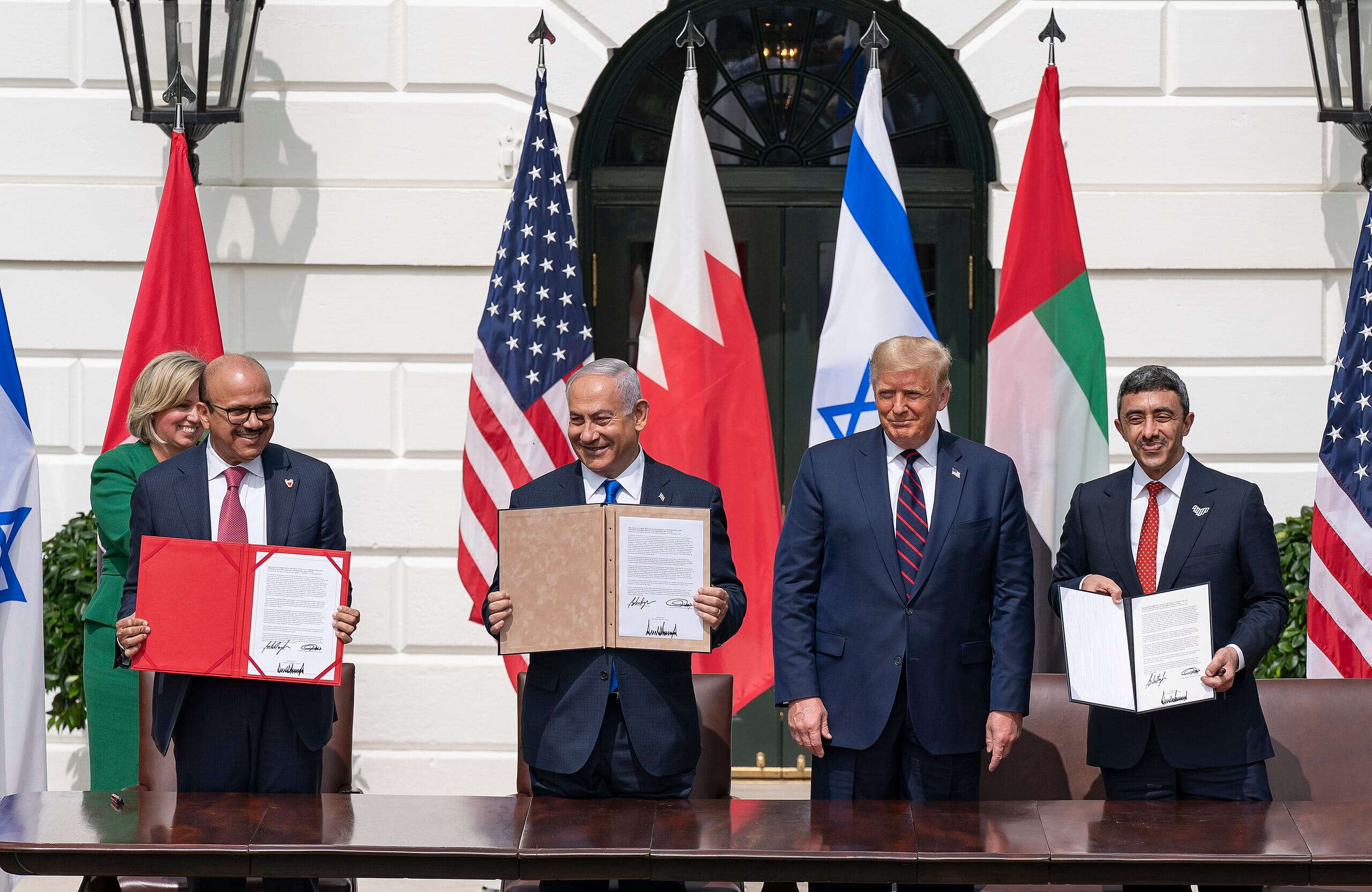
Why? Because one day its greatest ally — the United States — will cease to be the world’s dominant empire. And because the neighboring Muslim nations may no longer be willing to make agreements with Israel as they do today.
Let’s start with the United States.
For roughly eighty years, they have sat atop the world. After defeating the Soviet Union, many thought history had ended, that no threats remained on the horizon. During that period, the “bad guy of the moment” seemed poised to be Japan once again.
Today, in 2025, we know that is not the case. The enemy is not Japanese, but still Russian — and above all, Chinese.
If Russia represents a challenge for Europe, and Iran a threat to Israel, the United States is preparing for a confrontation that no one wants but many consider inevitable: a clash with China.
All empires, sooner or later, fall.
Perhaps this confrontation will never occur. Or perhaps it will — and the United States will emerge victorious once more, confirming itself as the planet’s hegemonic power.
But, sooner or later, even the American empire will fall. And when that happens, Israel will face enormous problems.
If today there is a relative peace in the Middle East, it is mainly thanks to Israel’s nuclear deterrent and the massive U.S. military presence.
A presence that, after any potential American collapse, simply would no longer exist.
In that part of the world live — and this is a conservative estimate — one billion Muslims.
People more or less radicalized, more or less observant of Islamic law, but who, one day, if the opportunity arises, could seize it. Taking advantage of a weakened and isolated Israel.
Nuclear bombs cannot save you forever. You cannot stop a billion people with bombs alone.
Israel knows this. And for that reason, it seeks to inflict as much damage as possible today, to accumulate as much power today, so that tomorrow it will be in a position of advantage.
Europe, the United States, and Israel are fighting three different enemies, yet all are connected by a single thread.
The success of one is the success of all.
Perhaps things will end well.
Or perhaps they will end badly.
I hope I have provided a new perspective on the destruction Israel is causing in the Gaza Strip, but above all, on its external enemies.
For now, the only sensible strategy is to keep tensions high in the Middle East, to generate chaos. To continue weakening Russia through the war of attrition in Ukraine, allowing the United States to consolidate its domestic politics, and thereby prepare for the real enemy of this century.
Israel is trying to bring the hostages home, and I truly hope those poor people can return to their loved ones. But the real game isn’t being played here.
And what about us, ordinary citizens? We must prepare.
No panic — but prepare.
I also invite you to read my other articles to better understand the situation we are in.
Per aspera ad astra.
Look me up on my social media. → LINK.