
A year ago, for the first time in my life, I bought a lottery ticket.
I’ve never been a gambler, and that was the only time I ever decided to try my luck.
I’m an adult, a university graduate, and I consider myself a rational person. I know perfectly well that the odds of winning are infinitesimal—that the house always wins.
And yet, that day I felt particularly happy for a personal reason, and that ticket displayed behind the counter seemed to be looking right at me.
“What if that’s the winning one?” I thought.
“Impossible,” my logical side replied.
But just a few moments later, when the clerk asked what I wanted to buy, I said:
“A pack of gum and… that lottery ticket, please.”
Of course, I didn’t win anything. But for the first time, I felt that thrill millions of people feel every day: the vertigo of gambling, the hope of defying the odds.
That feeling comes back to me now whenever I think about the war in Ukraine.
War as a gamble between powers
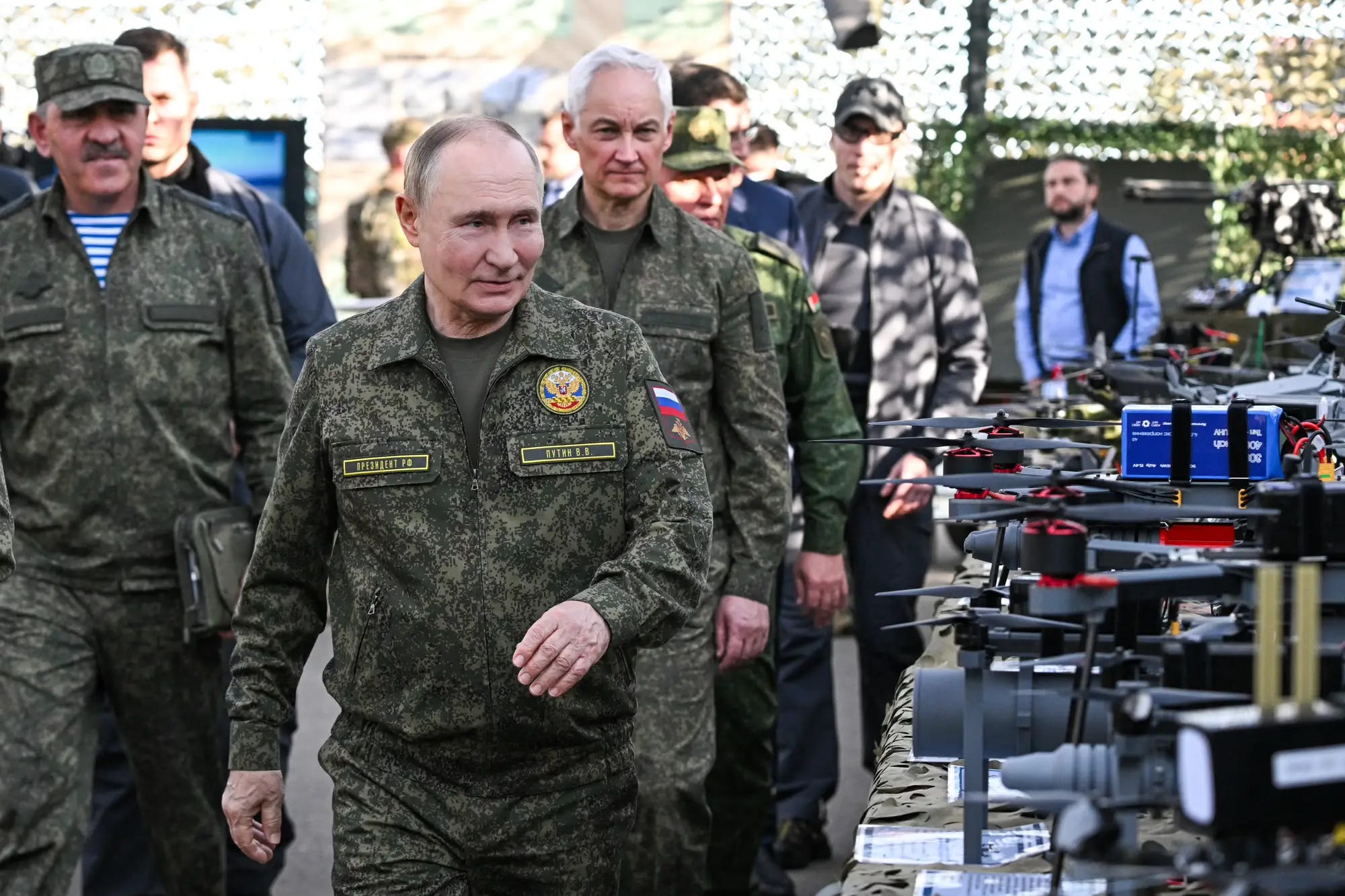
Roughly 1,350 days ago, two major powers decided to take a gamble:
on one side, Vladimir Putin’s Russia; on the other, Joe Biden’s United States and its Western allies.
It’s not fair to compare the two leaders to compulsive gamblers—just as I didn’t become an addict for buying a single ticket.
Still, there’s a point of contact: we all chose to take a risk, without truly knowing where that choice would lead us.
Nearly four years into the conflict, I’m no longer so sure that the United States and its allies are actually winning this bet.
Because—what has changed?
A war many still fail to understand
Many still believe this is a war of territorial conquest.
It’s often repeated that Putin has lost his mind and decided to annex territory out of imperial ambition, while the West remains a passive observer—or at most, a collateral victim.
But that’s an overly simplistic view.
From the very beginning, Russia’s main goal wasn’t so much to seize Kyiv as to pull Ukraine out of the Western orbit, preventing its entry into NATO and the European Union.
Since 1991, more and more Eastern European countries have chosen to move closer to the West.
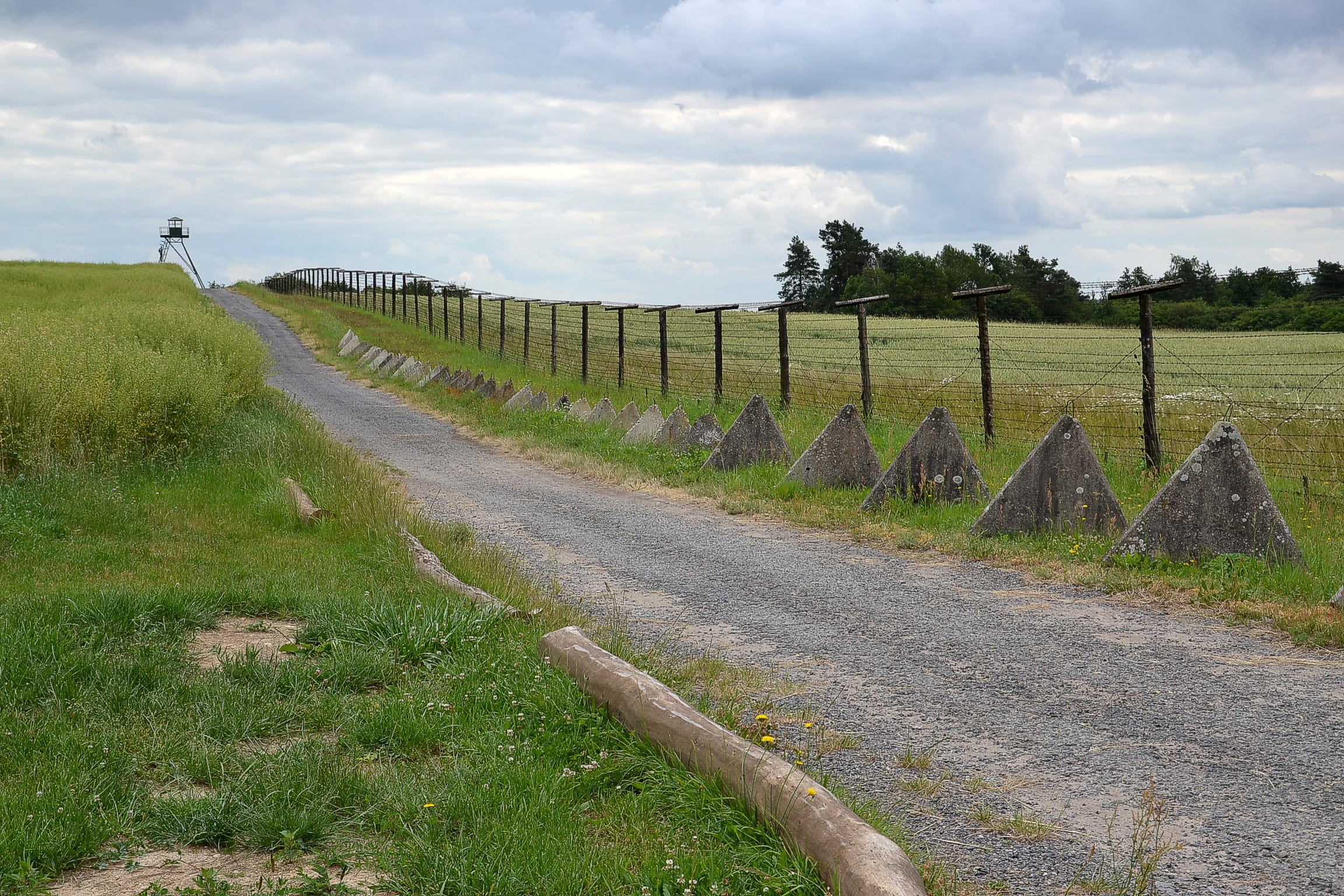
NATO has expanded eastward, and the European Union has integrated many of the nations that once lived beyond the Iron Curtain—reaching all the way to Russia’s borders.
Countries like Finland, Poland, and Romania leave no room for doubt: they are, and want to remain, Western nations—firmly anchored in NATO and far removed from Soviet or Russian influence.
For the Kremlin, Ukraine could not become yet another “traitor nation.”
Over the years, Ukrainians have repeatedly shown their willingness to follow the same path as others before them—a path that would take them away from Russia and closer to the West.
Russia could not allow that to happen.
Putin’s initial gamble: failed, but not lost
Putin’s original plan was straightforward: intimidate Zelensky, force him to flee, and install a pro-Russian puppet government.
The Russians attempted what Western powers had managed to do recently in Syria—advance steadily toward the capital, instilling fear until the leader finally fled.
The Turks, by supporting local militias, succeeded in that strategy.
Putin, with his army, failed to frighten Zelensky or to capture Kyiv.
That gamble went badly for him.
His lottery ticket turned out to be a losing one… just like mine.
Since then, the war has become a long and grinding stalemate.
The Russians have focused on the eastern part of the country, while Putin has told his people that “the inhabitants of Donbas must be liberated and the conquered territories secured.”
Russia now controls much of Donbas, yet it remains far from fulfilling the territorial promises made to its own public opinion.
As of today, about 6,000 square kilometers are still missing.
Within 6,000 km² (2,317 square miles) the Russians Could Win the War

In recent days, between Pokrovsk and Kostyantynivka, the Ukrainian front has been br…
The West has seized on this stalemate to supply Kyiv—not so much to make it win, but to make Russia’s advance as costly as possible—a strategy similar to the “porcupine doctrine” adopted by Taiwan to deter a potential Chinese invasion.
The United States and its allies do not aim for Zelensky to win, but for him to survive long enough to exhaust Russia.
This strategy, often employed by visibly weaker nations, seeks to make any potential attack unbearably expensive—economically and in human lives.
If the Taiwanese use this approach as deterrence, the Ukrainians—already in the midst of conflict—use it to limit the damage, hoping that sooner or later Russia will run out of the resources needed to continue.
What does the west gain from all this?
If you’re wondering what purpose there is in exhausting and weakening Russia, the answer is quite simple.
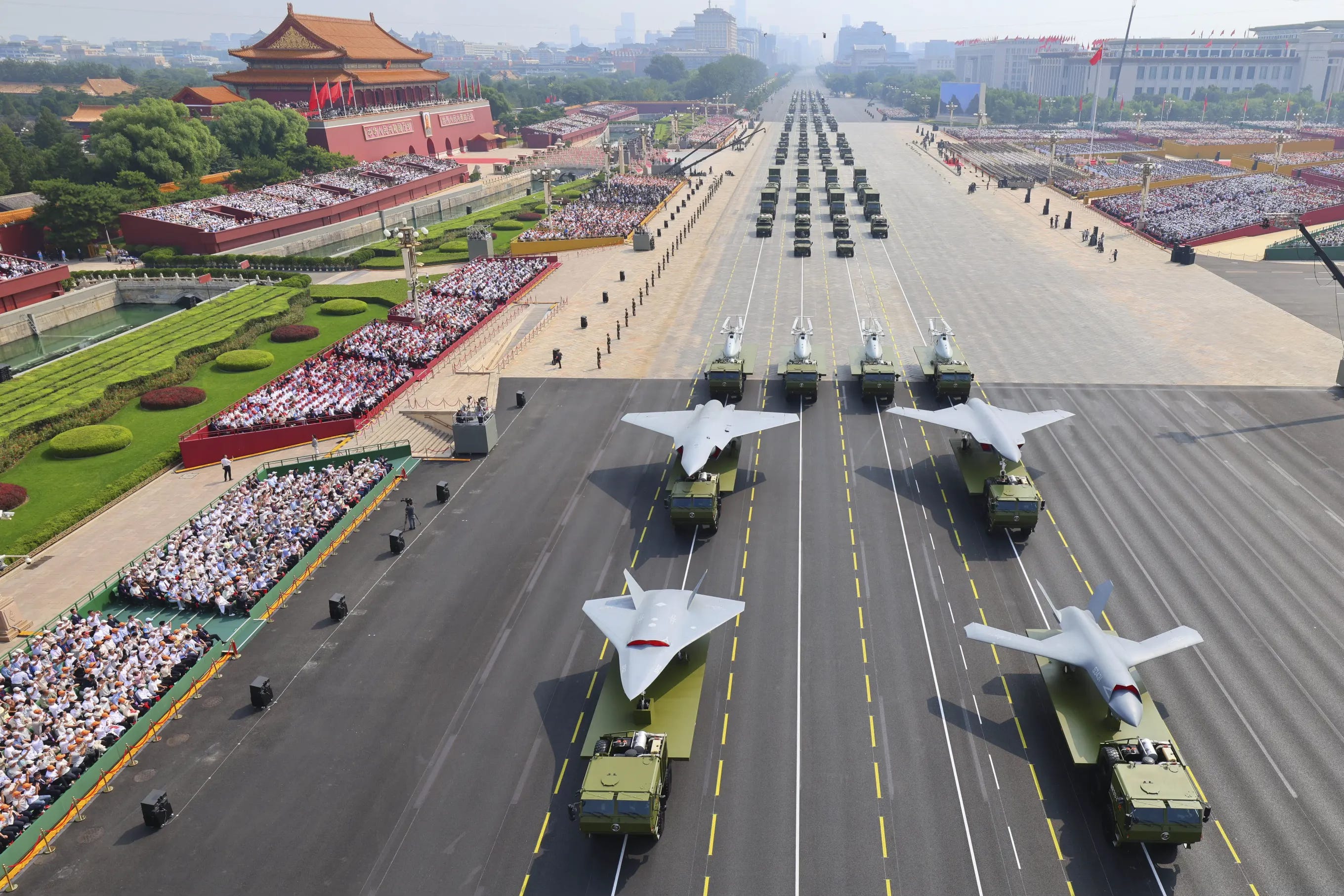
Washington’s strategic goal is clear: to weaken Russia in order to isolate China.
Depriving Beijing of its main ally serves to limit its global influence.
The United States is pursuing this strategy not only with Russia, but also with Iran—this time not through Ukraine’s hand, but Israel’s.
Have you noticed?
While the Ukrainians wear down Russia, Israel wears down Iran.
And if Venezuela has been making headlines lately, that’s no coincidence either: that country belongs to the group of nations on which China relies—and we can no longer afford to let Beijing lean even on a rusted crutch.
But like every long-term strategy, this one comes with a cost, and it may not be sustainable forever.
How long can we in the West keep playing the game this way?
And above all, are we sure it’s even working?
As 2026 approaches, I must admit that my doubts are growing.
When the gamble begins to creak
Until recently, I was convinced that the Western strategy was working—
that Russia was paying an enormous price, both economic and human, one that would eventually lead to its collapse.
Today, however, I’m no longer so sure.
Russia shows no significant signs of breaking down.
Its economy has gradually adapted to a state of permanent war; unemployment is at historic lows, largely because the working-age population keeps shrinking.
Industrial production is growing—though almost entirely in the defense sector.
Inflation remains high, interest rates are exorbitant, yet the state machinery keeps running.
In Russia, it has become nearly impossible to borrow money—stifling any chance of entrepreneurship, and with it, innovation.
Moscow does not seem ready to accept its fate; on the contrary, it appears to have embraced it.
History offers no shortage of nations that refused to surrender, even when defeat was inevitable.
One need only think of Hitler’s Germany, which chose to endure forty years of occupation and division rather than negotiate with its enemies.
And from Germany, we can draw another lesson.
During World War I, Germany seemed unstoppable—strong, organized, disciplined. Yet within a matter of weeks, that immense military and political apparatus collapsed in on itself, like a sheet of glass suddenly shattering.
Glass, after all, doesn’t bend gradually: it holds, it holds, and then it breaks all at once.
In a remarkably short time, Germany lost World War I—even though, only months earlier, nothing had seemed definitively lost.
Perhaps Putin’s Russia finds itself in a similar position today.
Under pressure, it holds out—hoping that it will be the other side, the West, that breaks first.
But if the tension keeps rising, it’s possible that, just as happened to Germany a century ago, the “crack” will come suddenly—when no one expects it.
Or perhaps that crack will come from Ukraine—or worse, from us.
Today, Russia is no longer fighting against Ukraine alone.
Russia is fighting the West, in Ukraine. The Ukrainians are the instrument, the blood, and the will.
Their dream of following the same path as the Estonians or Lithuanians is leading them, inexorably, to live through what may one day be remembered as the Ukrainian War of Independence.
Russia that doesn’t collapse: resilience or denial of reality?
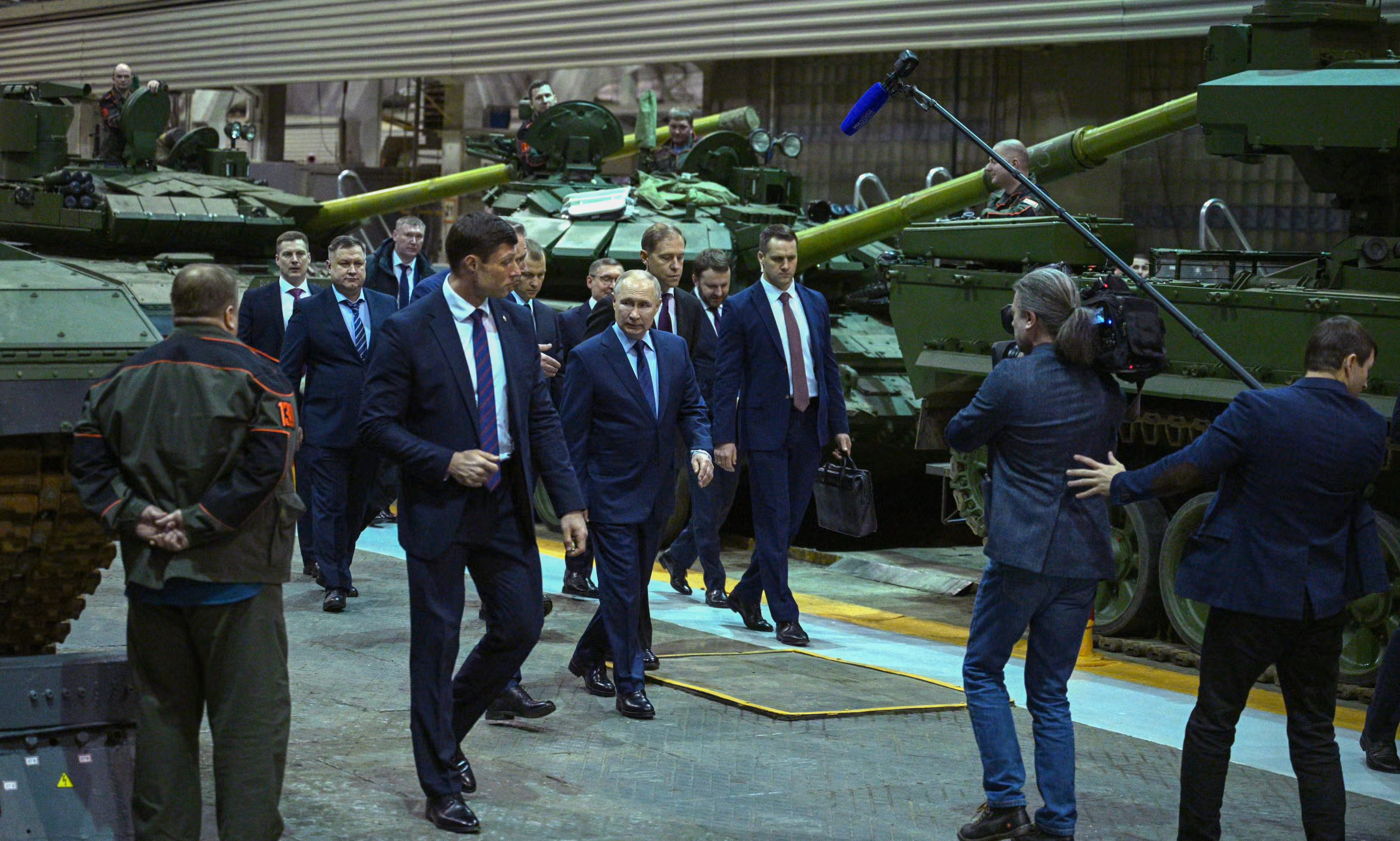
Russian factories now operate around the clock, even as the working-age population continues to shrink.
Yet, the Kremlin keeps projecting an image of stability, as if nothing could shake its internal order.
Propaganda does the rest: it builds a narrative of strength, endurance, and normalcy—one capable of sustaining public support despite fatigue and sanctions.
Perhaps the economic and social situation is far worse than it appears. Or perhaps it is the West that has overestimated its ability to wear the enemy down.
Just as I did with that lottery ticket, the United States and its allies may soon discover that their “winning hand” was never really a winning one.
As much as I’d like to believe that Western intelligence is the best in the world, no apparatus can predict the outcome of a war with precision—especially one that drags on for three, four, or five years.
The war in Ukraine was desired, perhaps provoked, and certainly exploited to our advantage—at least since the conflict shifted to the Donbas.
No American official—not even the most clear-sighted or well-informed—could have foreseen the situation we face today.
The variables were, and still are, too many.
And this, rather than a coldly calculated strategy, is simply a gamble.
A situation so advantageous that not even the most optimistic general could have dreamed of it.
The gamble continues—at least for now
It’s been about 1,350 days, and Russia has not collapsed.
1,350 days in which Ukrainians and Russians continue to die.
1,350 days in which drones keep taking lives, like in the most disturbing episode of Black Mirror.
After all this time, Ukraine still resists, but Moscow has not yielded either.
This is not a war that will produce a winner and a loser, but rather a loser—and an even greater loser.
For now, the only ones who might be gaining from this situation are we, citizens of the Western world, watching from afar—protected, or perhaps numbed, by our borders.
As at any gambling table, everyone keeps raising the stakes, convinced the other side is bluffing more.
But the danger, as always, is that the true loser is not the one who bets too much—but the one who no longer knows how to stop playing.
And as time passes, we wait to see whether we will truly manage to bend Russia, to cripple it just enough to make it useless as an ally for China.
In the meantime, I keep writing.
I do it driven by a desire for truth, and by love for a way of life built on freedom of thought and expression.
I hope that NATO continues to push even further East.
And now that this sentence has probably made some of you uneasy, I invite you to read more about me: only then will you understand that this line is neither propaganda nor political paradox.
Who I Am, What I Write About, And what you can learn

Hello, and thank you for stopping by my profile.
Per aspera ad astra.