
Tomahawks Will Weaken Ukraine and Strengthen the West
Ukrainians are sacrificing themselves for us

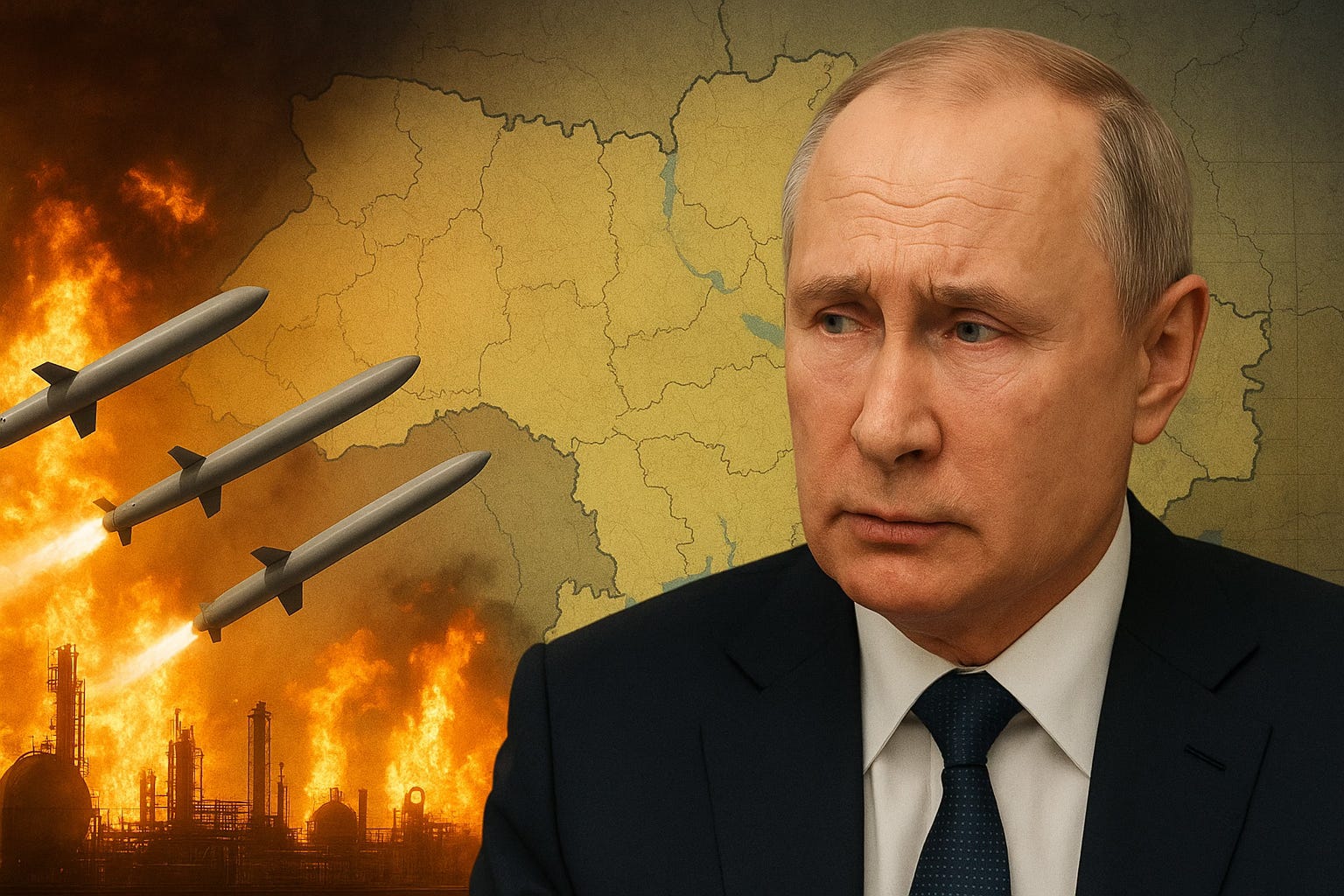
Tomahawks are American cruise missiles that, over the decades, have repeatedly demonstrated their destructive power and extraordinary precision. As a symbol of U.S. military projection, they have always embodied the very idea of technological strength in the service of deterrence.
For quite some time now, Ukrainian President Volodymyr Zelenskyy has been persistently urging the U.S. administration to supply Tomahawks to bolster Ukraine’s defense against the full-scale invasion launched by Russia in February 2022 — a war that, incredibly, is now approaching its fourth year.
While under Joe Biden’s presidency the delivery of such missiles was never authorized, the situation appears to be shifting: Donald Trump is reportedly giving serious consideration to finally granting Kyiv access to this class of weaponry.
The international public opinion immediately ignited. Some see this as a turning point, others as a restoration of balance, and still others as an act of strategic justice. Yet I cannot bring myself to view this development as a positive sign for Ukraine. Quite the opposite.
I have the distinct feeling that this move would benefit only the West — at the expense, sadly, of the Ukrainian people themselves.
Today I feel the need to speak about this openly, even if perhaps we are still not ready to confront this uncomfortable truth.
Are we truly sure that Ukraine isn’t sacrificing itself for us?
Do we genuinely want this war to end — or are we only pretending to want that?
Far from it.
As I have argued in previous articles, the reality is that the West — whether consciously or not — does not want this war to end. Rather, it wants to keep it alive for as long as possible. Because as long as the conflict endures, there remains a geopolitical balance to exploit, an interest to defend, and a narrative to control.
Tomahawks and How the Ukrainians Might Use Them
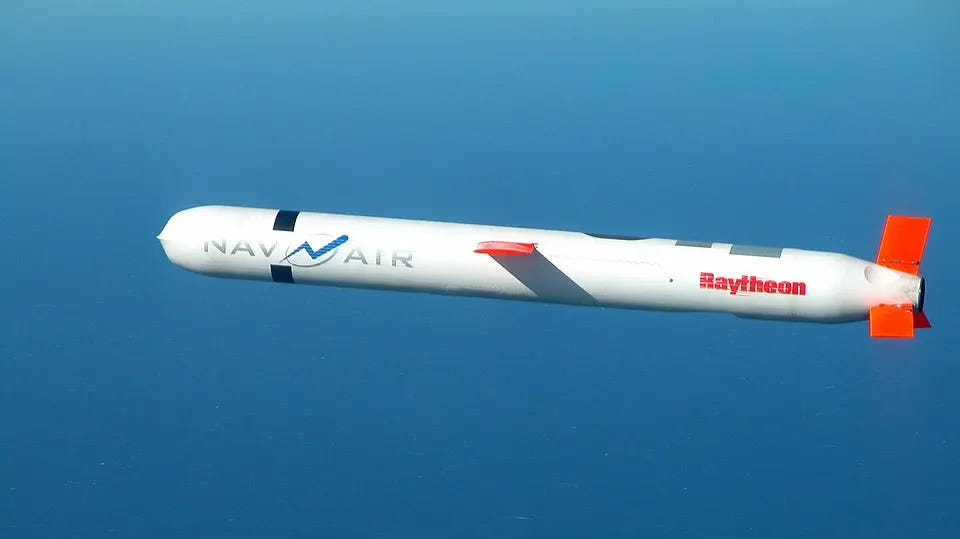
Tomahawks are cruise missiles — among the most iconic and feared in the modern Western arsenal. They can even carry nuclear warheads, but don’t be misled: they have never been used for that purpose. Their real defining feature is the ability to deliver large explosive payloads — about 450 kilograms (roughly 1,000 pounds) of destructive power.
For Ukraine, possessing such a weapon would mean the ability to strike deep with devastating potential. It would not be merely a tactical advantage: it would be a strategic game-changer.
Today we know that most Ukrainian deep-strike attacks focus on oil refineries, a chosen target for good reason. Those refineries are to Kyiv what sanctions are to the West: a means to weaken Moscow’s economic engine.
All joking aside, Ukrainians favor hitting refineries because Putin’s war machine relies heavily on exports of oil and petroleum products. Destroying those facilities not only reduces the Russian Federation’s revenues but also limits internal fuel supplies. This — inevitably — creates hardship for both the military apparatus and ordinary citizens, who find themselves without petrol, queuing for hours.
In recent weeks, especially in Crimea, footage of endless lines at petrol stations has revealed a symptom of a disease that is taking deeper root in Russian society: internal energy scarcity.
So let’s ask: what would happen if the Ukrainians continued to strike refineries with persistence, precision, and intensity?The consequences could be enormous. It would no longer be a matter of temporary damage, but of a structural wearing down of the Russian economy.
Now that would be a major operation, certainly not like the infamous Spider Web in June which, months later, proved to be a non-event.
(I was right.)
The Formidable Yet Pointless Ukrainian Attack on Russian Bombers:

There are moments in a war that mark a clear before and after.
Today, Ukrainians are already able to inflict serious damage on Russian refineries. But with Tomahawks, the outlook would change radically: we would no longer be talking about putting them out of action for a few weeks, but about leveling them completely to the ground. That would force Moscow into not a simple pause but a total reconstructionof its energy infrastructure.
Yes, it would be disastrous. Disastrous for Russia, but also potentially for the global balance of power.
Do You Think the Russians Would Stand By and Watch?
As we know, in life nothing comes for free: everything has a cost, often higher than we imagine.
What price must the Ukrainians pay to continue striking Russian refineries?
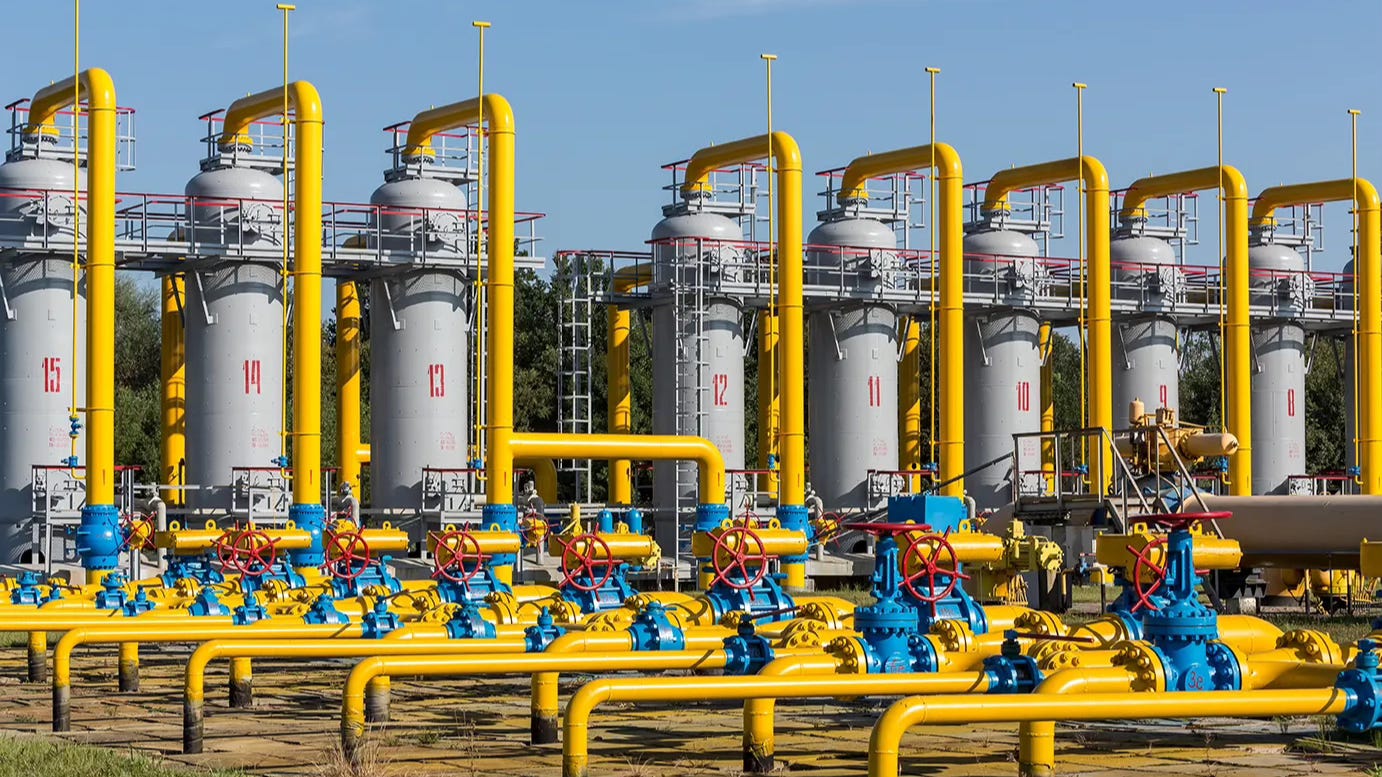
Even today, Ukrainian attacks force Moscow to adapt, to “patch up” the damage. But the Russian response has been swift: in retaliation, the Kremlin has intensified bombings of Ukrainian gas storage facilities and energy production plants intended for winter use. The result is both cruel and direct: a civilian population forced to endure freezing conditions.
This strategy is not new. From the early months of the invasion, the Russian army has systematically targeted power plants, pipelines, and critical infrastructure. The goal is clear: to break Ukrainian resistance not only on the battlefield but in everyday life.
Ukrainians, however, have adapted. They have learned to live with the emergency, placing their hopes in electric generators and makeshift solutions. It is a tremendous price, yet one they continue to pay with almost stoic determination.
This is the true cost of raids against Russian refineries: accepting the certainty of retaliation and the consequent need to survive with precarious means, even in the dead of winter.
But what would happen if Kyiv went beyond merely damaging refineries and began destroying them completely? How would the Kremlin respond to such a blow?
It is hard to imagine a “contained” Russian reaction. On the contrary, such an escalation would make strengthening Ukraine’s air defenses even more urgent — a priority that grows by the day.
And the Ukrainians know this. The very fact that they are pressing so hard for the delivery of Tomahawks proves that they have already factored in the price of potential retaliations. They know what lies ahead — and yet they choose to continue.
Why Tomahawks Would Not Benefit Ukraine
Let’s get to the elephant in the room: why striking and destroying more refineries would not actually benefit Ukraine.
Start from a premise too often forgotten in public debate: Kiev’s strategic objective, beyond the vital goal of surviving and preserving its independence, is to reclaim as much territory as possible. Liberating occupied areas is not only a matter of borders but one of identity, national dignity, and political survival for Ukraine’s leadership.
Yet, looking frankly at the kind of war being fought today, it is far from clear how hitting and demolishing Russian refineries would concretely serve that objective.
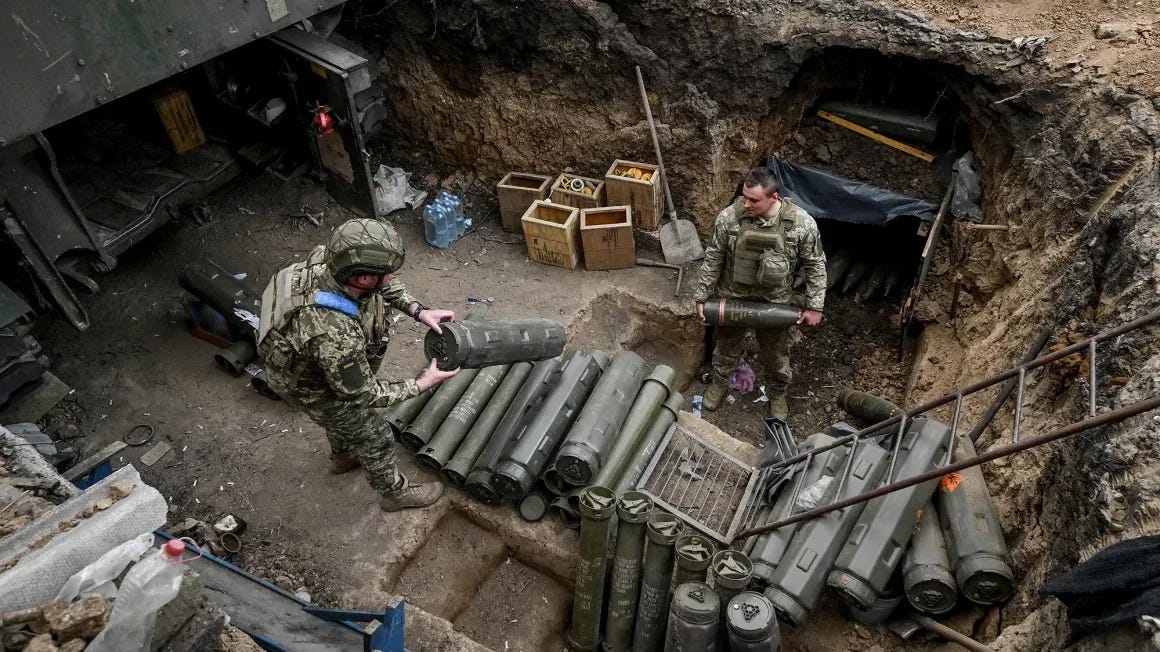
Frontline dynamics have changed radically. Motorized operations are now minimal: heavy vehicles, tanks and armored columns are rarely seen except in isolated instances. Terrain, ravaged and littered with mines, makes large mechanized maneuvers impossible. The war is fought at the infantry level, with small groups of soldiers moving in trenches, in dugouts, or among the ruins of villages that no longer exist.
And above all, it is a war dominated by drones.
Kamikaze drones, reconnaissance drones, FPV drones: they set the tempo of the conflict. Today the contact line is made up of small drones that track you and kill you.
(Black Mirror is no longer just a TV show)
Just open X (formerly Twitter) and you’ll see it: full of footage showing Ukrainian FPV drones crashing into dismounted Russian soldiers or small moving vehicles. Often those vehicles are motorcycles or quads used to move quickly between trench lines. This is the reality of contemporary war in Ukraine: close-quarters fighting under constant aerial surveillance.
In this context, limiting fuel availability in Russia would not change the tactical situation on the ground. It would not help Kiev to reclaim occupied territory, because fuel shortages would affect the Russian economy far more than frontline operations directly. At best, an energy shortfall could indirectly weaken Russian logistics or slow production of vehicles, but it would not magically turn a static conflict into a victorious counteroffensive.
Here is the point: destroying refineries would not advance Ukrainian troops; at most it would help consolidate defensive positions.
It might be useful to contain the adversary, not to reconquer.
The main effect of such a missile campaign would be to reduce the Russian Federation’s revenues, limiting its economic resources and its ability to finance the war. In other words, it would be a move aimed more at wearing downRussia than at immediately changing the geography of the front.
So the inevitable question is this:
Would this strategy truly benefit Ukraine?
Or would it instead risk exposing Ukraine to even fiercer and more destructive reprisals, directed precisely against the civilian population that already lives daily under the threat of Russian missiles?
One thing is certain: every blow dealt to Moscow has a price. And that price is paid by the Ukrainians themselves, not by us.
Why Tomahawks in Ukraine Would Benefit Only Us Westerners
As I have often explained in my articles, this war long ago stopped being a war of movement and has become a very long war of attrition, in which the Russians struggle to advance and the Ukrainians, thanks in part to Western support, have turned the contact line into a gigantic meat grinder: a place where lives, souls, tanks, aircraft and drones are destroyed.
It is no longer just a war. It has become a global military laboratory, an open-air experiment that the world watches, studies and learns from.
A laboratory that serves us — the West — to understand how one fights in the third millennium, to test new technologies, tactics and weapons.
The Ukrainians, by contrast, fight on their own soil. They live under constant threat, trying to resist, to defend their sovereignty, and hoping — with an almost desperate determination — to retake at least part of the lost territories.
The United States knows this. And they are exploiting the situation: they use Ukraine as an outpost, as a tool of pressure to wear down Russia without committing their own troops directly. It is an old but effective strategy: strike the enemy by proxy, weaken it gradually, consume it from within.
And yet Russia is still far from that famous “collapse” people have been talking about for four years. Despite sanctions, despite casualties, Moscow endures. But wars — all wars — are costly. And Russia cannot sustain such an economic and human effort forever.
They are alone putting in the money; we are thirty. Thirty of the richest countries in the world. Behind Ukraine stands the best of the global economy. Who does Russia have? No one!
This is where our game is played: we Westerners are investing in this meat grinder to wear down the Russian machine, pushing it to spend immense resources in exchange for marginal results. Every missile fired, every tank destroyed, every attack repelled slowly corrodes the Kremlin’s ability to finance its army.
The objective is clear: weaken them today, to avoid them tomorrow.
Reduce Russian strength to the point of making it incapable of facing a future direct conflict with NATO.
Because yes, even if Ukraine will not formally join NATO, NATO is already in Ukraine, and has been for some time. With its weapon systems, its advisers, its intelligence, its logistics and — above all — a river of money.
Rivers of beautiful green dollars and sky-blue euros.
And it is precisely in this context that we must place the news about the Tomahawk.
If these missiles will not allow the Ukrainians to retake territory, they will allow us — the West — to be even more aggressive, more incisive, more audacious toward an enemy that risks running out of fuel. Or at least of cheap fuel.
In 2014, Senator John McCain described Russia as:
A gas station run by a Mafia that is masquerading as a country.
And I would add: an armed filling station with nuclear warheads.
It would be truly ironic — and in some ways paradoxical — to see Russia, which for decades dominated global energy markets, grappling with fuel shortages.
Do not misunderstand me: the Ukrainians are not naive. On the contrary, I believe the exact opposite. They are aware of the risks, but also of the opportunities. Their goal is not only to defend themselves, but to bring the Russian finances to their knees, undermining the economic engine that feeds the army.
I do not think this would spark popular uprisings in Russia — the population is accustomed to sacrifice — but it could certainly weaken the war machine, which needs money, fuel and logistics to operate.
And here a crucial point must be recalled: almost all Russian fighters today can be considered mercenaries. Few fight out of conviction, very few out of patriotism. Most fight for money.
The Russian state promises huge payments to soldiers and their families. But those who fight for money will stop when the money runs out.
Those who fight to defend their home, their family, their freedom, will fight even without pay, even with bare hands.
And that, ultimately, is the great difference between Ukrainians and Russians.
So, these Tomahawks?
Yes, I hope they arrive.
I hope they do damage, and heavy damage.
I hope they serve to shut down the Mafia-run filling station that has posed as a global power for decades.
Per aspera ad astra.
Look me up on my social media. → LINK.