
The U.S. Has Finally Struck Iran.
The Three Nuclear Military Facilities Are Gone.

We’d love to say it came as a shock. That no one saw it coming, that it caught us all off guard. But that wouldn’t be true.
For days, the entire world had been holding its breath. The signs were there—clear, tangible. U.S. aircraft were on the move, and they weren’t flying drills. On OSINT channels, between tracking maps and suspicious flight paths, the information was breaking through: something was about to happen. And that “something” happened.
Last night, the United States struck Iran. And they did it live.
In an era where even the sky has eyes, nothing truly moves in the shadows anymore. Not even stealth bombers. It’s now possible—at least partially—to track what’s flying above our heads, and not just commercial flights: military ones too. The technologies that enable this are within everyone’s reach, which is exactly why states work so hard to muddy the waters, to protect the fog of war.
And yet last night, something leaked through. We witnessed a historic event in real time. The American bombers even played a game of cat and mouse: false routes, diversion maneuvers, sudden radio silence. But by then, we knew. We all knew.
We knew it from our homes, glued to radar maps and live feeds.
The Iranians knew.
The Israelis knew.
But what must it have felt like for those pilots, knowing thousands of eyes were on them? Flying not just over hostile territory, but directly into the gaze of half the world?
Then, the confirmation arrived. Directly from President Trump, in a short evening address: three Iranian nuclear facilities struck and destroyed.
The details? Still scarce. Satellite images in the coming days—just like with Ukraine’s strikes on Russian bombers during Operation “SpiderWeb”—will tell us more. But one thing is certain: not much is left of those structures.
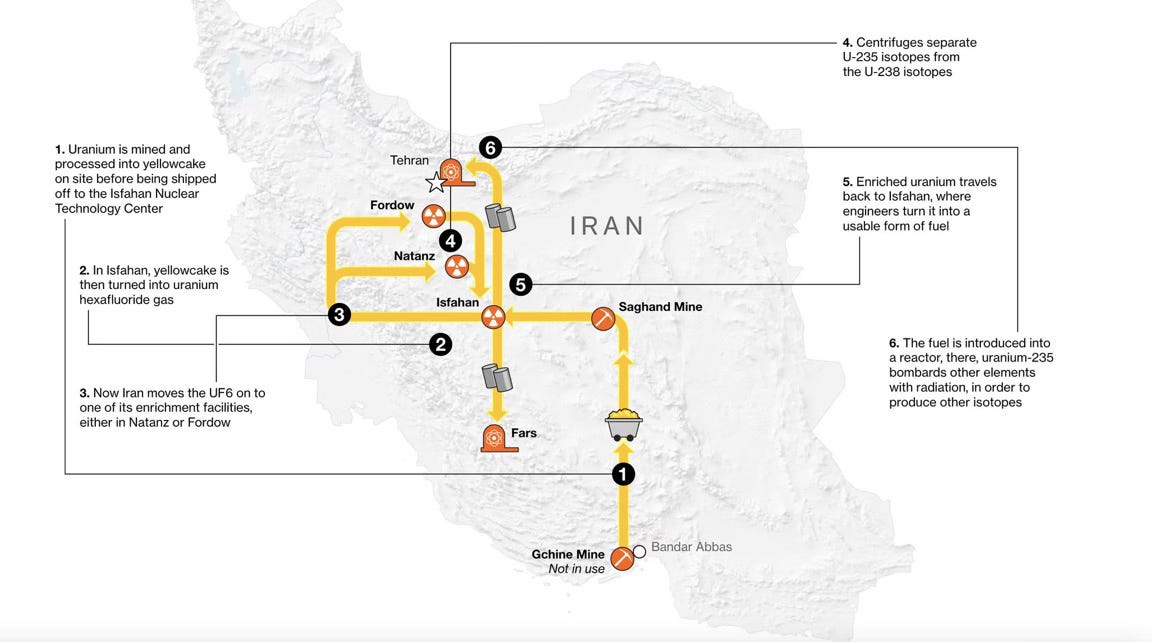
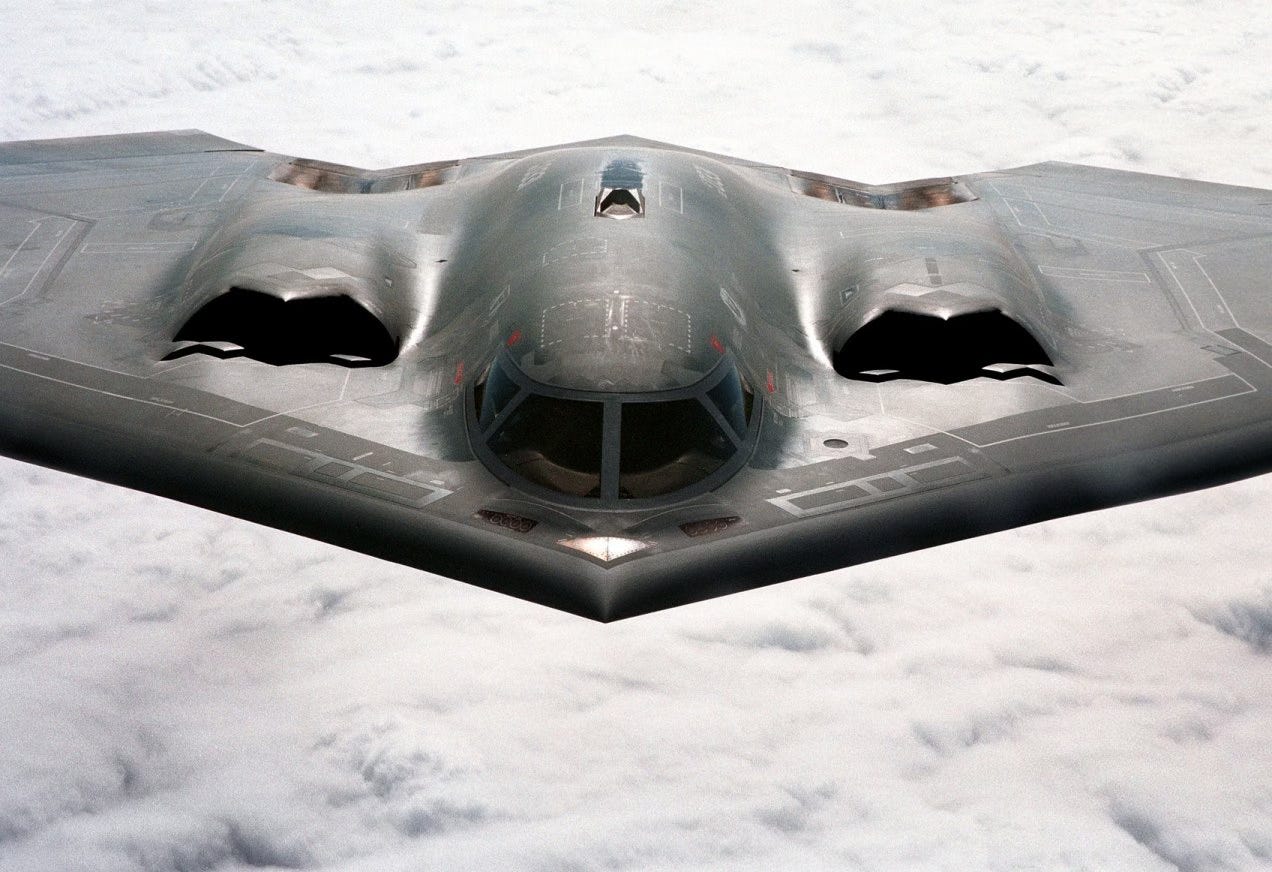
According to early reports, 6–8 B2 Spirit bombers and 30 Tomahawk cruise missiles were used. Before-and-after images of the sites are already circulating, but it’s still too early to assess the real extent of the damage—or to know whether Iran managed to evacuate its tech in time.
Maybe they saved something. Maybe not. But that’s not really the point today.
The immediate consequences are obvious: a severe, possibly devastating, blow to Iran’s nuclear program.
But the deeper consequences, the second-order ones, are even more intriguing.
Because this attack doesn’t just target Tehran and its proxies. It’s also a direct message to Russia and China, Iran’s long-time allies. And so the question arises: is this the moment when the so-called “free world” finally decides to raise its voice? To stop taking hits and start striking back?
Because yes, in recent years, we’ve been on the receiving end: the attacks on Ukraine, and then on October 7, are not isolated events. They’re linked—part of something much bigger than a “simple” invasion or a terrorist attack.
If that’s the case, we may be witnessing the beginning of something far larger.
A long conflict. The reaffirmation of the current world order. Perhaps even the erasure of Iran as we know it today.
For now, one thing is certain: last night, the United States changed its pace. And no one will ever again be able to say they didn’t see it coming.
As always in my writing, I express strong, clear views that break away from mainstream narratives. I’m not always allowed to do so. If you appreciate this approach, I invite you to subscribe for free so you won’t miss future updates. Thank you.
Iran, the Hybrid, and the Shadows: The True Face of the Threat
When people think of the Iranian threat, the collective imagination immediately jumps to the atomic bomb. To that image of the ultimate weapon, capable of wiping out entire cities and upending geopolitical balances by its mere existence. And yet, paradoxically, it’s not the atomic bomb that represents the real face of the Iranian threat.
Tehran's real power lies elsewhere: in hybrid warfare.
A subtle, ambiguous form of conflict that slips through the cracks of international law and the folds of collective conscience. An art Iran has perfected over the years, using paramilitary groups and terrorists as pawns — unofficial forces, yet perfectly aligned with its strategic interests.
Hamas, Hezbollah, the Houthis: names that are now part of our everyday vocabulary.
They’re not regular armies. They don’t wear uniforms. They don’t follow any honor codes of war (if such a thing even exists).
They fight in the shadows, target civilians, blend in with the population — and they do it with pride.
It’s war, but a war with no face.
And that’s exactly the aspect that deserves the most attention today, in the wake of the U.S. strikes.
Yes, Iran’s nuclear program may have taken a serious hit, but Tehran’s real response might come from another direction: the reorganization and activation of its proxies.
Think of the Houthis and what they’ve done in the Red Sea.
In just a few months, they’ve crippled one of the world’s most vital maritime corridors. Cargo ships blocked, threatened, attacked.
The result? Naval traffic rerouted, forcing vessels to sail around the entire African continent. A costly, time-consuming, and strategically unsustainable detour.
Direct consequence: a steep rise in transportation costs.
Indirect consequence: a spike in consumer prices.
And the victims? Always the same. Us, European citizens, who end up paying the price for a war that happens far away but hits us right in the wallet.
Then there’s the conventional military dimension.
Today, Iran is literally surrounded by American bases: in Iraq, the Persian Gulf, and neighboring countries.
Will it be bold enough to strike them directly?
It might. But would it be worth it?
A frontal attack on U.S. installations would give Washington the perfect excuse for a large-scale escalation. And Tehran knows full well that this time, America might not stop at just three bombings.
And yet, there are signals. The U.S. is evacuating non-essential personnel, repositioning assets, diverting weapons originally intended for Ukraine toward the Middle East.
A sign they’re expecting retaliation. And when even the cautious start to dig in, maybe something really is brewing.
There’s another card on the table too: oil.
Iran is a major producer and could use black gold as a political weapon. A surge in prices would severely hit Europe, still far too dependent on external energy sources.
A war without bombs — but one that empties wallets and fuels inflation.
And who stands to gain from such a scenario?
The answer is almost ironic: Russia.
With its fleet of shadow ships, Moscow manages to sell oil while evading sanctions.
High prices mean higher profits — especially in a market where scarcity equals value.
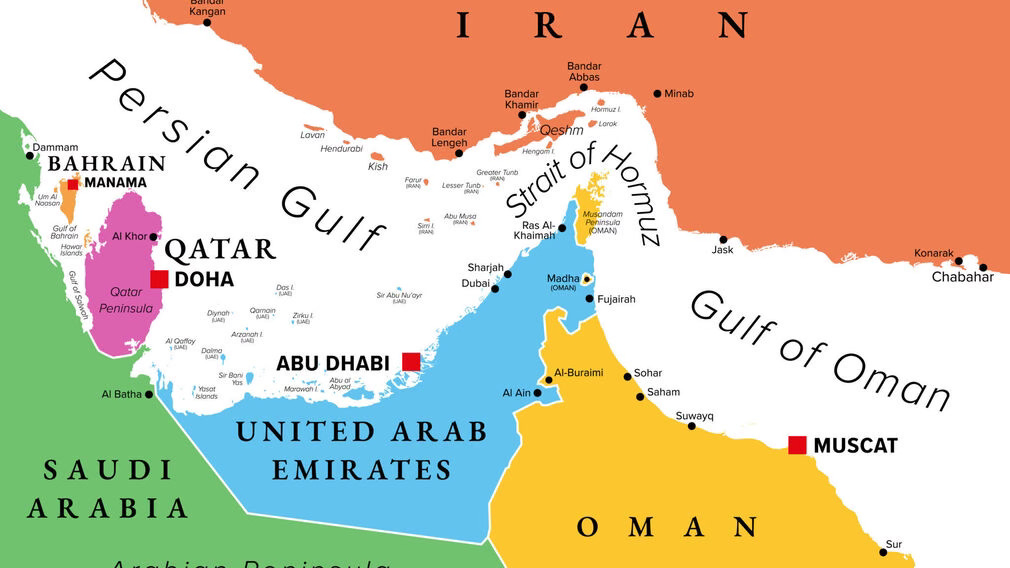
Finally, there’s the true chokepoint of global maritime trade: the Strait of Hormuz.
A stretch of water as small as it is strategic.
This is where oil exports from countries like Kuwait, Qatar, and the UAE pass through.
On one side sits Oman. On the other, Iran.
Whoever controls the strait controls the energy flow toward the Indo-Pacific.
Tehran could decide to shut it down — even partially.
Or, more likely, make it dangerous, unstable, unpredictable.
A strategy we've already seen in the Bab el-Mandeb Strait, where the Houthis have turned the Red Sea into a grey zone between war and piracy.
In this context, it’s clear that Iran’s real strength isn’t in showing its power, but in its ability to sow instability without ever officially taking responsibility.
A power that thrives in chaos, feeds on ambiguity, and can plunge entire continents into crisis… without even firing a shot.
By now, it's clear: we still don’t know much about this attack — let alone what its consequences will be. So let me take this opportunity to raise some questions. Questions that are just as uncomfortable as they are relevant.
Three uncomfortable questions no one (yet) has answered
Behind official statements, blurry satellite images, and triumphant headlines lies an emptiness. A deafening silence.
Because there are three questions, simple yet explosive, that — unsurprisingly — no one has answered clearly.
And it doesn’t feel like an oversight. It feels like caution. Or worse: fear.
1. Did the bunker busters really break through Fordow… or did they just bounce off?
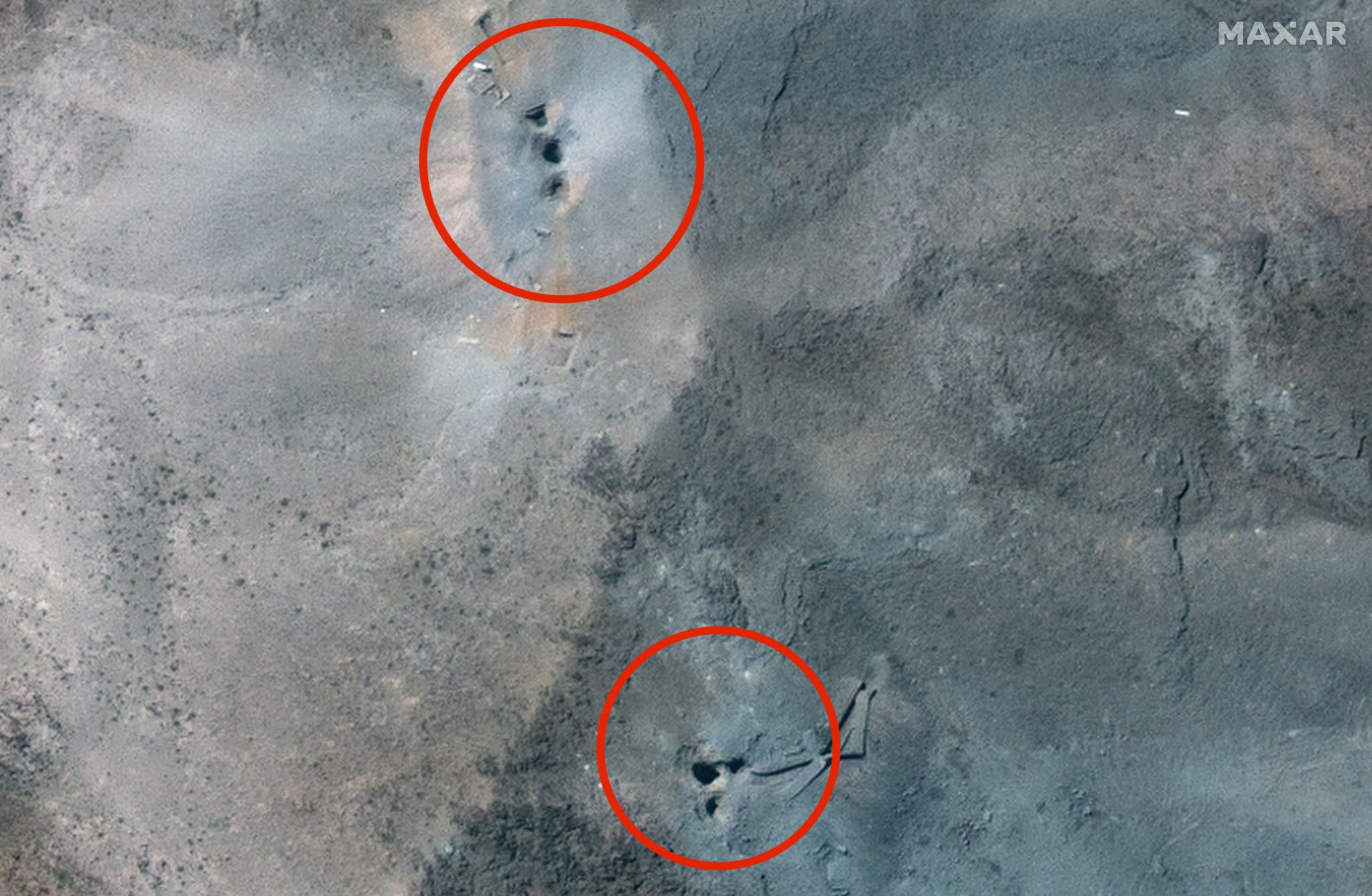
Fordow isn’t just any base — it’s a fortress carved into the rock, a nuclear sanctuary buried deep within Iran’s mountains. It’s the symbol of how vulnerable Iran feels… and how determined it is to protect what truly matters.
The Americans dropped their best bombs — those that, on paper, can punch through bunkers buried dozens of meters underground.
But are we sure they did their job?
Or was it just a show for the press, while the core of Iran’s nuclear program keeps pulsing, untouched, beneath tons of solid rock?
2. What the hell was removed from Fordow in the days before the strike? And why is no one talking about it?
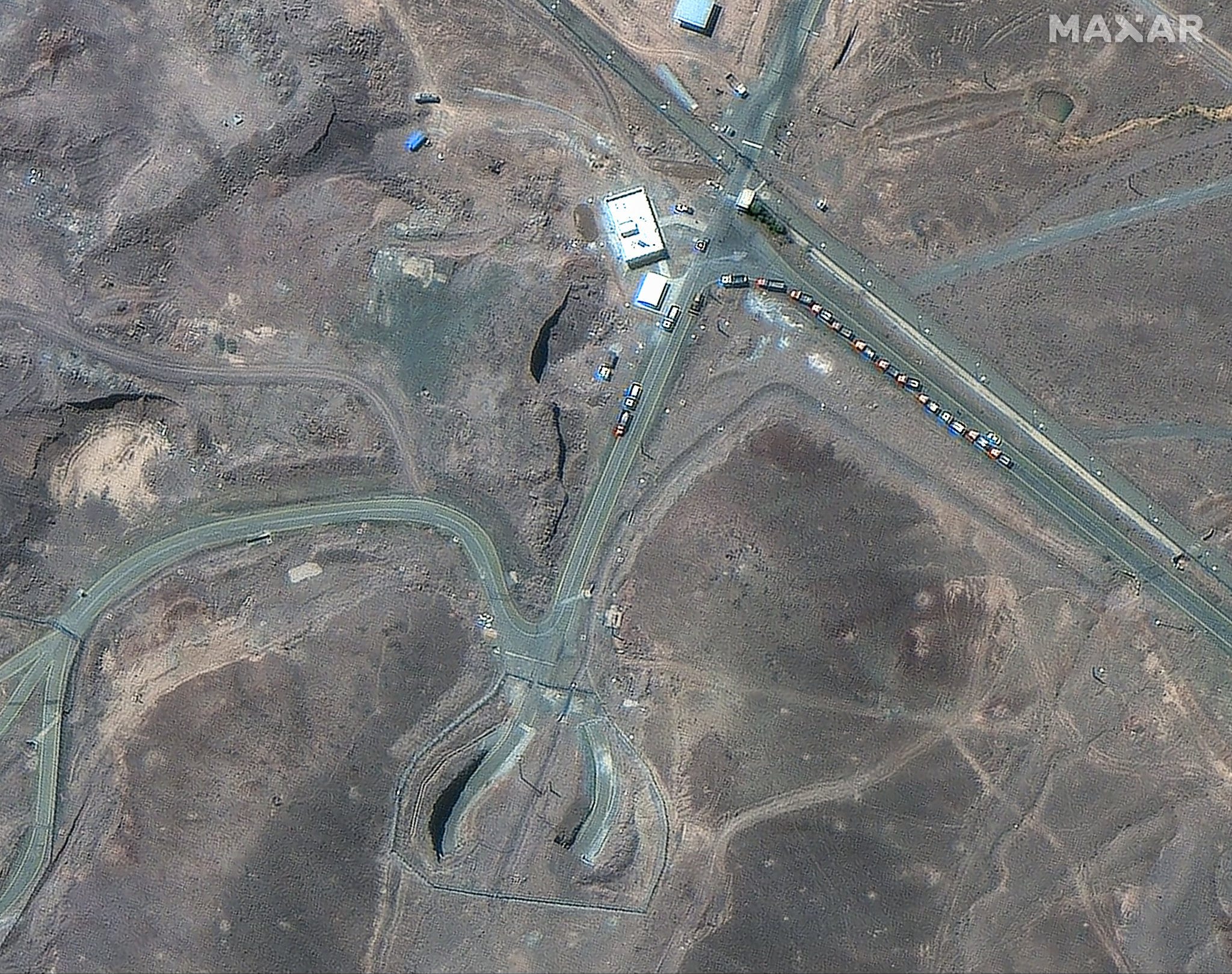
In the days leading up to the strike, there were unusual movements. Trucks. Convoys. Personnel leaving the site.
Coincidence? Perfect timing? Or did Iran know exactly what was about to happen and made sure to secure what it couldn’t afford to lose?
The question is as obvious as it is unsettling:
How much nuclear technology, how much uranium, how many secrets were taken out of Fordow… right under the eyes (or the nose) of Western intelligence?
3. What happened to the enriched uranium from Isfahan? Gone. Vanished. Hidden?
This isn’t speculation. It’s about hard data: 60% enriched uranium. Material that’s one step away from weapons-grade.
The IAEA had tracked it. Then… blackout.
After the bombings, no one’s been able to confirm its current location.
Was it destroyed? No proof. Was it transferred? No one says. Is it still there?
And so the question becomes blunt, yet inevitable:
Are we really looking at a military success...
Conclusions: Iran is just one of the hydra’s heads
I hope this article has not only brought some clarity, but also asked the right questions when propaganda runs wild.
This isn’t just about targeted strikes or retaliation. It’s not just front-page geopolitics. It’s something much bigger. It’s a global showdown.
Iran, as I’ve explained in earlier articles, is not merely a rogue state blinded by fanaticism.
It’s an active part of a very specific bloc — an informal yet increasingly cohesive coalition that, in the medium term, has a clear goal: to overthrow the US-led world order.
Some prefer to call it a “multipolar world.”
But let’s be honest: it’s a systemic attempt to overturn the status quo.
And in this effort, Iran is far from marginal.
It’s a pillar.
On one hand, it supports the Russian war effort — supplying drones, ammunition, and technology.
On the other, it fuels China’s industrial machine by selling raw materials at rock-bottom prices, dumped out of necessity, under the pressure of sanctions.
It has no choice. Which makes it the perfect tool for anyone wanting to chip away at Western hegemony.
Russia, China, and Iran don’t love or trust each other. But they tolerate, fund, and shield one another. They’ve realized that friendship isn’t needed when there’s a shared enemy.
That’s why striking Iran isn’t just a regional move.
It’s a global strategy.
It’s severing one of the hydra’s heads.
A blow that, over time, can weaken the entire organism. Because a Russia bogged down in a war of attrition needs all the help it can get. And taking Iran off the board means one less resource, one less flow of weapons and tech — a structural weakening of the anti-Western axis.
The US knows this well. And they also know that Iran isn’t just a threat to its neighbors (like Israel or Saudi Arabia).
It’s a problem for everyone.
Just ask the Ukrainians, who watch Russian drones — made in Iran — fly over their heads each day, spreading death and doing far too much damage.
This is the new face of global warfare: a network of toxic alliances, fed by desperation, ideology, and opportunism.
Cutting one of the nodes — today, Iran — could slow the entire machine.
No one knows where the next crack will appear. But one thing is certain: it’s already forming.
And so it must be said — maybe not officially, but unmistakably — a new kind of war may already have begun: a hybrid between a second Cold War and a third World War.
I’ll stop here for now. If you appreciated this analysis, I invite you to support my work by subscribing for free and sharing these words with someone who’s wondering what’s really going on.
Per aspera ad astra.