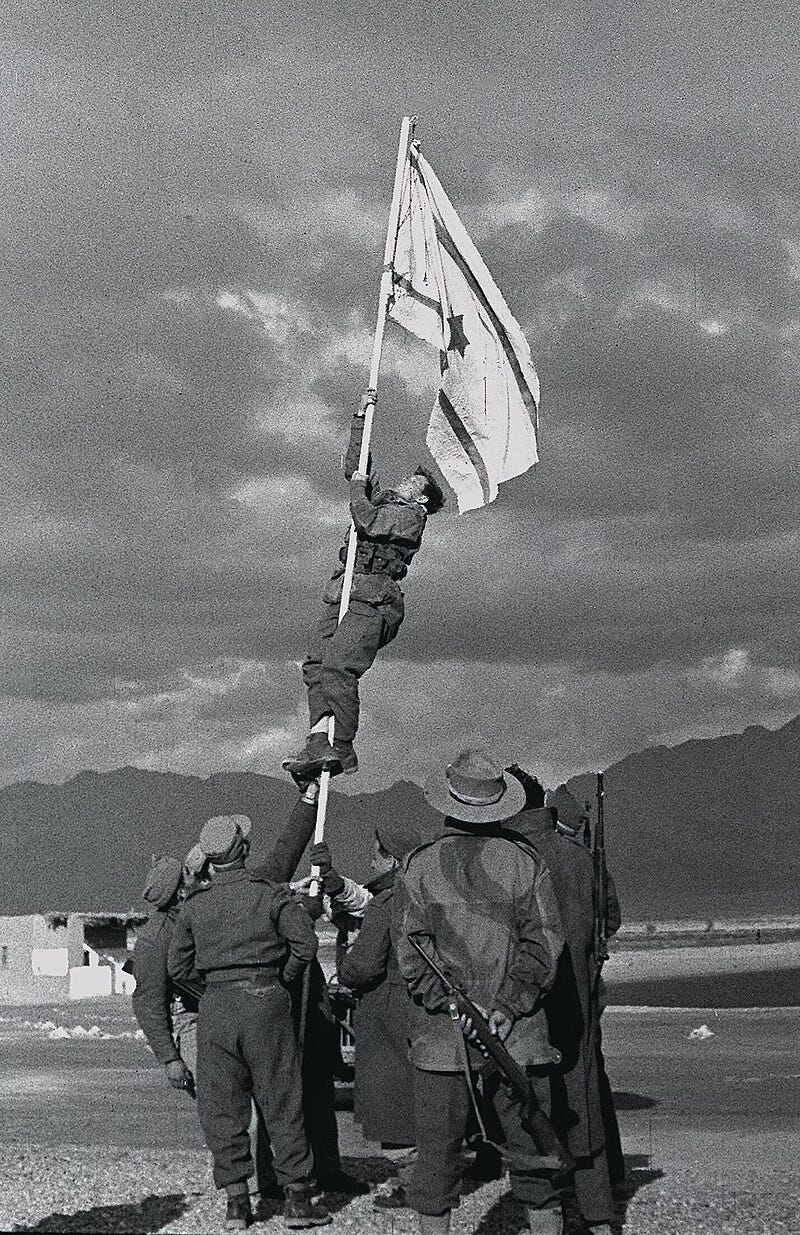
The Story of How (European) Zionists Colonized Palestine
Yes, through terrorism too—not just by buying land.

Have you ever heard Israel described as an occupation?
Maybe someone you know—or maybe even you—has called Israel an illegitimate state.
"The occupiers"?
I have.
I often hear people talk about Gaza or the West Bank as occupied territories, places patrolled by the IDF and dotted with settler outposts.
The same goes for the Golan Heights: they’re frequently referred to as occupied too.
And yet, I fundamentally disagree with that label.
Israel doesn’t occupy.
Israel conquers.
It conquers through war, through violence, through domination.
Through blood. Through pain.
(And through money. Lots of money.)
Starting in the 1880s, Zionists began legally purchasing unproductive plots of land—often swamps—which they then drained and cultivated. That’s how the first settlements were born, encouraging more European Jews to immigrate.
But when tensions rose beyond the breaking point, and it became impossible to buy land—not even for its weight in gold, quite literally—that’s when force took over.
Violence stepped in.
And at this point, you might think this is a pro-Palestinian article.
You might assume I’m saying:
“No, they don’t occupy. That would be too simple.
They conquer through violence. Which is worse.”
But that’s not it.
Palestinians are no better than Israelis.
Every time they’ve had the chance, they’ve tried to conquer by force too.
They just haven’t been very successful at it.
This article is the first part of a two-part series.
My goal?
To show you that Israel doesn't merely occupy: it colonizes.
It conquers.
And it does so with the intent to stay.
At the same time, I want to show you that Palestinians, whenever they had the chance, did the same.
And above all, I want to share a truth many would rather ignore:
Terrorists aren’t only found in Hamas.
Throughout the history of the Holy Land, Zionists too have committed numerous acts of terrorism.
If you're an extremist—pro-Israel or pro-Palestine—be warned:
I’m coming for you.
Cards on the table.
With facts. With evidence. With uncomfortable truths.
But if you’re not blindly taking sides, if you’re after complexity rather than slogans, chances are this series of articles will speak to you.
Because it aims to show that neither side holds any real moral high ground.
Even though both sides love to pretend otherwise.
“But what about the hostages...”
“Yeah, but the Nakba...”
Those Israelis and Palestinians who take up arms, who feed hatred, who sow death...
are mirror images of each other.
Reflections.
And the ones who always pay the price are the moderates—Arab and Jewish alike.
Every time.
What does this article cover?
In this first part, I’ll walk you through the birth of Israel: from the early Jewish settlements to the War of Independence.
We’ll talk about terrorism, about violence, about blood spilled on both sides.
In the second part, we’ll look at how—through violence—both Jews and Palestinians tried to seize land. ⬇️
How Palestinians accuse Israel of doing what they themselves also tried to do: invade and conquer—but mostly failed.
And finally, how Israel is a legitimate state just like Russia, France, or the United States—nations that also built their histories on violence.

Hypocrisy?
You be the judge.
For now, let’s focus on the history—and don’t miss part two. It only gets more interesting.
Writing pieces like this doesn’t come easy.
There’s a reason you don’t see many out there.
Putting myself out there like this invites harsh criticism—and often insults—from both camps.
But staying silent today means becoming complicit.
If you found value in this piece, I invite you to support this publication:
Subscribe for free and share the article with someone who might appreciate it.
Your support is crucial.
Being independent today isn’t just a choice—it’s a necessity.
Only by doing so can we break free from the mainstream media narrative, which too often offers partial, convenient, selective truths.
The History of Zionism: From Russian Pogroms to Irgun Terrorism
1875
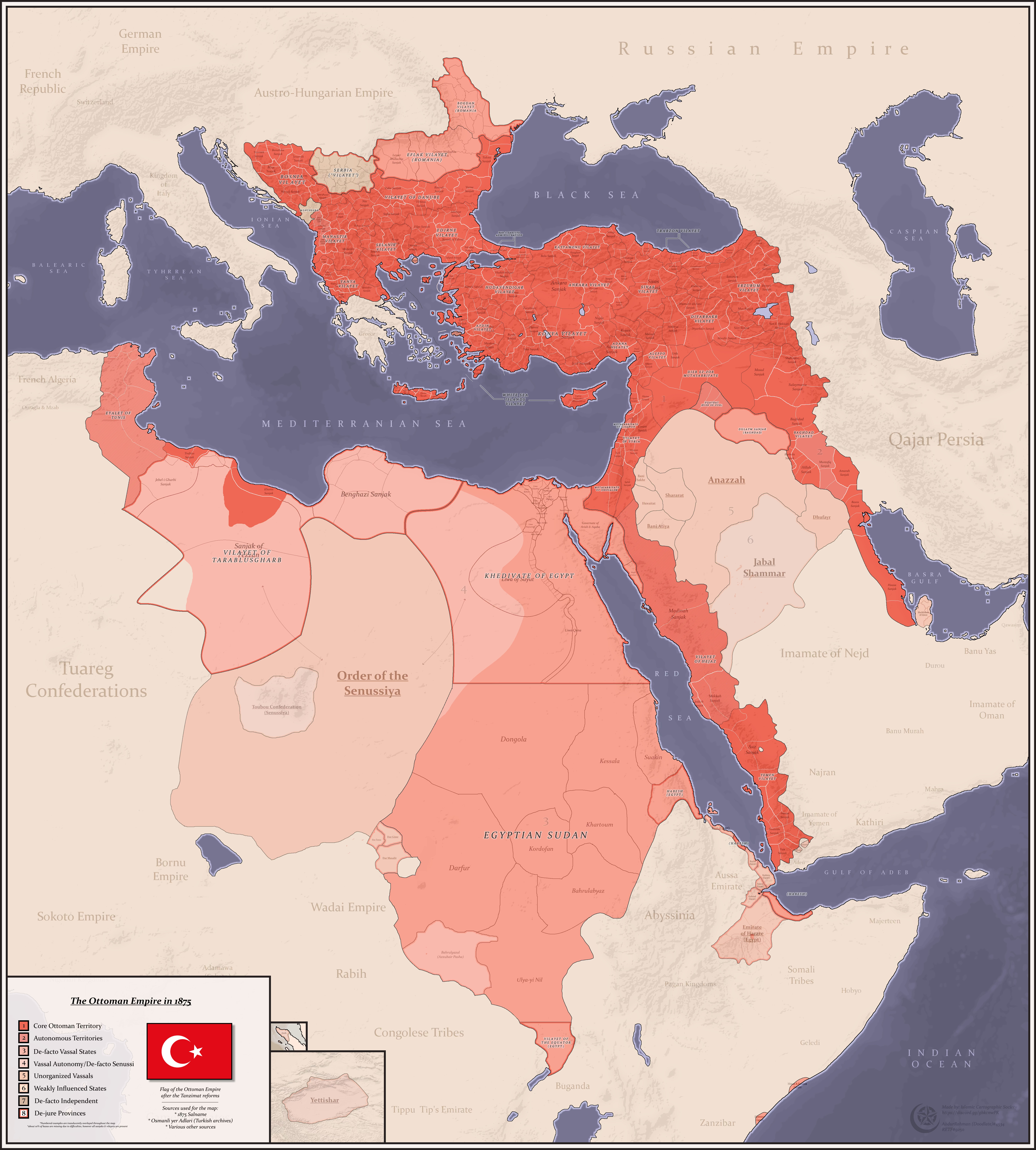
What you’re looking at is a map of the Ottoman Empire in 1875.
In the context of this article, the Ottoman Empire isn’t the main focus.
But one detail is crucial: the Palestinian territories.
The term Palestine has geographic significance, not political.
It refers to a region of the world, but it did not—and never had—corresponded to a sovereign state.
As the map shows, in 1875 these territories were directly administered by the Ottoman Empire.
There was no Palestinian state.
There never has been.
1881
Let’s jump ahead a few years—to 1881.
In Russia—and soon across Europe—anti-Jewish sentiment, which had never truly vanished, begins to intensify.
The pogroms of 1881 erupt: brutal attacks targeting Jewish communities.
Many Russian Jews, hunted and persecuted, flee their homelands.
They escape far, but not too far.
Where do they go?
They leave the Russian Empire and enter the domain of another empire: the Ottoman Empire.
More specifically, they head to the Holy Land—to Palestine.
There, they find a small Jewish community already living there.
A modest group, but a historic one.
Let’s not forget: the Jewish people have long been a wandering people. They were everywhere. Including in Palestine. In small numbers, they had always been there.
Together, they begin to form small settlements—groups of dozens, maybe hundreds of people at most.
Not yet colonies. Not yet towns.
But the foundations of something that would grow.
1882–1896
These were the years of Practical Zionism.
In every era, in every corner of the world, every Jew has always known of the Holy Land.
And deep down, they’ve always harbored the hope for a place of their own.
A safe space. A place to call home.
It’s from this centuries-old yearning that Practical Zionism emerged—a movement built not on declarations, but on concrete actions.
At first, there was no intention to oust the Ottomans, and certainly no plan to found an independent state.
The early groups of European Jews who arrived in Palestine did so by buying or leasing land—often barren or swampy—to reclaim and cultivate.
They simply wanted to live. In peace.
With the blessing of the Ottoman Empire.
And in harmony with the local Arab population.
For about fourteen years, these small groups of refugees fleeing the pogroms focused on farming.
No demands. No conflict.
Just labor.
Just survival.
1897
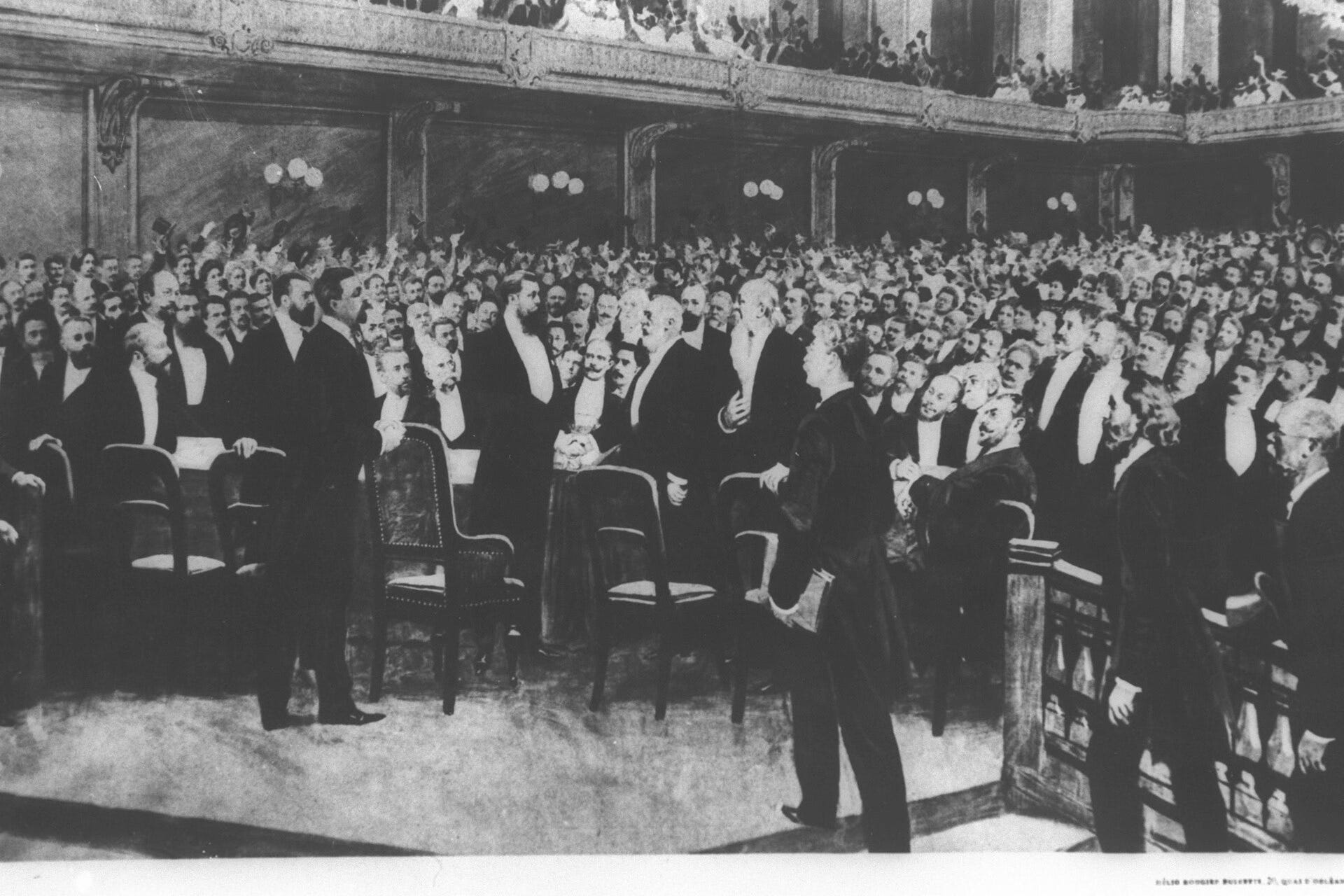
This is a pivotal year in our story.
We’re in Basel, Switzerland.
It’s here that Theodor Herzl convenes the First Zionist Congress.
A historic gathering where Herzl—joined by Jewish intellectuals from across Europe—puts forth an idea that would reshape the world:
the creation of a Jewish state.
At the time, it wasn’t yet clear where that state should be established.
Various options were floated—some in Africa, others even in Latin America.
But after years of debate, false starts, and failures, a realization took root:
despite all the challenges, Palestine was the only place that made sense.
It was a harsh land, to be sure.
Living conditions were often unbearable for the European Jews who had migrated there—many of whom had already returned to Europe, disappointed and disillusioned.
And yet, despite everything, the Holy Land remained the only true home.
At that moment in history, Zionism split into two distinct currents:
On one side, Practical Zionism: shaped by farmers, refugees, pioneers—
men and women who had already moved to Palestine, driven by a personal longing to return to the land of the sacred texts.
On the other, Political Zionism: embodied by Herzl—a modern, strategic, diplomatic vision.
A movement aimed at formally establishing a sovereign Jewish state.
Back then, many of those already living in Palestine had never even heard of Herzl.
And yet it was he who turned a spiritual dream into a national cause.
The idea of the State of Israel begins here. With Herzl. With Basel. With modern Zionism as we know it.
1898–1916
These were difficult years.
Theodor Herzl’s Political Zionism was beginning to spread.
It was gaining visibility—debated, imagined, hoped for.
Meanwhile, more Europeans continued to migrate to Palestine, driven by two key motivations:
To escape rising antisemitic persecution, increasingly brutal and widespread across Europe.
To embrace a rural lifestyle, one rooted in the land of the Bible, in its spiritual and symbolic heritage.
These new arrivals encountered a very different environment than the one that greeted the Russian refugees in 1881.
The local Jewish society was beginning to take shape.
No longer just scattered settlements.
Now there were proper villages: with homes, schools, synagogues, granaries, wells, and farming infrastructure.
Everything needed to build a dignified, self-sustaining, rooted life.
By this point, migrants were familiar with Herzl’s ideas.
They had read his writings, heard of the dream of a reborn Kingdom of Israel.
They imagined a Jewish state.
Even though, for now, it still felt like a distant dream more than a realistic goal.
It was during this time that the first structured Zionist organizations began to emerge.
Their mission was clear: raise funds, purchase land, support settlers, and build the infrastructure needed to live and remain in Palestine.
But not everything was idyllic.
Tensions began to rise.
Early clashes broke out between the Jewish and Arab-Ottoman populations.
The Ottoman Empire tried to contain the situation, but it was grappling with far greater problems.
In 1914, World War I erupted.
The Ottomans sided with Germany, against Britain and France.
The war went poorly. The Ottoman Empire collapsed.
And from that collapse came two critical consequences for our story:
A new, even larger wave of Jewish refugees poured into Palestine.
The Middle Eastern territories were carved up by the victorious powers: France and Britain.
1916
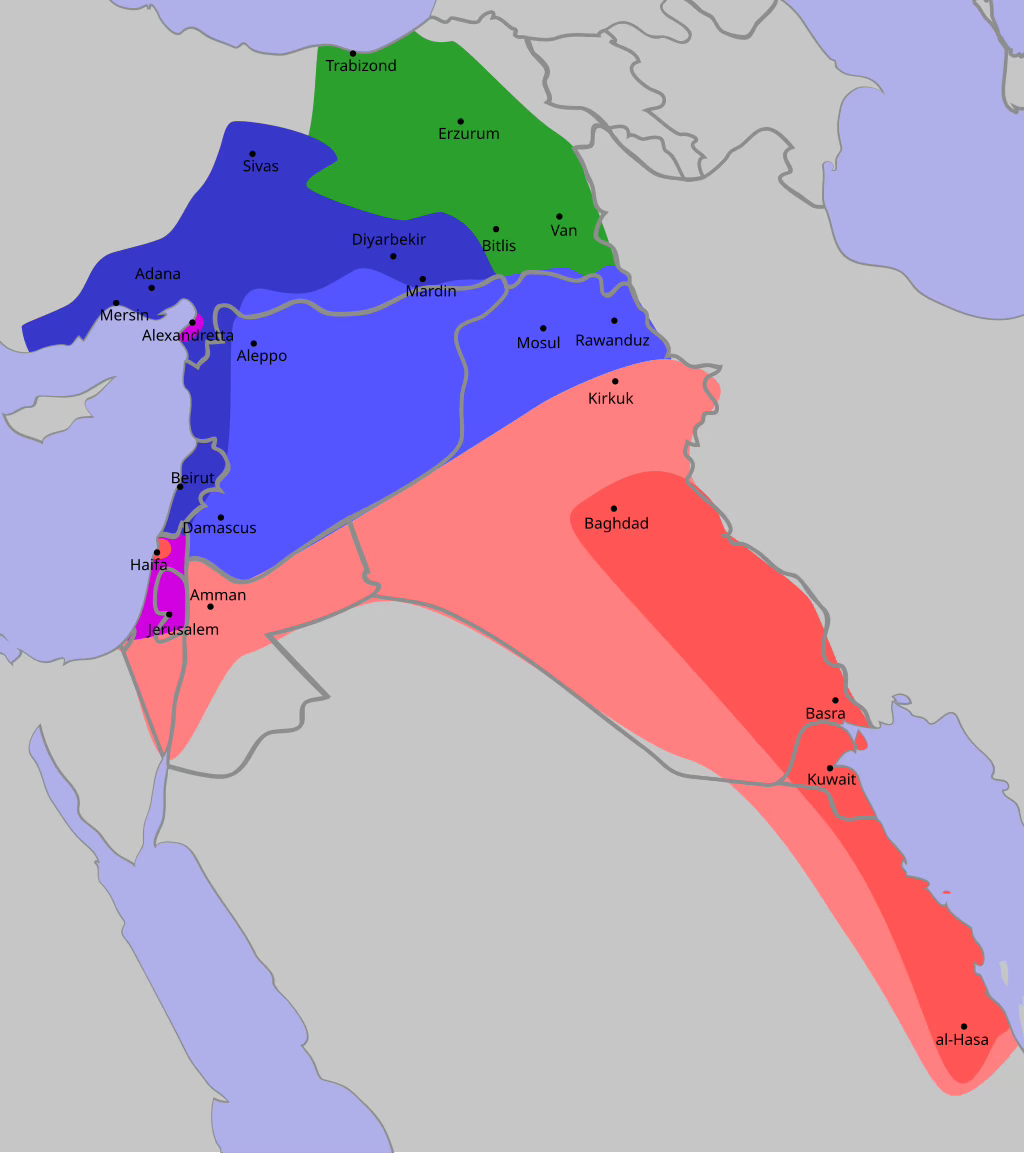
Shortly before the war's end, while Europe’s trenches were still drowning in mud and blood, Britain and France signed a secret deal.
An agreement made far from public view—one that would redraw the future of the Middle East.
It would go down in history as the Sykes–Picot Agreement, named after the two diplomats: Britain’s Mark Sykes and France’s François Georges-Picot.
Its purpose?
To divide up the Arab provinces of the Ottoman Empire even before its official fall.
A cold, calculated, deeply colonial move.
While Arab leaders were fighting alongside the Allies—believing their loyalty would be rewarded with independence—London and Paris were quietly divvying up the spoils of a dying empire.
Palestine, in particular, became a focal point.
A crossroads of history, religion, and geopolitical interests.
It wasn’t yet clear who would take control, but one thing was:
the European powers had no intention of letting it fall into Arab hands.
1917
Something monumental happened.
While still engaged in the war, the British made a strategic move with deep and lasting consequences.
They issued the Balfour Declaration: an official letter signed by British Foreign Secretary Arthur Balfour, addressed to Lord Rothschild, a leader of the British Jewish community.
In just a few lines, the British Empire publicly declared its support for the Zionist cause.
It expressed favor toward the establishment of a “national home for the Jewish people” in Palestine.
This marked the first time a major European power formally acknowledged — and supported — Herzl’s dream.
But it wasn’t just an idealistic statement.
It was also a calculated diplomatic maneuver: the British hoped to win the favor of European Jews — especially in Russia and the U.S. — to bolster the Allied war effort.
At the time, Britain did not yet control Palestine.
But it would soon.
And the promise made in the Balfour Declaration would become a cornerstone of Israeli–Palestinian history.
A heavy cornerstone.
One that brought hope for some, betrayal for others.
1920–1946
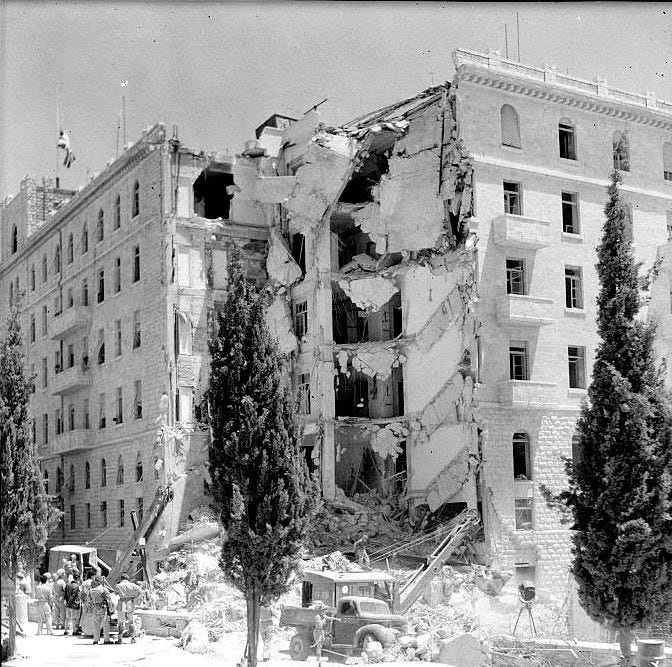
These were the years of the British Mandate over Palestine.
A pivotal period during which control over this strip of land—now divided among Israel, Palestine, and Jordan—fell under British administration.
But governing this territory proved to be an immediate and daunting challenge.
On one side, Jewish settlers continued to buy land, fueling the Zionist dream.
On the other, the local Arab population began to resist with increasing intensity. Tensions multiplied. Revolts erupted. The fragile balance shattered.
These were brutal years.
The Jewish community began organizing militarily: militias were formed not only to protect settlers, but also to attack, seize, and intimidate.
Not just through legal acquisitions, but also via armed operations and violent acts.
Over time, attacks targeted both Arabs and British forces.
Terrorism entered the picture.
British authorities found themselves caught between two fires: on one side, the demands of the Zionist settlers; on the other, determined Arab resistance.
The result?
An escalating spiral of violence.
Bombings followed by counterattacks.
Endless reprisals.
Widespread hatred.
Everyone fought. No one was innocent.
Each side fought to overpower the other, in an escalating wave of brutality.
The list of terrorist attacks carried out by the Irgun — one of the main Jewish paramilitary organizations — is extensive.
But let’s not be naive and assume that only Zionist settlers resorted to violence.
That land, in those years, had become a crossroads of fanaticism and despair.
A dangerous and ruthless place, where reason seemed to have vanished.
1947
The Second World War began in 1939 and ended in 1945.
At the end of the conflict, the horror comes to light: gas chambers, sealed trains, systematic round-ups.
The world finally and tragically discovers what antisemitism in Europe truly meant.
An ancient antisemitism, never eradicated, now showing its most inhuman face.
Public opinion is shocked.
Stunned.
Who, in those years, had the courage to tell the Jews that no, they did not deserve a homeland?
Who dared to claim that they were not in danger?
That they were wrong to seek refuge in Palestine, to desire a land to call “home”?
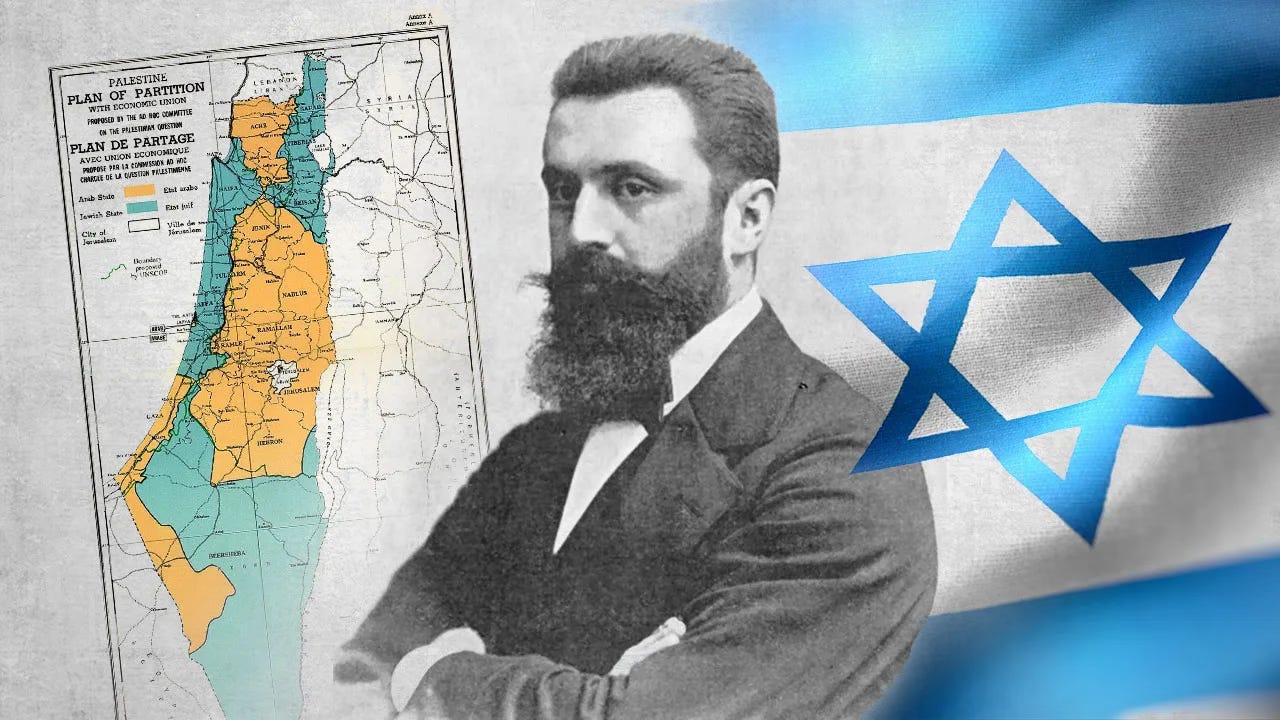
In this climate of collective pain and redemption, in 1947, the newly formed United Nations makes a historic decision: it relieves Great Britain of the responsibility to administer those troubled territories and proposes a partition map.
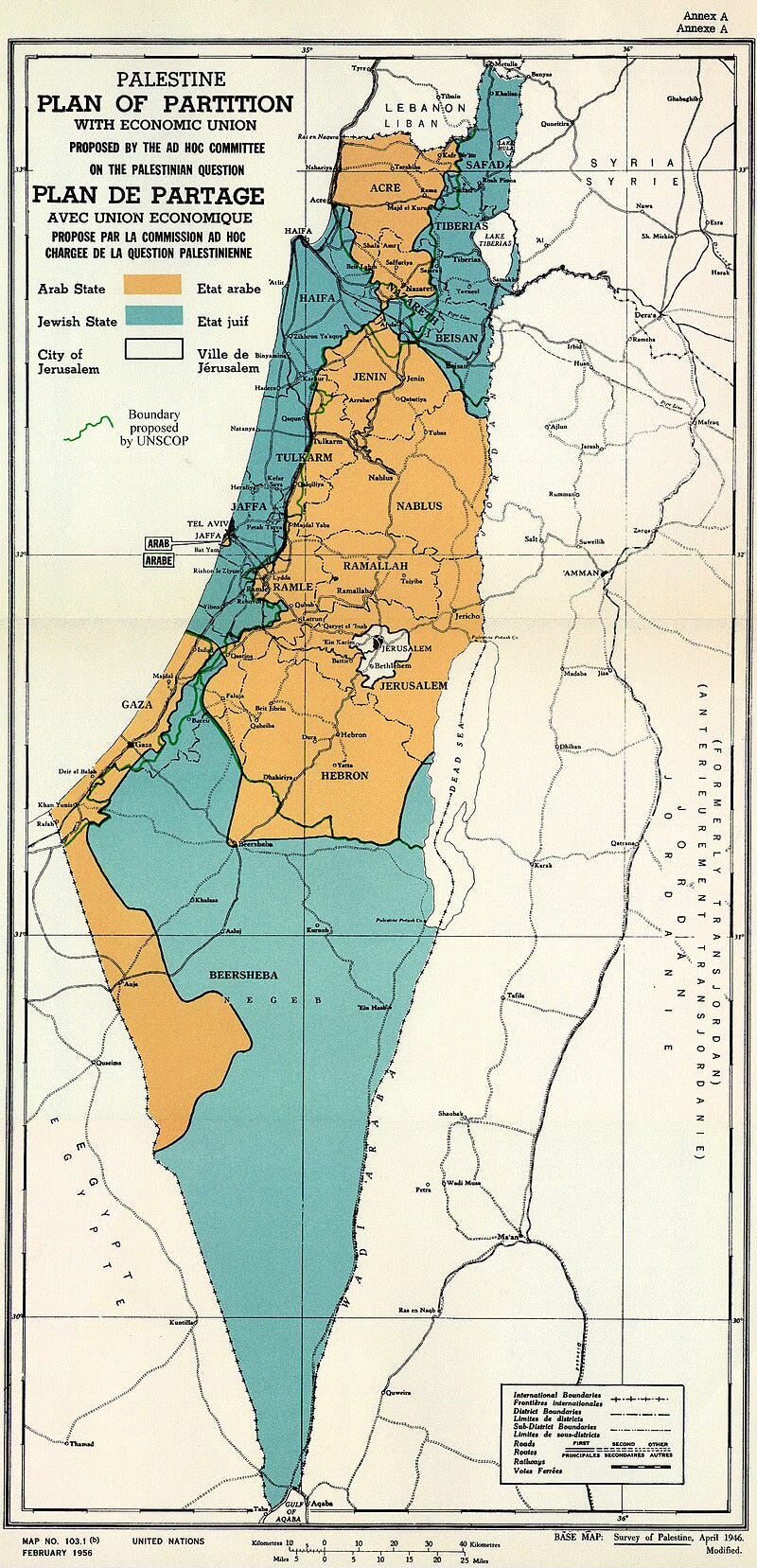
A map that will make history.
The idea is clear: divide Palestine into two distinct entities.
One for the Jewish population
The other for the Arab population
Two peoples. Two territories.
“Together, but separate.”
A fragile compromise, yet full of hope.
The Zionist settlers — present in Palestine since 1881, first under the Ottoman Empire, then under British administration — finally glimpse the real possibility of founding a state of their own.
A homeland after centuries of diaspora.
They accept.
They celebrate.
But not everyone rejoices.
The Palestinian Arabs decisively reject the UN plan.
They are the only ones, at that moment, to have the courage to point the finger.
They see in the Jewish settlers not refugees, but colonizers: men and women who, in a few decades, have first bought, then forcibly taken ever larger portions of land.
For the Palestinians, it is unacceptable.
They don’t want the Jews there.
They must leave.
All of Palestine — 100% of the territory — must return under Arab control.
They dream of the same path followed by other countries in the region:
first colonial rule — French, British — then independence, without foreign presence.
Without Jews.
A clear-cut position.
1948 - 1949
Several months have passed since the UN partition proposal.
What until then had been a conflict of violent clashes and attacks quickly transforms into an open civil war.
Tensions reach their peak.
The Middle East holds its breath.
The neighboring Arab countries send a clear message to the Jews:
"If you declare your independence, we will attack you without mercy."
The exact words may differ, but the meaning is unmistakable.
A direct, explicit threat, charged with hostility.
The Jews, though intimidated—aware they are surrounded by more populous, better-armed, and hostile nations—reflect carefully.
The decision is far from simple.
But in the end, they choose the boldest path.
On May 14, 1948, they declare the birth of the State of Israel.
The response is immediate and brutal.
Within hours, seven Arab armies attack Israel from all directions:
Egypt
Jordan
Iraq
Syria
Lebanon
Saudi Arabia
Yemen
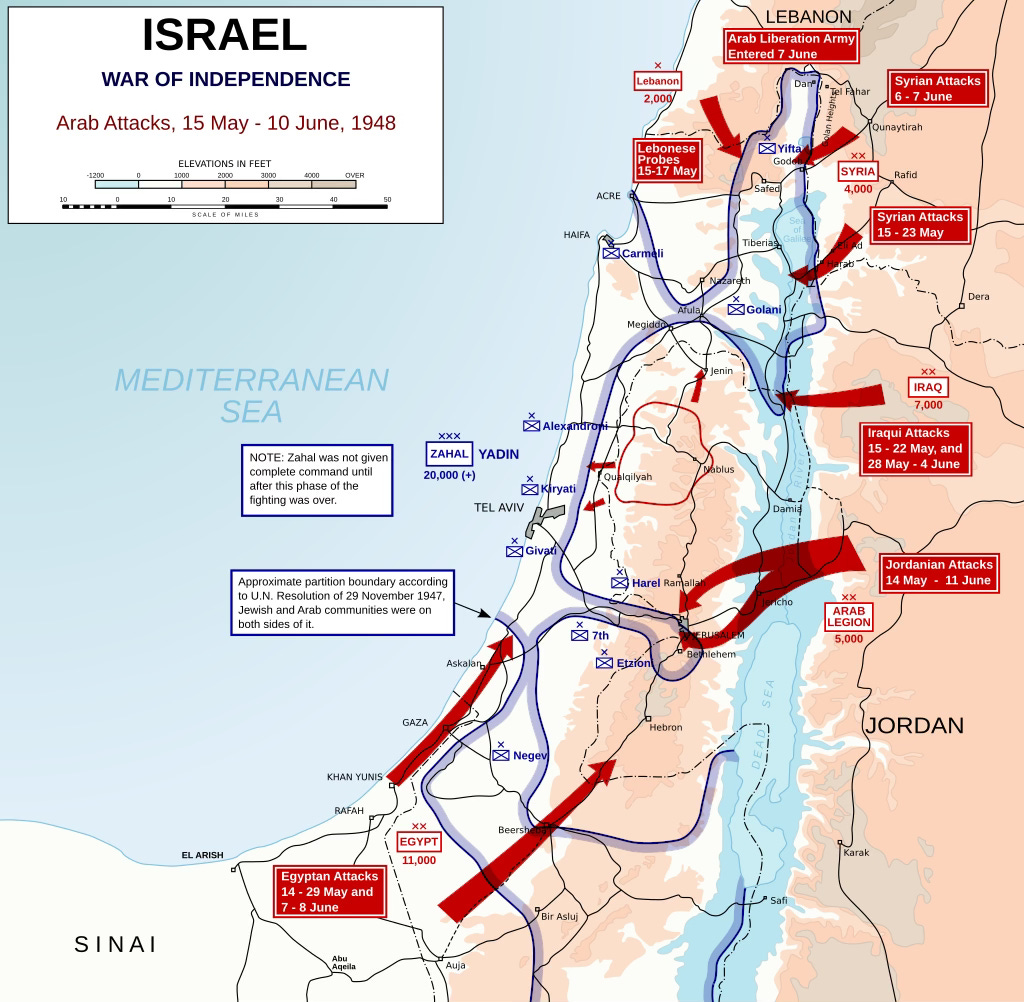
Meanwhile, the State of Palestine, as defined in the UN proposal, is never proclaimed.
No declaration of independence.
No state structure.
The Arab armies aim to uproot Israel.
The enemy is no longer the "Jewish settler," but the Israeli citizen, part of a new political entity.
The attacks are fierce, organized, massive.
Yet, within a year, the goal is not achieved.
Not only does Israel resist.
Not only does it hold all the territories assigned by the UN.
Israel expands its borders, also conquering part of the lands designated for the future Palestinian state.
It is a disaster.
A political and territorial massacre.
Of the remaining territories:
The State of Palestine, in fact, never comes into existence.
Not before.
Not during.
Not even after the war.
What was supposed to be a nation dissolves into silence, divided between Israel and two Arab powers.
1950 – 2025
Since then, seventy-five years have passed.
A span of time marked by new wars, unstable alliances, and unfinished treaties.
Israel, born in fire and blood, has continued to fight.
Time and again, it has challenged and repelled its neighbors, expanding—piece by piece—the borders of its young nation.
Each war has left a mark.
Each treaty, an open wound.
Each victory, a new geopolitical fracture.
However, we will not go into the details of these conflicts now.
Not because they aren’t important.
But because they are not necessary to understand the essential point: how the State of Israel was born.
After 1949, Israel becomes a sovereign state, recognized (sometimes reluctantly) by the international community.
It is no longer settlers versus local populations, but an armed nation, ready to defend itself both on the battlefield and in diplomatic arenas.
A controversial, yet real.
Independent.
Determined.
Conclusions
Alright.
So far, we have reconstructed the history of practical Zionism, political Zionism, Zionist terrorism, and Arab terrorism, up to the declaration of independence of Israel, followed by a brutal—and often forgotten—Arab aggression war.
If you have made it this far, you probably have even more questions than before.
Even though you have grasped, at least broadly, how the State of Israel was born, unresolved knots remain.
Uncomfortable questions.
Questions few dare to ask, and even fewer dare to face.
For example:
Why, if Arabs consider themselves morally superior, do they resort to the same violent means as the Israelis?
What truly legitimizes the birth of a nation?
Is it acceptable to conquer land by force? Or is it only acceptable when you win?
And the Palestinians: are they upset with Israel because it occupies... or because they have never managed to expel it, despite decades of attempts, failures, and abuses?
Today I did not shy away from talking about Zionist terrorism.
I touched a raw nerve, a critical and suppressed point in Israeli history.
But we cannot stop here.
In the second and final part of this deep dive, we will go further.
I will show you, with sources, data, and concrete facts, how Hamas — and not only Hamas — does not want to build a Palestinian state, but rather to destroy the Israeli one.
It is not a conflict between two state projects.
It is a clash between those who want to live... and those who only want to kill.
Yes, today’s Palestinians do not want their own state.
Or, at least, not anymore.
They have rejected it multiple times, even when it was offered on a silver platter.
But then, you might ask:
Why do they complain so much?
Simple: because they use the same methods as Israel — targeted attacks, rockets, propaganda, reprisals — but they cannot achieve the same goals.
And this is unbearable for them.
We will talk about all this in the next chapter.
An analysis without filters and without mincing words.
Are you ready to hear what many do not even want to utter?
For 140 Years, the Palestinians Have Lost Every War Against Israel

No, this isn’t provocation — it’s a fact: for 140 years, they’ve lost war after war. And yet, they continue to lay claim to that land as if nothing ever happened.
I want to sincerely and deeply thank everyone who made it this far.
This article took dozens of hours to create: I truly enjoyed gathering the sources and trying to tell a bit of history in a simple and accessible way.
I hope you found this long piece enjoyable, including the many links scattered throughout.
I also hope that my narrative style, at times raw, resonated with you.
I love seeking the truth — even when it’s uncomfortable.
I'd really love to build a connection with my readers. That’s why I’ve launched a free group chat where we can interact, share thoughts, and exchange opinions.
You can find it in the chat section on Substack.
I’ll be waiting for you there to chat and share ideas!
Thanks again.
Until next time!