
The American “Special military operation” in Venezuela.
The U.S. Are About to FAFO.

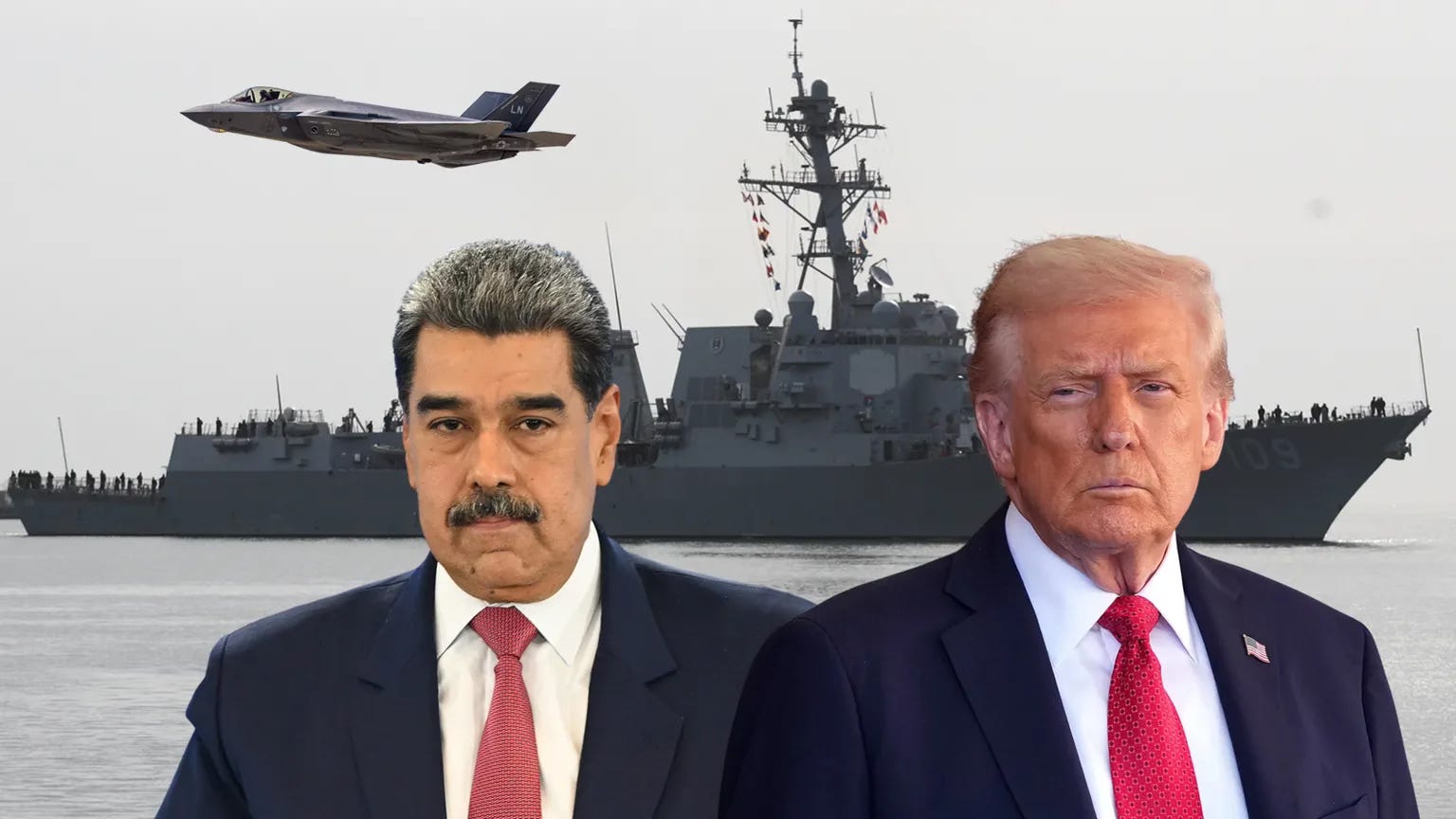
Once, the United States were regarded as the moral beacon of the West, the guardians of a world order founded—at least in the official narrative—on justice, freedom, and the defense of the weak.
Today, however, that “aura of champions of good” appears to have cracked. I now find myself wondering whether Washington is on the verge of repeating the very same strategic and moral mistakes made by Russia in Ukraine.
Until just a few years ago, what set the United States apart from the rest of the world was the widespread belief—encouraged and shared by its Western allies—that it stood on the right side of history.
It was a powerful narrative: America fighting for democracy and human rights. A story that, deep down, we all knew was only partially true—yet, as Westerners, we did not mind believing it.
Think of the countless times an American or Western soldier has set foot on foreign soil “to free the population from dictatorship,” “to defend women,” “to fight terrorism,” or “to destroy weapons of mass destruction.”
Behind every mission stood a message of moral righteousness. But today that ethical rhetoric seems to have faded.
The United States now appear more disillusioned, more cynical. In Washington, officials openly speak of scaling back their commitment to Europe and even of abandoning Ukraine—an idea that will likely never fully materialize, yet one that speaks volumes about the changing paradigm.
Meanwhile, American attention is shifting south: to Venezuela.
For months now, the White House has been threatening the government of Nicolás Maduro, amassing warships and military aircraft near Venezuelan waters. A language and a posture that look uncomfortably similar to those adopted by Russia in the days leading up to the invasion of Ukraine.
From Moral Empire to Bully Empire
What was once the “empire that protected the weak from the strong” is rapidly taking on the features of a bully empire, ready to impose its will through force.
The new “American special military operation in Venezuela”—as some analysts have dubbed it—risks turning into a political and moral catastrophe.
And while Washington flexes its muscles in South America, its global image continues to blur: its closest allies, from Canada to the European Union, from the United Kingdom to Israel, are beginning to question whether America is still the reliable partner it once was.
An empire that betrays its own values, after all, soon ends up betraying its friends as well.
In the corridors of the Pentagon, restlessness is growing. After the threats against Maduro and the gradual deployment of naval and air forces in the region, the American military establishment now seems too deeply involved to pull back without losing credibility.
The feeling is that something—soon—will have to happen.
And if history teaches us anything, it is that whenever a superpower acts out of pride rather than strategy, the consequences prove to be unpredictable.
A Geopolitical Déjà Vu: From Putin’s Warnings to Trump’s Threats
What we have been witnessing in recent months closely reminds me of what happened in Europe between November 2021 and February 2022. Back then, Vladimir Putin was amassing troops along the border with Ukraine, while diplomatic negotiations gradually turned into threats and, ultimately, into full-scale acts of war.
The analogy is unsettling: the same dynamics, the same rising tension, the same race against time to avoid a conflict that, tragically, already seemed written into history.
As I have pointed out many times, wars appeal to no one. They do not generate domestic consensus, they destabilize the economy, and above all, they are enormously costly. Even Putin, in the months leading up to the invasion, tried to pursue a diplomatic exit: he hoped that the European Union, the United States, and Kyiv would become frightened enough to accept his conditions, thus avoiding a direct confrontation.
But as history has taught us, the threat of war often becomes a political trap in itself. When a power builds up military assets and fuels a rhetoric of confrontation, the next step—toward action—becomes almost inevitable.
Today, Donald Trump appears to be following the same pattern toward Venezuela. He speaks by phone with Nicolás Maduro, issues ultimatums, amasses military resources in the region, and increases diplomatic pressure. It is a verbal and strategic escalation that dangerously echoes Russia’s modus operandi from three years ago.
Sooner or later, something will have to happen. Otherwise, Trump would risk appearing as the president who threatens but does not act—a leader unable to translate words into real power. In a polarized American political landscape dominated by the image of strength, this would be a reputational risk the tycoon cannot afford.
Meanwhile, the world waits.
There is speculation over whether Maduro will become yet another dictator exiled to Moscow or whether, on the contrary, he will manage to negotiate a compromise that allows him to remain in power while saving face.
But the real issue is geopolitical: the United States are trying to reconvert Venezuela into an allied country—much as already happened in Syria, where the shift in the balance of power has favored a partial reopening toward Washington.
The Oil Factor: The Key to America’s Game
The economic advantages of a potential American control over Venezuela are obvious.
The South American country is extremely rich in oil, and the Gulf of Mexico hosts numerous fully equipped refineries capable of processing Venezuelan crude.
Such a scenario would guarantee the United States:
abundant low-cost energy reserves,
a reduction in dependence on foreign markets,
the economic weakening of Russia,
and a direct provocation against the entire CRINK bloc, both major players with strategic interests in the South American country.
Moreover, European allies would reap immediate benefits, finding in Venezuela a new stable energy supplier, backed not only by the dollar but also by American naval protection. In other words: globalization as we know it.

Venezuela Is Only One Piece of the Puzzle
In recent years, Washington has carefully redesigned its geopolitical chessboard.
The objective is not only Venezuela, but the entire balance of global power. The United States are trying to avoid a direct conflict with China, while at the same time dismantling its peripheral alliances.
The strategy is clear:
Weakening Russia, stripped of resources and legitimacy.
Neutralizing Iranian proxies, depriving Iran of its ability to project power.
Removing Bashar al-Assad from Syria, eliminating a pro-Russian stronghold in the Mediterranean.
Forcing Europeans to “wake up,” gradually withdrawing American troops and compelling NATO to invest more in defense.
Reasserting control over Latin America, focusing on strategic countries such as Argentina, Panama, and, of course, Venezuela.
With Javier Milei, Argentina has returned to the U.S. orbit.
With Panama, Washington strengthens its influence over a crucial logistical hub, the Panama Isthmus, essential to global trade.
And with Venezuela, it aims to secure an energy and geopolitical lever capable of rebalancing the entire continent.
All that glitters is not gold.
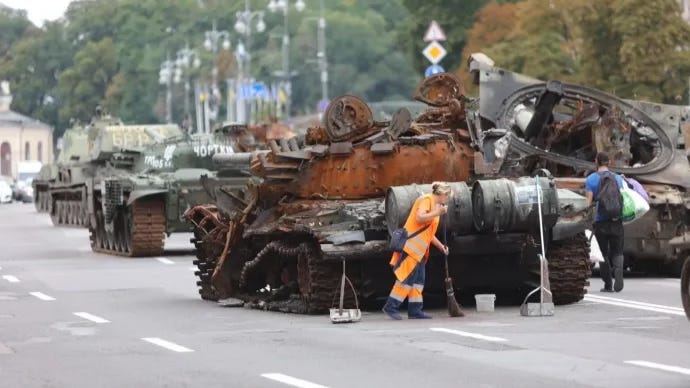
Enthusiasm must be kept in check.
On paper, the conflict in Venezuela may seem like a war “worth fighting,” but geopolitical reality tells a very different story.
As I wrote in the title, the concrete risk is that this could become a pale imitation of Russia’s “special military operation” in Ukraine: a war that, years later, has brought no tangible strategic advantage to Moscow. Even if Russia were to complete the conquest of the Donbas, its global geopolitical weight would not change significantly.
The United States today find themselves in an extremely uncomfortable and strikingly similar position.
History proves it: missile campaigns alone do not win wars.
You may level an entire country, but that is not enough to conquer it. The examples are many: from Vietnam, where American air superiority failed to break local resistance, to the recent 12-day war between Israel and Iran, where air raids did not force Tehran’s leadership to capitulate.
The same was seen in Syria: years of bombings did not eliminate the regime of Bashar al‑Assad. Only when rebel forces advanced dangerously close to the capital and the leader himself was directly threatened did the situation change.
In Ukraine, however, we learned another lesson.
It is ground offensives that truly put a country under pressure. When Vladimir Putin reached the outskirts of Kyiv in 2022, Volodymyr Zelensky was placed under enormous strain. Yet despite the difficulties, Ukraine held out, thanks to loyal generals and a determined army.
A fundamental difference from Syria, where many commanders allowed themselves to be bought off and HTS rebels captured Damascus almost without a fight.
The United States could certainly strike Venezuela and destroy its military infrastructure within a few days. There is no doubt about their operational capability.
But such an action would not guarantee victory.
The alternative—a ground invasion—would open a long and painful conflict, likely even more complex than the one in Iraq.
That is why, in my view, the only truly viable strategy is a combination of military pressure and political destabilization:
a targeted missile campaign, accompanied by the systematic corruption of the Venezuelan establishment and the activation of internal figures ready to betray Nicolás Maduro in exchange for power.
In this scenario, Washington could limit itself to air operations, leaving it to pro-Western Venezuelan forces to “do the dirty work.”
It is the same logic the United States are applying in the Middle East, using Israel as a tool to strike Iran and its proxies indirectly.
The Hope for a Wiser Pentagon
The hope is that the Pentagon will not once again become bogged down in a war of attrition, as happened in Iraq and Afghanistan.
The experiences in Ukraine and in Gaza should have taught us that the wars of 2025 are no longer fought with brute force alone—and above all, that it is impossible to keep making the same mistakes of the past.
Because if the next operation were to fail, it would become a parody of Russia’s failure in Ukraine—only on another continent and with another aggressor.
As the West, we need to limit China’s room for maneuver and secure strategic advantages without opening new direct military fronts.
Every tactical mistake, every excess of confidence, offers Beijing an opportunity to expand its economic and diplomatic influence.
Meanwhile, while Washington’s gaze is fixed on Venezuela, India is gradually reducing its energy dependence on Russia.
If the United States were to succeed in pulling New Delhi away from Moscow as its preferred oil buyer, the Russian war machine would suffer yet another severe blow.
Time, however, is a decisive factor.
Every rushed move, every miscalculation, can turn a geopolitical opportunity into a new international quagmire.
If we want to replace Russian oil with Venezuelan oil, we must do so intelligently and without missteps.
Perhaps the only constant lesson history offers us is that there are no easy wars.
Behind every decision to use force lies a price—human, political, and strategic—that sooner or later must be paid.
Thank you for reading.
Stay safe.
Per aspera ad astra.
Who I Am, What I Write About, And what you can learn

Hello, and thank you for stopping by my profile.
I feel provoked!