
Tariffs: How the West Is Hurting Itself
In the short term, the U.S. wins — in the long term, we all lose.

This profile was created with a clear purpose: to monitor the moves of the West and analyze how it is responding to increasingly aggressive threats from actors like Russia, China, North Korea, Iran, and international terrorism.
The goal is not only to keep attention focused on these dangers — which, whether we like it or not, concern us all — but also to share with you, the readers, the concrete actions I personally take to protect myself in the growing geopolitical chaos. And at the same time, to offer you useful tools to do the same.
But today, sharing my thoughts isn’t easy.
Because these tariffs bring no real benefit to the West.
Not to the Japanese.
Not to the Canadians.
Not to the Europeans.
And not even to the Americans.
In fact — while they may seem advantageous for the U.S. in the short term, over the long term they’re the ones with the most to lose.
And the bitter truth is this: we are doing this damage to ourselves.
It’s not Russia attacking us.
It’s not China manipulating us.
It’s us — long-time allies — tearing ourselves apart from within.
This could be — if we’re not careful — the final, fatal crack in American hegemony.
Maybe that sounds exaggerated to you. Maybe you think I’m being naive.
But I ask only this: listen.
This is not some distant war, like those in the Middle East, which often feel abstract or far away.
No.
Tariffs hit us every single day.
They hit you — whether you’re reading this in Berlin, in Houston, in Paris, or in Los Angeles.
They hit our businesses, our wages, our families.
They hit your children, their future, the opportunities they will have — or lose.
…unless we choose to mend our relationships.
To make peace between allies.
To be friends again, as we always have been.
Where Do We Stand Today?
At the end of July, the situation looks like this:
The United States has imposed a 15% tariff on all European imports, with a few exceptions: pharmaceuticals and steel, which are subject to zero tariffs and 50% tariffs, respectively.
In response, Europe has committed to purchasing American energy worth a total of $750 billion over the coming years, and to making direct investments in the U.S. for another $600 billion.
President Trump is celebrating.
He got what he wanted: tariffs on goods, a massive energy deal, and foreign investment on home soil.
In Europe, the mood is more subdued.
No one is truly satisfied.
At best, there’s a sense of relief — we’ve avoided the worst-case scenario: a full-blown trade war that could have deeply destabilized the European continent.
But let’s be careful:
Stability should not be confused with respect.
Because what does Europe really get in exchange for a 15% tariff and hundreds of billions spent on energy and investment?
Absolutely nothing.
Today, Europe gets nothing in return.
Yes, some commentators point out that the continent has freed itself from its energy dependence on Russia.
But have we really?
If we were once too dependent on Russian gas, we now risk becoming dependent on American gas instead.
And frankly — speaking plainly — it doesn’t seem like the United States is treating us much better than Russia right now.
“The Russians want to invade Europe.”
Maybe. But the Americans are already here:
NATO bases and U.S. troops are stationed all across Europe.
Let’s be clear: I’m not equating the United States with Putin’s Russia.
I love the United States.
But ever since Trump came to power, the relationship between the Old and the New Continent has steadily cooled.
And here’s what I see with growing concern:
Many Europeans — many of my fellow citizens — are beginning to feel resentment toward the United States.
And that, believe me, is not a good sign.
Not for us.
But especially not for the Americans, whose global dominance was built on the strength of their alliances.
Because when you mistreat your friends, you may one day find yourself alone.
Europe Has Surrendered: We Are Vassals.
That Europe has now been reduced to a vassal continent is something we’ve long known.
In my writings, this idea has always been present — a constant shadow.
And yet, never before has the European Union knelt so openly before the United States as it has today.
The agreement signed by President Ursula von der Leyen marks both a symbolic and substantive shift:
Europe has stopped dreaming. It has stopped thinking in terms of its own interests.
But to fully grasp the gravity of what’s happening, we need to take a step back.
Let’s return to the post–World War II era —
To the moment when the current world order was forged.
In those years, the United States poured massive sums of money into every corner of the globe, with one clear goal: to win the friendship of distant nations and strategic allies.
Their tools weren’t only economic — they were also cultural and political.
They offered military support, economic freedom, civil rights, and a model of democracy that inspired and captivated.
Back then, the U.S. made the world fall in love.
Us Europeans included.
In return for our loyalty, we were promised prosperity, security, and freedom.
Meanwhile, on the other side of the Iron Curtain, the Soviet Union followed a very different playbook: one built on fear and intimidation.
The USSR didn’t court its allies. It subjugated them.
Just think of Poland.
East Germany.
Prague, 1968 — where Soviet tanks crushed the popular uprisings in blood.
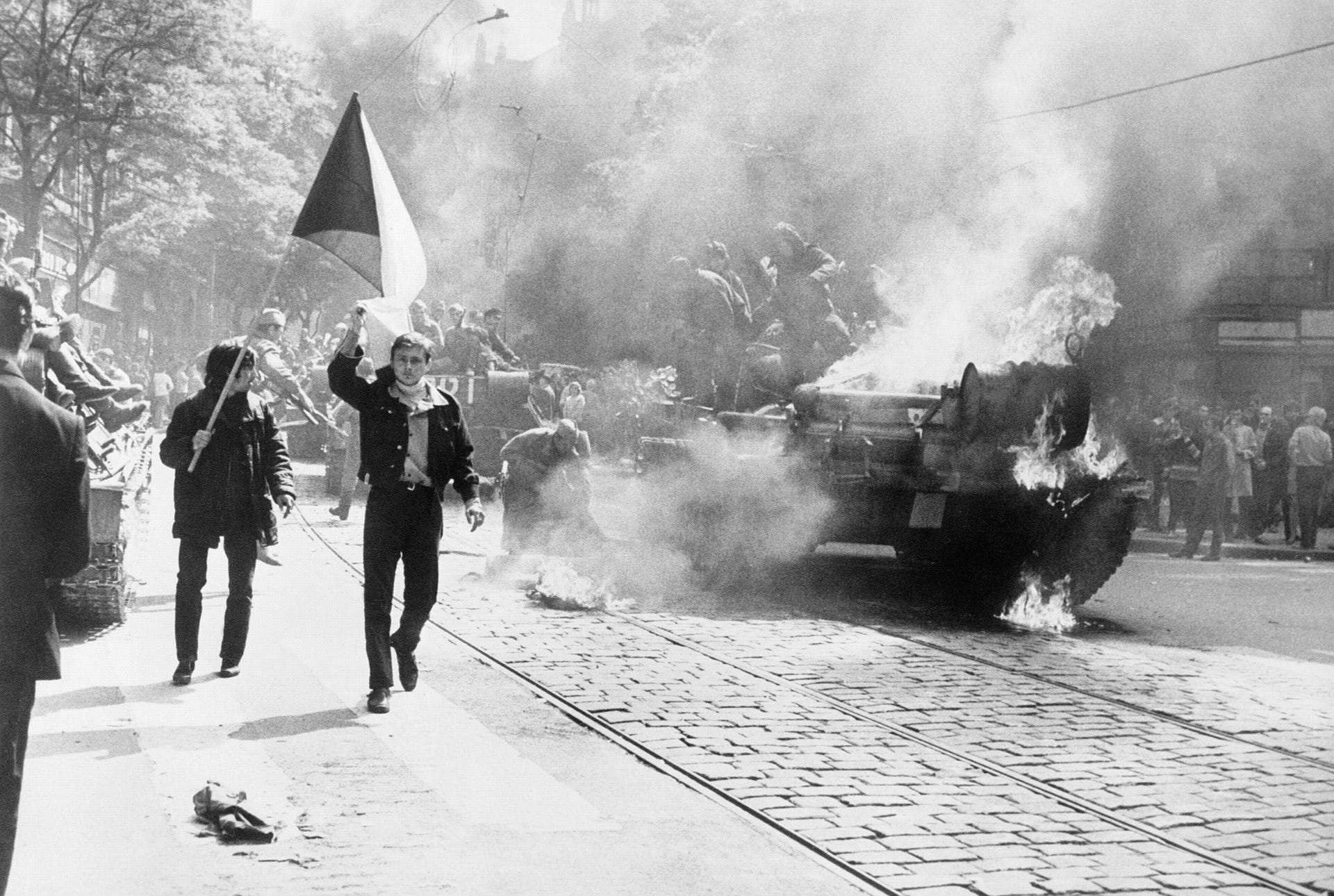
The Americans would never have done such a thing.
They didn’t demand obedience through threats, but through allure.
They didn’t ask for loyalty out of fear, but out of gratitude.
And let me be clear:
It worked. It worked beautifully.
Because, even in relationships between individuals, treating someone well is the surest way to earn their favor.
Threaten them? No.
Threats only breed resentment.
And when the time is right — when the opportunity presents itself — those you’ve humiliated will stab you in the back.
That is precisely what happened after the collapse of the Soviet Union:
The Poles, Romanians, and Hungarians — all ready to turn their backs on Moscow the moment they could. And today, that is what angers the Russians most.
Why Tariffs Weaken America in the Long Run
Here’s why I argue that tariffs only benefit the United States in the short term.
Because if this rift isn’t healed — if it deepens instead…
…tomorrow, many more Europeans will grow tired of the “bully” in the White House.
And over time, resentment toward Trump will turn into hostility toward the United States as a whole.
And that would be a historic mistake — not ours, but theirs.
Because America built its global dominance on consent, not fear.
If the U.S. continues to treat its allies with contempt and arrogance, then at the first opportunity… it will lose them — just as Russia lost the loyalty of the Ukrainians.
Yes, today we have American soldiers and NATO bases spread across Europe.
But nothing stops us, someday, from choosing a different protector.
Maybe even China.
Because with this kind of behavior, the United States is abandoning its traditional role — that of defender of the free world.
And history teaches us this clearly:
Before you ask a people to be your friend, you must first ensure they are not your enemy.
And no people can go to war unless they are armed.
By building a network of military bases and guaranteeing our security, the U.S. effectively neutralized Europe as a potential threat.
And by exporting a vibrant, innovative, captivating culture, it earned our deepest friendship.
But today?
There’s nothing in this agreement that even resembles the word “friendship.”
We pay the tariffs.
We buy their energy.
We invest in their plants, on their soil.
And what do they give in return? Nothing. They give up nothing. They’re not even willing to defend us from the Russians.
Dear Americans — what’s your purpose now? You’re becoming a burden, not an ally.
This is a dark day for Europe.
For Canada.
For Japan.
For every country that once looked to the United States as a beacon, a model, an example to follow.
Once, the U.S. was living proof of what it meant to be on the right side.
Not anymore.
Today, the global hegemon is abandoning its moral authority.
Replacing trust with coercion.
Choosing the tactics of the Soviet Union.
What Do I Expect?

These days, many say that Europeans need to wake up, realize their potential, and rediscover their greatness.
But I don’t see it that way.
I believe that the United States is nothing without its allies.
And that we are nothing without the United States.
We are bound. Inseparably.
If we split apart, we enter a new world order — one without America at the helm.
And if we fail to realize this in time, the price will be steep.
I hope the next American president won’t just be a leader for U.S. citizens.
I hope they will be a president for the entire Western alliance.
A skilled navigator, able to steer us through the storm that these years have become.
Because what surrounds us truly is a storm.
Russia in Ukraine.
Iranian proxies in the Middle East.
China threatening Taiwan.
We are living through a dangerous era.
And if Donald Trump fuels these tensions, sowing hatred and contempt among allies, there’s only one outcome:
Our common enemy grows stronger.
The Chinese couldn’t ask for anything better:
A divided Europe, and a hostile America.
And do you know what I see today, with deep frustration?
A total lack of vision.
Neither Trump nor the European leaders seem up to the historical moment we’re facing.
Too distracted by social media. By this damn “energy transition”… while China keeps burning coal.
Too shortsighted to grasp that every choice we make today will shape the long term.
This is what it means to live in the periphery of an empire.
In the days of Rome, living in Dacia was infinitely worse than living in the capital.
Today, in a twist of history, living in Rome often feels worse than living in Washington, D.C.
If the United States doesn’t wake up, it will meet the same fate as the Roman Empire.
And we will, inevitably, follow them in their fall.
Today, there’s no trace of “Per aspera ad astra.”
Today, there’s only: “per aspera.”