
Russia, Ukraine, the US, and the EU Have No Real Interest in Ending the War
For now, everyone has a reason to keep the fighting going.

There are different kinds of citizens.
Some follow geopolitical dynamics closely. Others keep up with the news diligently, reading analyses, articles, and reports.
Then there are those who prefer to stay away—people who dislike the topic, maybe even fear it. They avoid informing themselves, almost as if silence could shield them from reality.
Ignorance becomes a way to exorcise fear.
And finally, there’s us—the minority.
The attentive ones, the curious, sometimes even the passionate.
War isn’t a passion, of course.
But you know what I mean.
We are few. Fewer all the time.
A small group trying to understand, to dig deeper than the official narratives.
Meanwhile, around us, a growing majority stays uninformed—and thus becomes more vulnerable to manipulation.
It’s a vicious cycle that feeds on itself. A loop that goes something like this:
I'm scared, so I avoid the news.
Avoiding the news makes me ignorant, and more easily manipulated.
The media bombards me with alarming, clickbait headlines—tailored for the already vulnerable.
I get even more frightened.
And in my fear, I once again stop informing myself.
And the cycle repeats.
I wanted to outline this mechanism to help explain why—regardless of public statements and the dominant narrative—I’m convinced that as things stand, no one truly wants this war to end.
Of course, we see statements like:
Trump wants peace.
Zelensky calls for a 30-day ceasefire.
The Russian delegation sits down for talks in Turkey.
They seem like glimmers of hope. But those words are not meant for us—not for those who dig deeper.
They’re meant for the fearful majority I mentioned earlier.
Because let’s be honest: no one likes war.
Not European citizens, not Americans, and certainly not Russians or Ukrainians.
So the media reassures us: everyone is working to end it; the finish line is in sight.
But we—the informed minority—aren’t satisfied by vague reassurances.
We know that the truth often lies beneath the surface.
That to grasp it, you have to be willing to follow the White Rabbit.
And so today, we go down the rabbit hole.
To see just how deep it goes.
And why no one actually benefits from the war ending.
No.
Not even the Ukrainians.
Thank you for opening this article.
This editorial project is free and independent. If you value my perspective, subscribe to keep reading.
Here you’ll find political and geopolitical analysis—a clear-eyed view of how the West is defending itself from increasingly aggressive external threats — and what you, as an individual citizen, can do to protect yourself.
To defend your freedom of movement, your economic independence, and above all, your personal safety.
Thank you for your support.
🪖 Why This War? And Where Do We Stand Today?
You see, war is always the last resort.
A violent tool—one to be avoided as long as possible.
And precisely because of that, it is used only when no alternatives remain.
First comes dialogue.
Then come threats.
Then troops begin to amass at the borders.
And finally, when the enemy won’t yield, the trigger is pulled.
It’s a familiar script—one as old as politics itself.
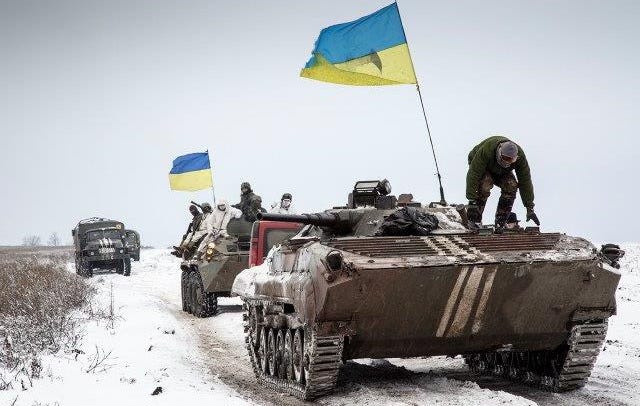
And we watched it play out once again, in Ukraine, beginning in December 2021.
Why Did Russia Start This War?
There are many reasons—but none of them are particularly complex. I’d even say they’re downright banal.
Some, like the so-called "denazification," belong purely to the realm of propaganda.
But others are more concrete—and true:
To demilitarize Ukraine.
To bring the Ukrainian government back within Russia’s sphere of influence, much like Belarus.
To push the West out of the country.
To drive out Europeans and Americans in order to prevent Kyiv from becoming another “Lithuania”—another piece of the former USSR that has definitively crossed over to the Western side.
This is the backdrop. A framework essential for understanding what we are about to examine.
Because now, in mid-2025, it’s time we ask ourselves:
Who genuinely wants this war to end? And who stands to gain the most by keeping it alive and unstable?
Let’s start with the main protagonist of this long Eastern European bloodbath.
🇷🇺 Why It’s Not in Russia’s Interest to Stop Now:
We’ve already outlined the reasons that led Russia to start this war—reasons that, stripped of propaganda, are fairly straightforward.
But here’s the crucial point:
If Russia were to stop today, it would not have achieved any of its actual strategic objectives.
Just look at the facts:
Volodymyr Zelenskyy’s government remains firmly in power.
Ukraine is still a sovereign state, far from becoming another Belarus.
Kyiv today is closer to European partners than it was four or five years ago.
The Ukrainian army is armed to the teeth, with far superior military technology than it had pre-invasion.
Formally, Ukraine is neither in NATO nor in the European Union. Yet thanks to a series of diplomatic workarounds, its territory now hosts U.S. Patriot missiles and German Leopard tanks.
Let’s say it plainly:
NATO is already in Ukraine, even if Ukraine is not officially in NATO.
It may sound like wordplay. But it’s not.
It’s the reality of 2025.
Framed like this, one might think Russia is failing across the board.
After more than three years of war, it seems to have gained nothing.
But that’s not entirely true.
Moscow has achieved significant territorial results:
It has solidified control over Crimea, physically linking it to the Russian mainland.
It has seized strategic Ukrainian cities, such as Mariupol.
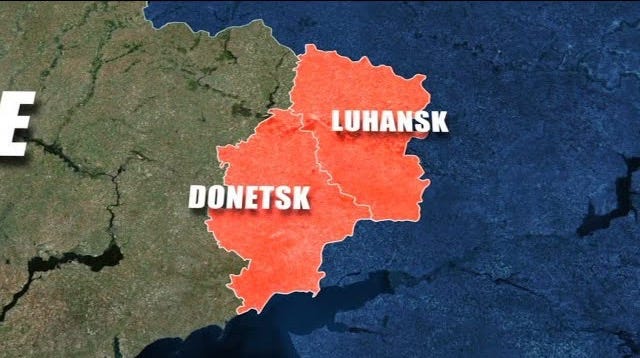
It has taken control of the entire Luhansk oblast.
And to complete its grip on Donetsk, it needs “only” 6,000 more square kilometers.
(Or, for our friends across the Atlantic: 2,316.61 square miles).
That said, it’s hard to imagine Russia today being capable of:
Toppling the Ukrainian government,
Installing a pro-Russian puppet regime,
Fully expelling NATO and EU influence
And above all, demilitarizing Ukraine.
These were — according to Vladimir Putin — the war’s deeper objectives.
Objectives that are now highly unlikely to be achieved, at least not in the near future.
And yet, back in 2022, when he announced the so-called “special operation,” Putin publicly promised to liberate the separatist republics of the Donbas from Ukrainian control.
A public promise. In effect, a trap.
That’s why, at a minimum, he cannot halt the conflict until he has secured:
The full territory of Luhansk and Donetsk,
Today, without those final 6,000 square kilometers, Putin has nothing he can sell to the Russian public as a “victory.”
Yes, he reconnected Crimea.
But this war — officially — didn’t start because of Crimea.
According to the Kremlin, it started to protect the Russian-speaking population of the Donbas.
And until the entire Donbas is under his control,
the war cannot end.
🇺🇦 Why It’s Not in Ukraine’s Interest to Stop:
If Russia has declared its aim is to block Ukraine’s integration into the Western system, that very integration is precisely the dream that millions of Ukrainians have pursued for at least a decade—if not two.
It’s a dream built on the ruins of the Soviet past, on the squares of Maidan, on a conscious choice to turn away from Moscow.
But today, Ukraine is still under fire.
Its cities are under constant attack.
The country is exhausted: a collapsed economy, a fragmented society, and a political system still plagued by deep-rooted corruption.
If the war is going badly for Russia, it is by no means a triumph for Kyiv.
Ukraine has lost a significant portion of its territory.
It counts hundreds of thousands of dead and wounded, shattered infrastructure, and billions of dollars lost in three years of nonstop war.
And despite support from the European Union—which seems to be strengthening—Kyiv is still far from being officially part of Europe.
The only consolation, for now, is this:
The government is still standing.
The capital remains free.
And the country, though wounded, has not become a “Belarus on the Black Sea”—a puppet state controlled by Moscow.
But what if Ukraine stopped now?
What would it gain?
Nothing.
An independent country, yes—but one that is mutilated, destroyed, impoverished, and filled with grief and ruins, not to mention littered with deadly landmines that endanger civilians and vehicles alike.
That cannot be enough.
Kyiv is still fighting for its very existence, for its identity, and for the right to choose which side of history it belongs on.
And thanks to the support of the so-called Free World, it’s at least managing to hold back the Russian advance, and in some cases, limit further territorial losses.
But there’s more.
Ukraine still hopes to reclaim what it has lost.
While those lost territories may not pose an immediate threat to the state’s survival, they are some of the most economically productive regions in the country (or at least, they used to be).
And then there’s Crimea, with its immense symbolic and strategic value: a dream of reconquest that Kyiv has never truly abandoned.
Meanwhile, the West continues to send weapons and funding.
As long as that support flows, the resistance holds.
The objective?
To lose as little as possible.
And if the conditions allow, to regain something, as already happened during the counteroffensives in Kharkiv and Kherson.
To stop now would mean accepting defeat.
And for Ukraine, defeat is not an option—
unless it is forced to surrender completely.
🇺🇸 Why It’s Not in America’s Interest to Stop:
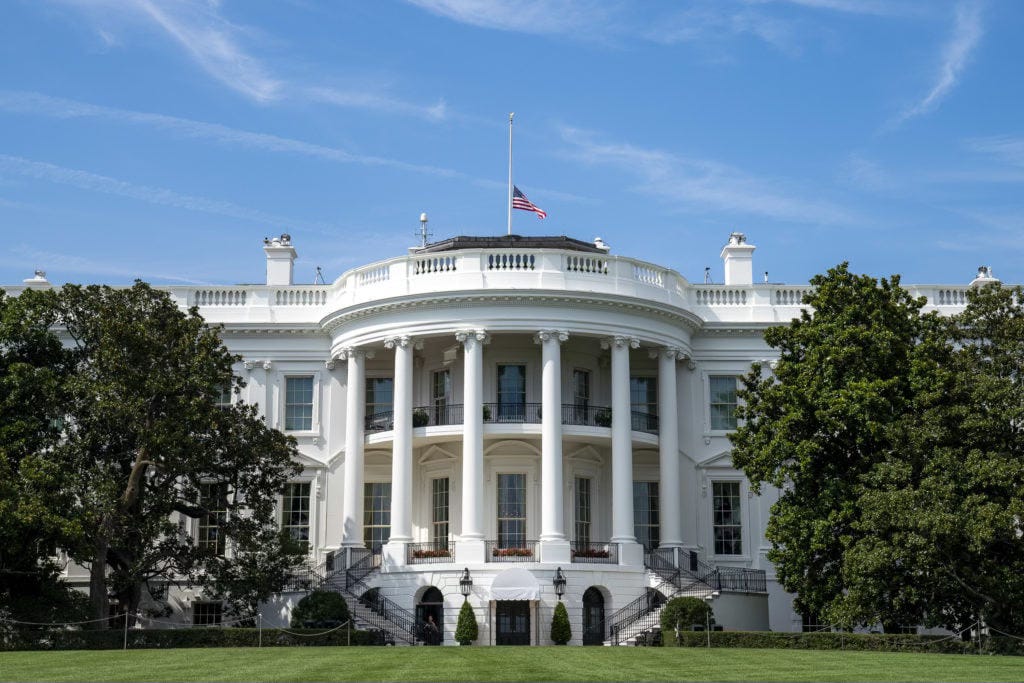
Let’s start with a basic premise:
The United States does not have the direct power to stop this war.
Or rather... not entirely.
Let’s imagine a hypothetical phone call between Trump and Putin—one of the many they’ve had:
Trump: “Why don’t you stop fighting?”
Putin: “Because I want Ukraine to become a vassal state. And I want you out.”
Trump: “Same here! I want Ukraine to be a vassal state too—mine (like the rest of Europe). And I want you Russians out!”
In short: “Let’s see who breaks first.”
Obviously, I’m joking.
But if we really wanted to boil the situation down to its brutal essence, it’s honestly not that far off from this caricature.
The United States has only one real way to end this war:
Cut off funding to Ukraine.
And maybe, at the same time, pressure its European allies to do the same.
In that case, yes—Kyiv could collapse.
And once Putin achieved his minimal objectives, he might stop.
But… this scenario is absolutely not in America’s interest.
The United States doesn’t want the war to end now, because it aims to see Ukraine fully integrated into the Western bloc, just like the Baltic states are today.
Another forward NATO trench. Another thorn in Russia’s side.
And there’s more.
If you’ve been paying close attention, you may have noticed a key strategic detail:
Despite massive military support to Kyiv, Washington has never provided Ukraine with enough resources to actually win.
Only just enough to keep resisting.
To avoid collapse.
To lose slowly—but not completely.
Do you think that’s a coincidence?
I don’t.
I believe this is a deliberately crafted strategy.
Let the Russians advance—but very slowly, at enormous cost.
Not so much that they become demoralized and withdraw, or worse, consider using tactical nukes.
But just enough to drain every drop of Moscow’s military and economic strength.
At the beginning of this article, I wrote that war is the last resort, used only when diplomacy and threats fail.
That’s because wars are unbelievably expensive.
And even outcomes that appear certain often hide dangerous pitfalls—as Russia itself learned when it tried to take Kyiv, only to fail within weeks.
So what is America’s true objective?
To wear down Russia.
To bleed it dry.
To weaken it as much as possible.
But why? Why this need? What do the Americans gain from depleting Russia’s resources, its youth, and isolating it economically through sanctions?
I’ll answer with a question of my own.
If you were sitting in the White House, preparing for a possible future war against China:
Would you rather face a China backed by a strong, well-armed Russia...
Or a China standing alone—its only major ally KO’d, exhausted, poorer, and bled dry by a grinding war in Ukraine?
And another:
Would you prefer an ally in the form of a weak, disarmed, and fearful European Union—
Or a Europe that, under pressure, is increasing its defense budget year after year?
You decide.
America is fighting today, in 2025, but its eyes are on 2030, 2035, 2040—and beyond.
🇪🇺 Why It’s Not in the European Union’s Interest to Stop:
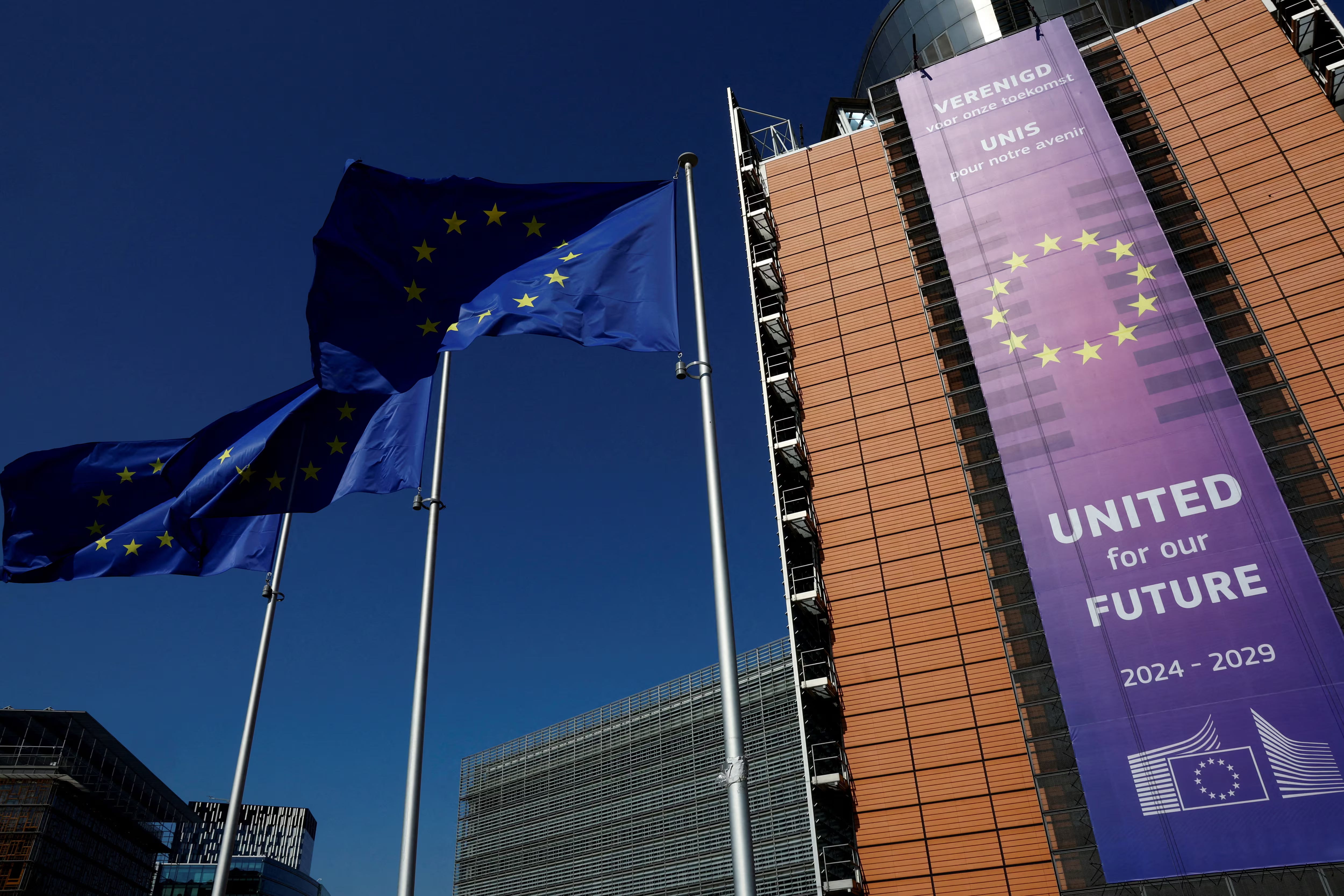
Let’s conclude by discussing a secondary—but far from irrelevant—player: the European Union.
A player that, only recently, began contributing more substantially to the conflict.
At first, it largely followed the United States, providing mostly massive financial aid, but without showing much autonomous initiative.
The uncomfortable truth is that in many respects, the European Union behaves like a “vassal state” of Washington.
And I say that as a European citizen—fully aware of what that implies.
Are we free?
Yes, but not entirely.
We have room to maneuver. We can act independently on many fronts.
But when it comes to foreign policy, our freedom becomes more fragile.
The U.S. military bases scattered across our continent, our heavy reliance on the American arms industry— all of it makes us structurally subordinate.
Much of the weaponry we use comes from the U.S., which means we can only use it in scenarios Washington approves.
Otherwise?
No more ammunition.
No spare parts.
That’s why, at the end of the day, it’s not in Europe’s interest for this war to end:
it’s not in America’s interest, and Europe—with few exceptions—dutifully follows.
But there’s also another reason, far more concrete.
Europeans are afraid.
They fear the conflict might spread, perhaps toward the Baltic states, or toward Poland.
An apocalyptic scenario that could materialize through the Suwałki Gap—the most vulnerable point on NATO’s eastern flank.
And so, while Ukrainians fight, we…
Prepare.
Arm ourselves.
Increase defense spending.
Organize our defenses.
Meanwhile, the Russian military wears down, its resources dwindle, its ability to threaten the continent weakens—at least on paper. (And let’s be clear: on paper. Just like Kyiv was supposed to fall in three days. Don’t take anything for granted!)
For the European Union, prolonging the conflict means buying time, contributing to Russia’s systemic weakening, and eventually facing tomorrow a weaker adversary than it is today.
Yet, reading certain articles, you might get the impression that Russia is on the verge of collapse.
The reality is different.
Weakening Russia is proving to be a long, costly, and exhausting endeavor.
And it’s by no means guaranteed to succeed.
Yes, Moscow is more fragile than it was years ago, but can we truly say that Russia is on the brink of national failure?
I doubt it.
But as always, the difficult task of judgment is yours.
Conclusions
This has been a longer article than usual, but a necessary one.
Because while many continue to say that the end of the war is near, the bitter truth is this:
barring a miracle, there is no end in sight.
Not now.
Putin will not stop until he has achieved at least his minimum objectives.
And that, we can say with near certainty.
But precisely for that reason, we have an opportunity:
to use this war to wear down Russia,
to observe and understand what warfare looks like in 2025,
to give the U.S. and Europe time to reactivate their war machines.
So then?
When will this war end? How will it end?
The truth is, no one knows.
And anyone who ventures, in good faith, into these analyses can only arrive at one simple, disarming conclusion:
we don’t know.
Maybe not even Washington knows.
Maybe not even the Kremlin.
Today, Ukraine is a no-man’s-land.
A nation torn, pulled, pushed
between two ruthless empires—
anvil and hammer, striking, relentlessly, at its fate.
That is where the future of the world is being decided.
In those trenches of mud and blood.
In those skies crisscrossed by drones.
In those silences broken by explosions.
And we—those who stay informed—
cannot look away.
For now, I’ll stop here.
I hope this analysis leaves you with something to reflect on in the hours ahead. I hope it has offered you a few more tools to see past the lies of newspapers and politicians.
Per aspera ad astra.
If you found this analysis useful, thought-provoking, or simply different from the usual— I invite you to follow me for free.
Your support—even just a single click—is what allows me to keep publishing content that’s independent, in-depth, and unfiltered.
If you see value in what I write, you can contribute simply by subscribing for free.
I read every comment, and I encourage you to share your thoughts—criticism, ideas, reflections.
Every contribution enriches the conversation and helps build a space for broader, sharper, more honest thinking.
Thank you for reading. Until next time.
Simone, the real tragedy? Peace is often less profitable than perpetual instability, for more actors than we care to admit.⚔️📡 Good work my friend.