
Israel has just bombed Iranian nuclear sites.
How did we get here?

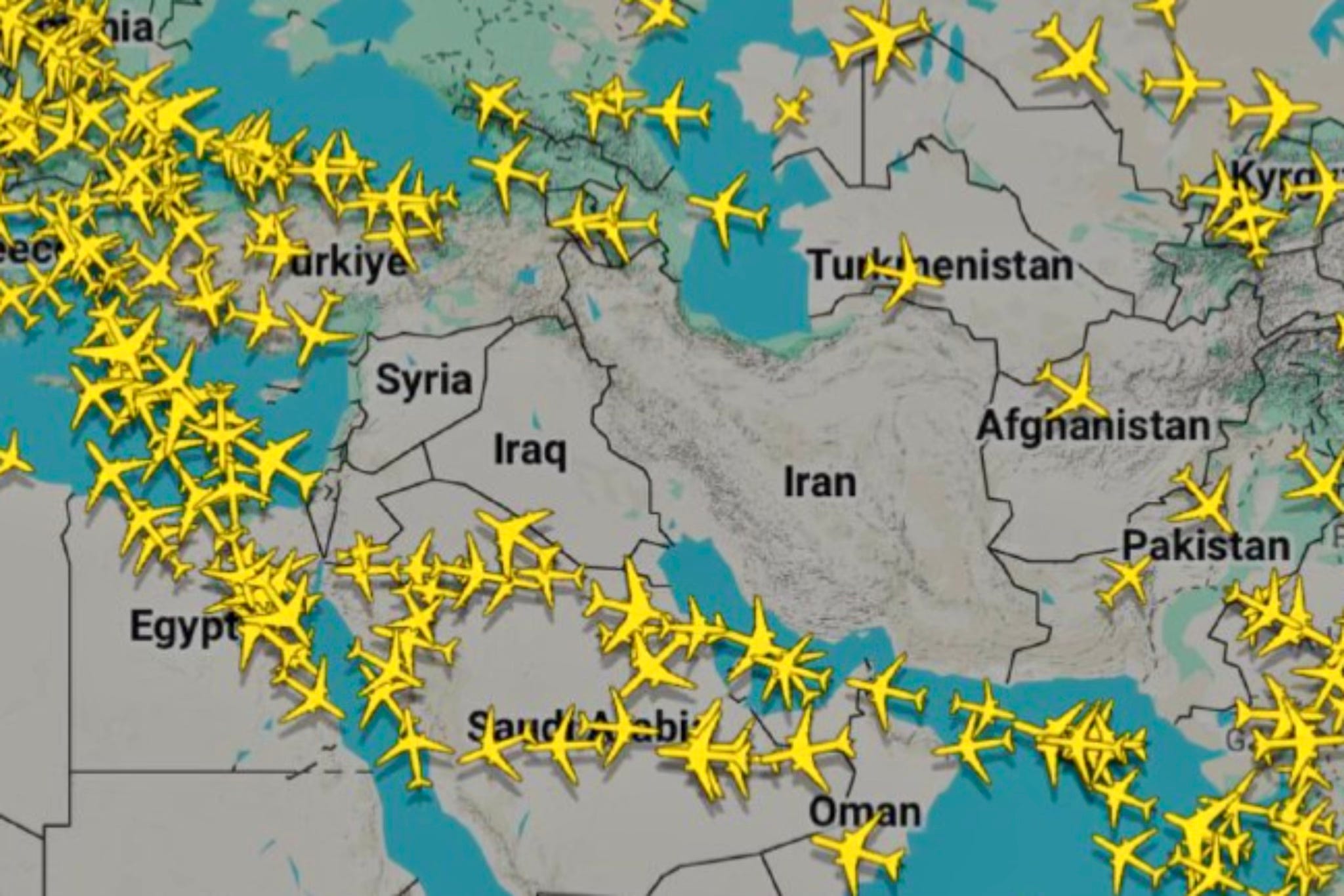
It was a rude awakening this morning.
Like when you walk into a room and sense that something happened, even if no one says a word.
A lingering tension, invisible but palpable — dense, heavy, restless, like the air before a violent storm.
Iran is working on the atomic bomb. That’s no longer a suspicion. It’s a fact.
We’ve known for years — intelligence reports say it, and partial IAEA inspections confirm it.
But above all, their behavior shows it — calculated, provocative, never accidental.
Today, nine nations in the world possess nuclear weapons.
Nine chairs occupied around an invisible table, built on power, deterrence, and fear.
And now there’s a tenth — empty, dusty, but with a nameplate already prepared: Iran.
Because Tehran wants that seat.
And it wants something else too: revenge.
This isn’t just a matter of defense or prestige.
It’s ideological revenge, deep-rooted, cultivated over decades.
Iran dreams of rewriting the world order.
It dreams of striking the West at its core.
And the fact it has chosen allies like Russia, China, and North Korea says a lot about the kind of world it wants to build.
Three countries, three regimes that have nothing to do with freedom or rights.
Three opaque and aggressive powers, united by a common goal: to dismantle the Western order, to strike it from within, to wear it down until it collapses.
And if we really look at what’s happening — truly look, without being distracted by the noise — we begin to notice something different.
The conflicts that once seemed unrelated are now moving in unison, playing the same underlying note.
The war in Ukraine, the constant attacks on Israel by Iranian proxies, China’s increasingly aggressive provocations toward Taiwan…
These aren’t isolated events.
They’re fronts.
They’re strategies.
They’re deliberate, well-orchestrated attempts to bring the United States and its allies to their knees.
And while all this unfolds before the world’s eyes, Iran moves steadily along its path, without hesitation.
In remote deserts, hidden beneath gray and desolate mountains, engineers and technicians work at a frenzied pace.
They enrich uranium, test components, silently upgrade their facilities.
All of it shielded by deep bunkers and an official narrative that no longer holds up.
Meanwhile, Israel watched and prepared.
Because it knows time isn’t infinite.
A targeted blitz to destroy nuclear sites before they become operational.
Meanwhile, another front is shifting, quietly, but not too quietly.
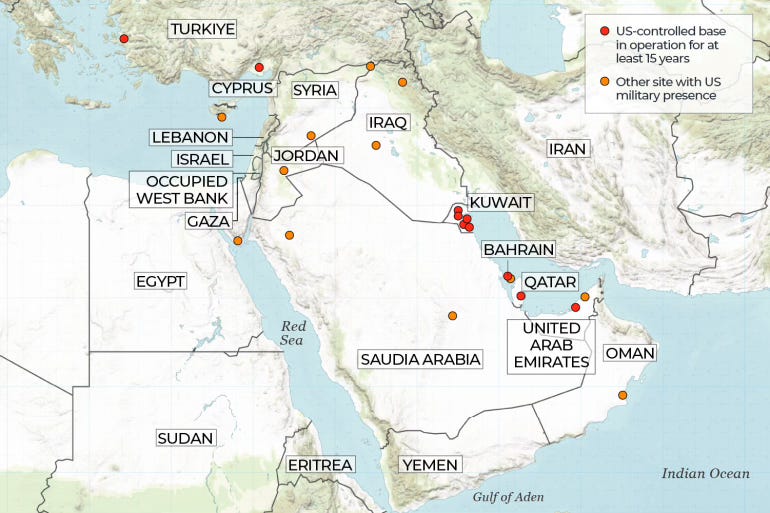
The United States is evacuating non-essential personnel from its bases in the Middle East.
And then there’s the news that almost went unnoticed:
20,000 anti-drone missiles, originally destined for Ukraine, have been suddenly rerouted.
They’re now headed to the Middle East.
Why?
The wheels are already in motion.
Something is in the works.
And it’s not just a drill.
Someone, somewhere, has the feeling that something big has happened.
But here’s the point.
The real fear is something else, far more uncomfortable.
What if it’s already too late?
What if Iran has already achieved nuclear capability?
What if Western intelligence, this time, is behind?
What if Israel launches the attack… only to find itself facing an enemy already armed with the atomic bomb?
What do you do then? Wait, hold back. Yet the more you wait, the more you let them advance in their development.
That’s the riddle keeping Israelis awake — and not just them.
As events unfold in real time, I don’t want to chase after overlapping headlines at the risk of bringing my readers fake news or an incomplete story. First, let’s take a step back and look at how we got to last night’s events. In the coming hours, once the situation is clearer, we’ll examine what actually happened.
If the update has already been published, you’ll find the link at the bottom of this article.
As always, thank you for your support. If you enjoy my straightforward, no-nonsense takes, I invite you to subscribe for free so you don’t miss future updates. Thanks again.
Now take a deep breath and stay with me — let’s begin.
April 14, 2024 – The Night Iran Showed Its True Face
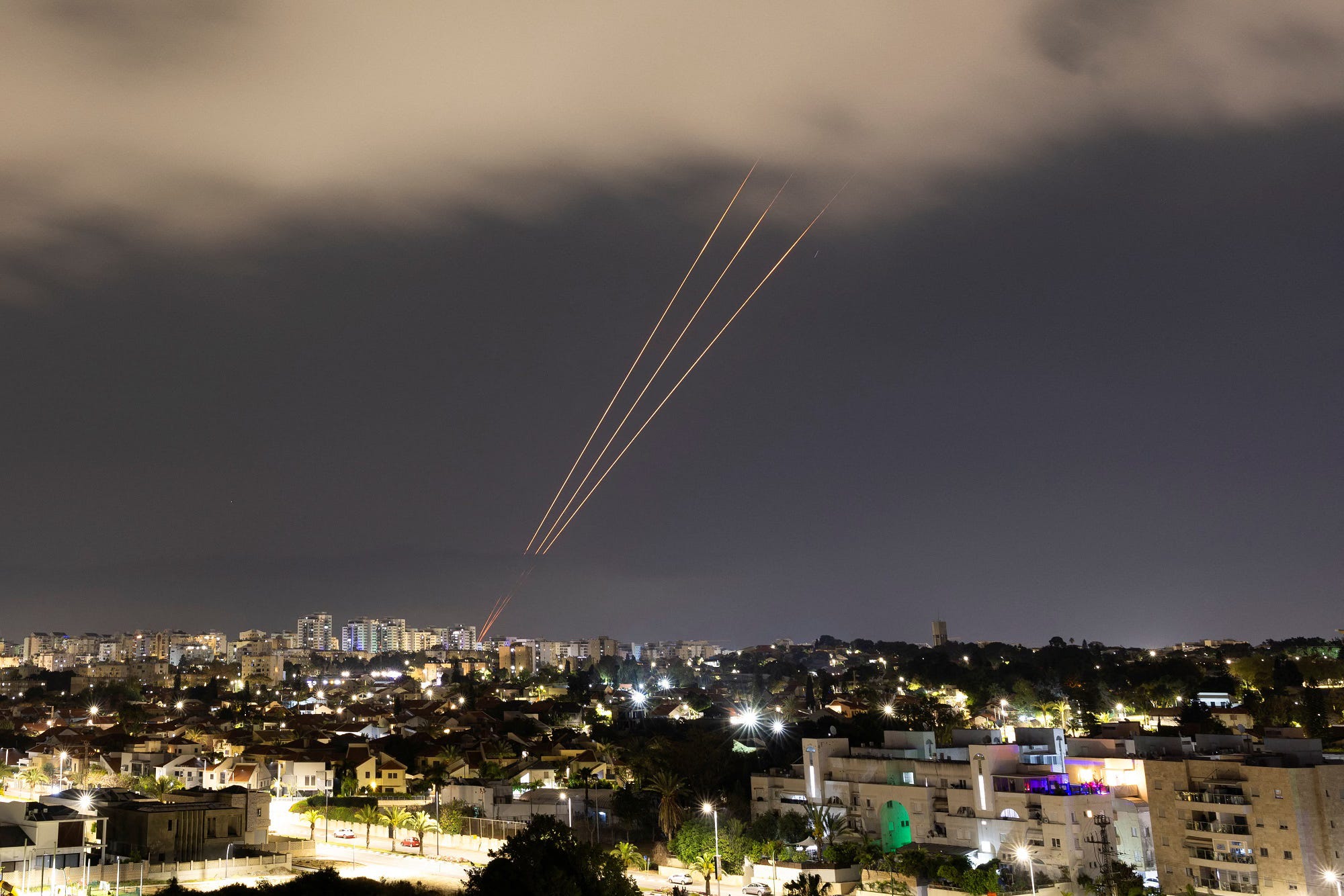
It was a quiet evening—or so it seemed.
One of those nights that feel like late spring: warm air, open windows, light conversation, a glass of wine in hand.
And then...
Suddenly, notification alerts started going wild.
Headlines from international outlets raced to keep up:
“Iran has directly attacked Israel.”
This wasn’t the usual skirmish via Hezbollah, nor yet another rocket fired from Gaza under the veil of ambiguity.
This was a direct attack. Explicit. Signed.
Iran had just launched over 300 airborne objects—drones, cruise missiles, ballistic missiles—at Israel.
A massive assault, designed to overwhelm air defenses, strike multiple targets simultaneously, and test not only the Jewish State, but the entire balance of power in the region.
I was at a friend’s house for dinner.
One of those slow weekend meals, full of laughter and distractions. But while everyone else chatted, I stared at my phone screen.
Something was building inside me—not fear, but something subtler. More insidious. A deep unease.
I had a strong sense that something historic was unfolding.
Iran had just crossed an invisible line that no one had dared to step over—until now.
And in its defense, Israel wasn’t left alone.
Within hours, the United States, the United Kingdom, and France sprang into action.
Their defenses, their aircraft—everything was mobilized to contain an attack that could have turned catastrophic.
That night ended with few casualties, thank Heaven.
But it left us all with a lingering question:
what if next time, the objects aren’t just conventional?
Why did Israel take so long to respond?
It’s the question we’re all asking.
Why, after such an act, hasn’t Israel struck back?
Why wasn’t that infamous “red line” followed by an immediate military response?
The truth is, Israel isn’t the only one deciding.
Behind the scenes, the United States has been holding back—for years.
They did it under Trump. They did it under Biden.
Even Obama, perhaps the most idealistic of the three, chose to try diplomacy.
And yet Iran has never stopped feeding its visceral hatred of Americans.
It screams it in the streets, prints it on posters, repeats it in speeches:
Death to America.
But the Americans kept seeking dialogue.
Perhaps out of pragmatism.
To avoid another war in the Middle East.
Obama succeeded—at least briefly: in 2015 he signed a historic agreement to limit Iran’s nuclear program.
But today, that agreement is nothing more than a memory, emptied, ignored, overtaken by events.
January 20, 2025 – Trump Returns to the White House, and Iran Becomes an Immediate Priority
Donald Trump returns to the White House with a clear agenda: to regain control of an increasingly unstable global chessboard.
Among the most urgent files on his desk, the one marked Iran sits squarely on top.
And the file is blunt: Tehran is only steps away from nuclear capability, and Israel has no intention of standing by.
Trump knows it well.
He knows Iran isn’t the same as when he left office.
He’s watched it grow closer to China and Russia, test missiles more boldly, and—most importantly—carry out a direct attack on Israel on April 14, 2024, a watershed moment.
With an open war in Ukraine and China turning up the heat on Taiwan, Trump cannot afford for Iran to become a fourth nuclear power spinning out of control.
The Iran file isn’t just a threat—it’s a lit fuse with an ultimatum written on it.
April 2, 2025 – The U.S. Moves B-2 Bombers: A Message to Both Israel and Iran
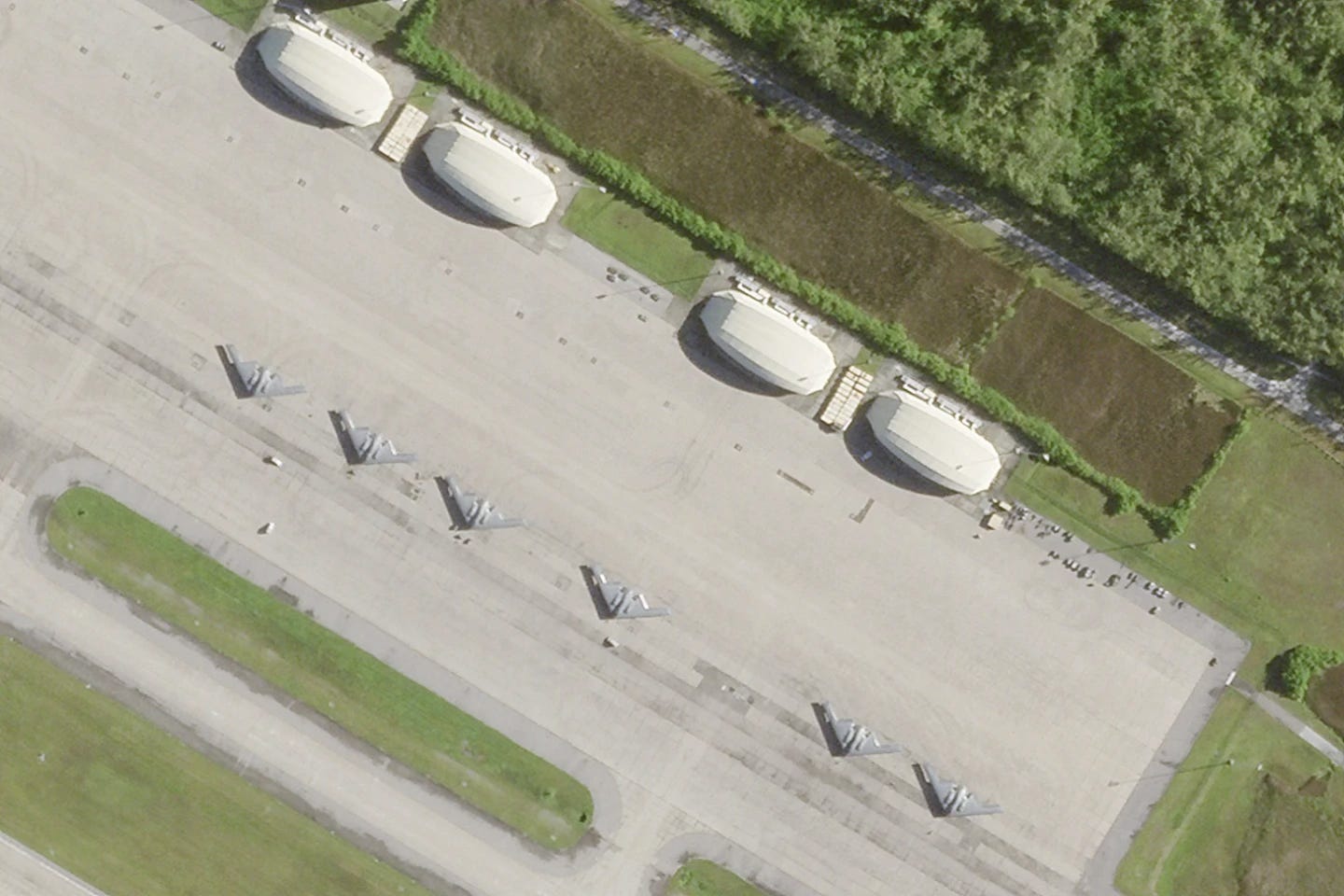
The Pentagon quietly deploys six B-2 Spirit strategic bombers to a base in the Indian Ocean. No press releases. No public statements.
But for those fluent in military language, the message is clear: Washington wants options ready on the table.
The B-2 is designed for surgical strikes on underground nuclear facilities.
This isn’t deterrence—it’s preparation.
The message works on two levels: to allies—especially Israel—it says “we’re ready to act if needed.” To Iran, it sends rising pressure: come back to the table, or face the alternative—force.
Behind the scenes, Tel Aviv watches closely.
The B-2s’ position perfectly overlaps Israel’s attack corridor toward Iran, creating a scenario in which a joint strike could be executed in hours, not weeks.
April 12, 2025 – Iran Accepts Talks, but Israel Isn’t Buying It
Iran agrees to open a new round of negotiations. The first meeting is held in Oman, the second in Rome.
On paper, it’s a good sign.
In reality, it’s a tactical move to buy time.
Tehran comes to the table stiff, offering no technical concessions on its nuclear program, sticking to its usual claim: nuclear energy is for civilian use.
Meanwhile, Israel is convinced this is just cover—to buy time for the final stages of an atomic project.
Israeli intelligence reports suspicious activity at Fordow and Natanz, interpreting the diplomatic front as a smokescreen.
In IDF war rooms, the strike plan begins to crystallize.
It’s refined, updated, and coordinated with American partners.
The critical sites are mapped. The window to act is closing fast.
May 27, 2025 – The Third Round Collapses. Israel Starts the Countdown
After more than a month of fruitless meetings, the third round in Muscat certifies the collapse of diplomacy.
Trump says negotiations are “going well,” but adds, “I don’t trust anyone.”
Iran’s Foreign Minister is more blunt: “There are no guarantees of a swift resolution.”
Behind these carefully measured words lies a clear truth: the talks are dead.
At this point, Israel stops holding back.
It sends a crystal-clear message:
“If there’s no deal, there will be an attack.”
Saudi Arabia—aware of the fallout—urges Tehran to at least sign a statement of principles.
But Iran refuses.
For the Israelis, this is the green light.
The point of no return has been reached.
No more pretexts are needed: the right to preventive defense is now fully justified.
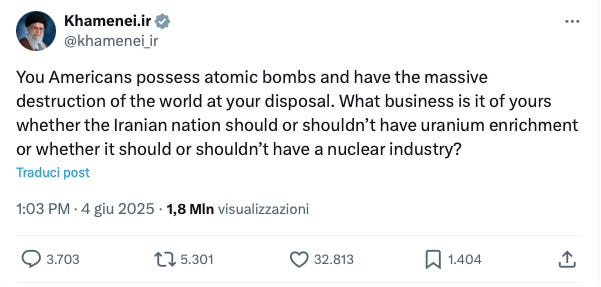
June 8, 2025 – The U.S. Shifts Focus. Iran Becomes the New Frontline
In the middle of a Ukrainian counteroffensive that was expected to be decisive, the United States diverts 20,000 anti-drone missiles from the European front to the Middle East.
Zelensky voices his protest — but the decision is made.
This isn’t just a logistical adjustment. It’s a strategic declaration.
It signals that Washington now sees the risk of conflict with Iran as more imminent than the threat from Russia.
Israel reads it for what it is: a green light — you're not alone anymore.
On Israeli airbases, preparations intensify.
Pilots are briefed. Routes are locked. Bunker coordinates are confirmed.
It’s a matter of days.
June 11, 2025 – Evacuation of U.S. Bases: The Prelude to Bombing
Defense Secretary Pete Hegseth appears before the Senate and makes it clear:
“Senator, as you know, the Middle East is and remains a very dynamic theater,” Hegseth claimed. “We’re going to surge counter UAS systems to our troops and our bases and our places first […] that has been and will continue to be a priority for us.”
That same day, nonessential personnel and families are ordered to evacuate from Iraq, Kuwait, and Bahrain.
In military terms, this move says one thing:
“Something is about to happen.”
Iran responds through Minister Nasirzadeh, issuing an explicit warning to all U.S. bases in the region:
“If war is forced upon us, the United States will have to leave the Middle East. Every one of their outposts is within our reach.”
This is a declared escalation.
A deliberate crescendo.
The next move, will officially ignite the conflict.
And the one to make it will be Israel.
How will this story continue?
The truth is, we are walking on a thin, taut wire, bending under the weight of every hour that passes without an agreement.
The margin for error is minimal. Time is almost up.
The situation is fragile. Unstable.
And if Iran doesn’t change course, there’s no illusion to be granted: it will not end well.
The United States, for their part, do not want a war.
They already have too many fronts to watch: Ukraine, Taiwan, the Indo-Pacific.
Another conflict would open a huge gap in their strategic capacity.
That’s why they keep pushing for diplomacy, even though they know it’s failing.
Even though, deep down, many are convinced that this time, a clash is inevitable.
Israel, however, does not have the luxury of waiting.
It has no oceans protecting it.
It lives just minutes away by flight from Iran.
Within rocket range. Within mistake range.
And that’s why, after years of war against Hamas, months of fighting Hezbollah, and the fall of Assad’s regime in Syria — today it looks Iran straight in the eye.
The last pillar.
The mind. The director. The octopus.
The one that funded the Houthi missiles, the escalation in Lebanon, the chaos in Gaza, global insecurity.
And Israel, this time, wants to close the circle.
Want to know what I think?
I believe Israel is right.
Being at the head of the world order is not just a privilege. It’s a burden.
It means facing threats before they become lethal.
It means intervening before someone presses a button that can’t be undone.
Yes, we must have the courage to stop Iran from completing its nuclear arsenal.
And do it now, before it’s too late.
Provided, of course, that it’s not already too late.
Because if Tehran has truly crossed that threshold,
we are entering a new era.
One where every attack can become reciprocal.
And a nuclear exchange — even a limited one — would change the face of the Middle East forever.
But I don’t want to believe that. Not yet.
I want to think there is still a window.
Narrow, tiny, but real.
Trump knows it.
And you can sense it between the lines of his strategy:
He tried to give them one last chance, but he didn’t succeed.
A chance to pull back, avoid impact, save what can be saved.
It’s in everyone’s interest:
the United States, who want to avoid a second front;
Israel, which was ready as we have seen, but certainly would have preferred to avoid it.
and Iran itself, which risks losing everything.
But there is one detail we cannot ignore.
Today, for some regimes, true sovereignty comes from terror.
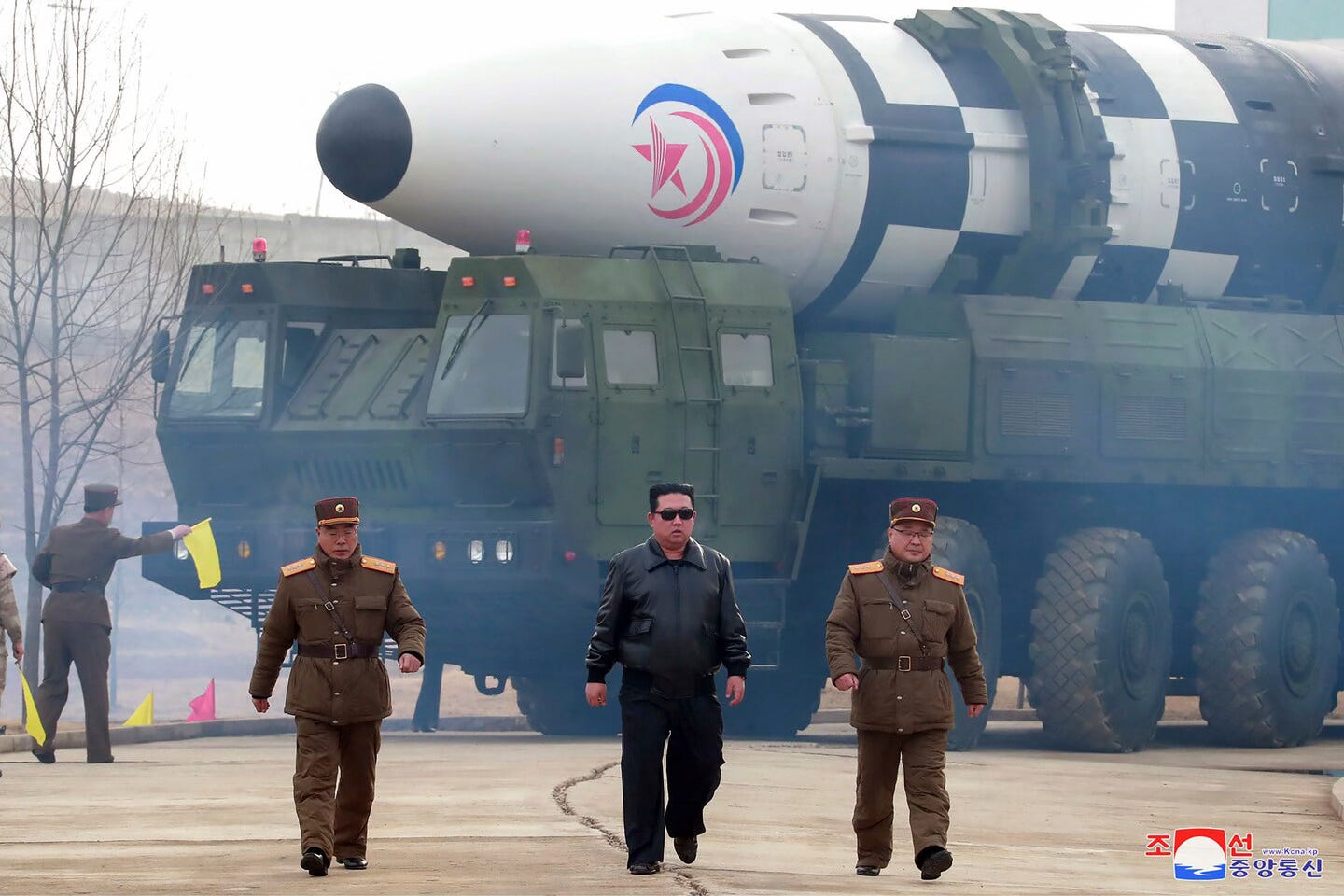
This is the lesson Kim Jong-un has taught the world:
a nation that possesses the bomb can no longer be invaded, overthrown, ignored.
And Iran has learned that lesson well.
They want to be feared, not respected.
They want us to consider them dangerous, not reliable.
And here lies the crossroads.
Tehran was given the opportunity to make a choice:
give up the bomb in exchange for eased Western sanctions,
or complete the bomb, accepting to become like North Korea:
isolated, poor, hostile, but untouchable.
The question that remains is simple.
But it contains within itself all the possible catastrophes of our time:
Do the Iranians really want to challenge the free world to the very end? Or have they understood Israel’s message? Will they stop, or is this only the beginning?
One way or another, I’ll be here to tell you, always with my style, my way.
Thank you for reading through to the end.
If you enjoy the way I share what’s happening in the world, I warmly invite you to subscribe for free to my Substack. Thank you if you do.
See you in the comments.
Nice breakdown.
This is exactly the same playbook used by the British Empire to kick off WW1. The century of financial wars.