
Is Ukraine Winning or Losing?
Is Russia Achieving Its Goals or Stuck in a Quagmire?

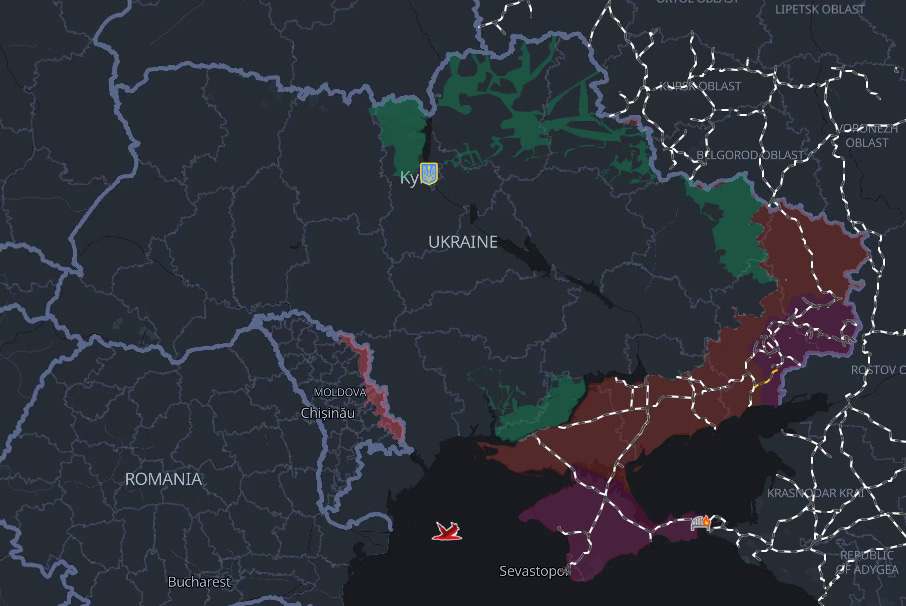
We know all too well: in war, the first casualty is always the truth. And the conflict in Ukraine is no exception.
More than three years after the start of hostilities, it is still difficult to find analyses that, in good faith, tell it as it is. There are high-quality assessments — such as those from the Institute for the Study of War (ISW), which I follow with interest — but amid the relentless flow of events, determining whether the Ukrainians are winning or losing remains a challenging task.
A clear example? On the very same day, you might come across articles claiming:
that the Russian economy is on the brink of collapse;
and that Russian missiles are continuing to strike Ukrainian cities in growing numbers.
Two messages in stark contradiction.
Or:
that Ukrainian forces are losing territory day by day;
yet also that there have been over one million Russian casualties.
How should one interpret such information when it doesn’t seem to align?
In this sea of conflicting narratives, the only viable approach is to arm ourselves with patience, accept the complexity, acknowledge the many shades of grey, and truly attempt to understand what is happening.
Today, we will do just that.
Thank you for opening this article.
Here you will find a clear-eyed look at how the West is defending itself from increasingly aggressive external threats — and what you can do to protect yourself.
To safeguard your freedom of movement, your economic independence, and above all, your personal safety.
Thank you.
🪖 What Does “Winning” Mean?
At first glance, the concept of victory seems simple — even a child could grasp it. Yet, especially in the military realm, defining a victory can prove surprisingly complex.
Consider Nazi Germany. In that case, defeat was unambiguous: the leader dead by suicide, the territory occupied, the nation split into East and West Germany, and the country effectively administered by Americans and Soviets for decades. A textbook example of total collapse.
Today's war in Ukraine against Russia is somewhat different. Both presidents are alive, governments remain functional, neither army has disintegrated, and no capital is under foreign occupation — although the Russians did attempt to seize Kyiv in 2022.
And that is precisely where we must begin: with 2022 and Russia’s failed assault on the Ukrainian capital.
To understand what “victory” means in this context, we must first examine the objectives.
Have the Russians achieved them? Perhaps only partially? Or not at all?
And what about the Ukrainians? What objectives are they pursuing today — and are they managing to fulfill them?
🇷🇺 Russia’s Objectives
In December 2021, Vladimir Putin was amassing his troops along the Ukrainian border. The war had not yet begun — at least, not officially. Within weeks, rifles would start cracking and bombs would begin to fall, but even then, the Russian president already knew exactly what his goals were.
It is reasonable to assume that, in those months, behind closed doors, Moscow engaged in talks where — through threats and ultimatums — it tried to secure what it is now attempting to seize by force.
As one might expect, strategic wartime objectives are never fully spelled out: partly to avoid giving clues to the enemy, and partly to avoid alienating domestic public opinion, which might not understand complex strategic reasoning.
Shortly before the invasion, Putin delivered public speeches to the Russian people outlining the supposed motives for military action:
“Denazify” Ukraine;
Liberate the Russian-speaking population of Donbas from alleged “Ukrainian oppression.”
However, it is clear that we cannot build a serious analysis on such statements. “Denazification” is a concept devoid of tangible meaning (come on, let’s be serious), and it seems implausible that Putin would sacrifice over a million men to “save” a few million civilians in Donbas.
Putin is not that naïve.
The real question, then, is: What are Russia’s true objectives? What should we look at to determine whether Moscow is winning — and whether Kyiv is managing to hold out?
Beyond speeches aimed at a domestic audience, Putin also addressed us in the West, speaking a little more transparently about his actual goals:
Keeping Ukraine out of NATO and the European Union;
Removing Volodymyr Zelenskyy from the presidency, viewing him as excessively pro-Western.
These appear to be more concrete objectives, consistent with Russia’s military actions.
On February 24, 2022, hostilities officially began: Russian forces crossed the border on multiple fronts.
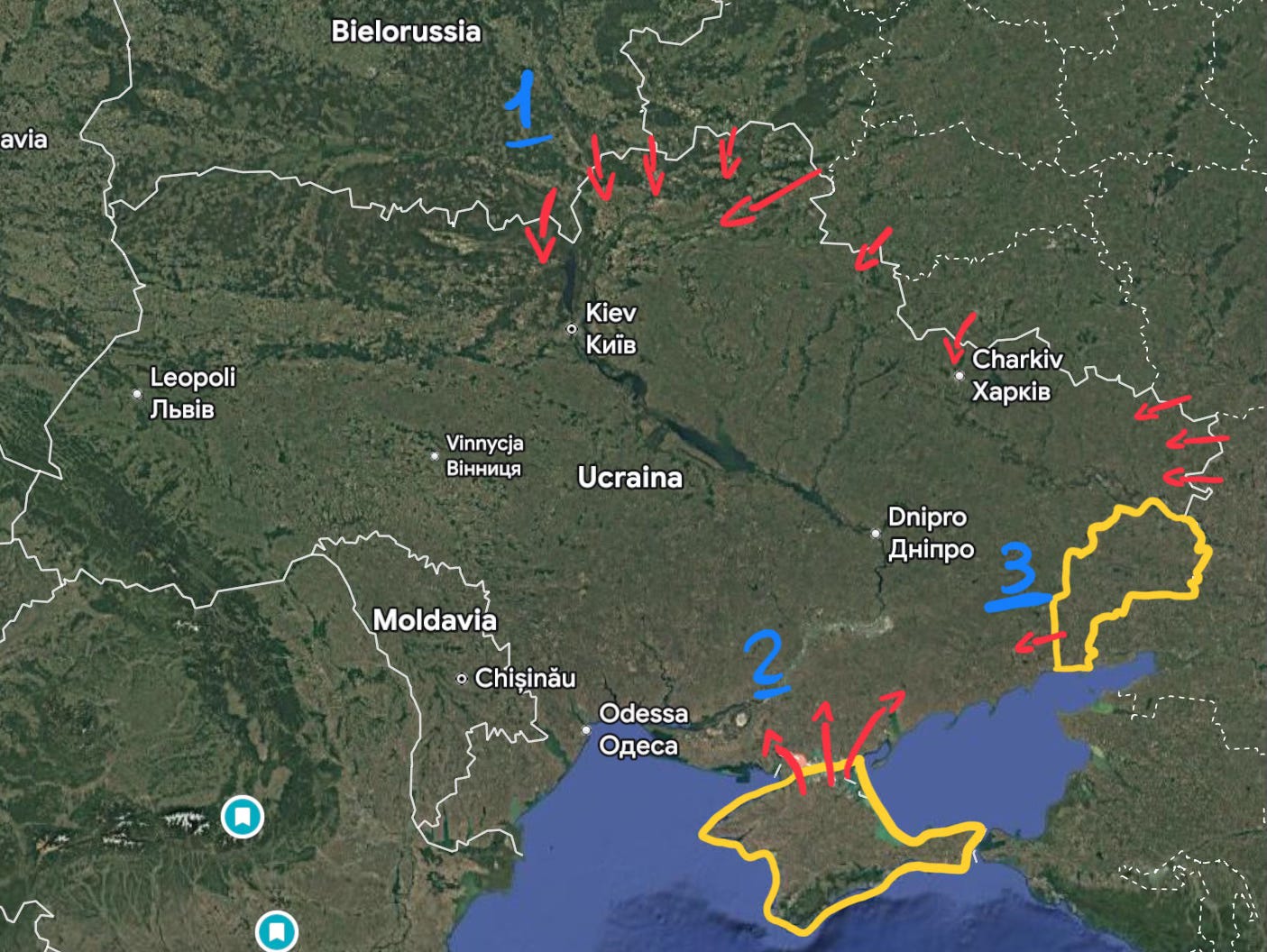
From Belarusian territory, they advanced south toward the capital.
From the south, launching from Crimea, they pushed north and east, aiming to occupy Kherson Oblast and then Zaporizhzhia Oblast.
From occupied Donbas, they moved west to link up with forces advancing eastward, cut Ukraine off from the Sea of Azov, and connect Crimea to mainland Russia.
Of these axes of advance, the push toward Kyiv drew the most attention in the early days. The underlying goal was clear: seize the city, capture the president and government, and replace them with a puppet administration.
This objective was strategic because it would have allowed Russia to achieve everything without a prolonged war, using a blitzkrieg approach:
Ukraine would lose its sovereignty;
It would cede territory;
It would begin a gradual disengagement from NATO and the European Union.
In other words, if Moscow had succeeded in taking Kyiv, it could have turned Ukraine into a kind of new Belarus.
Russia’s initial military moves were therefore fully aligned with its stated goals: push Ukraine away from the Westand change its government.
But the story doesn’t end there.
The Southern Front: The Corridor to the Black Sea
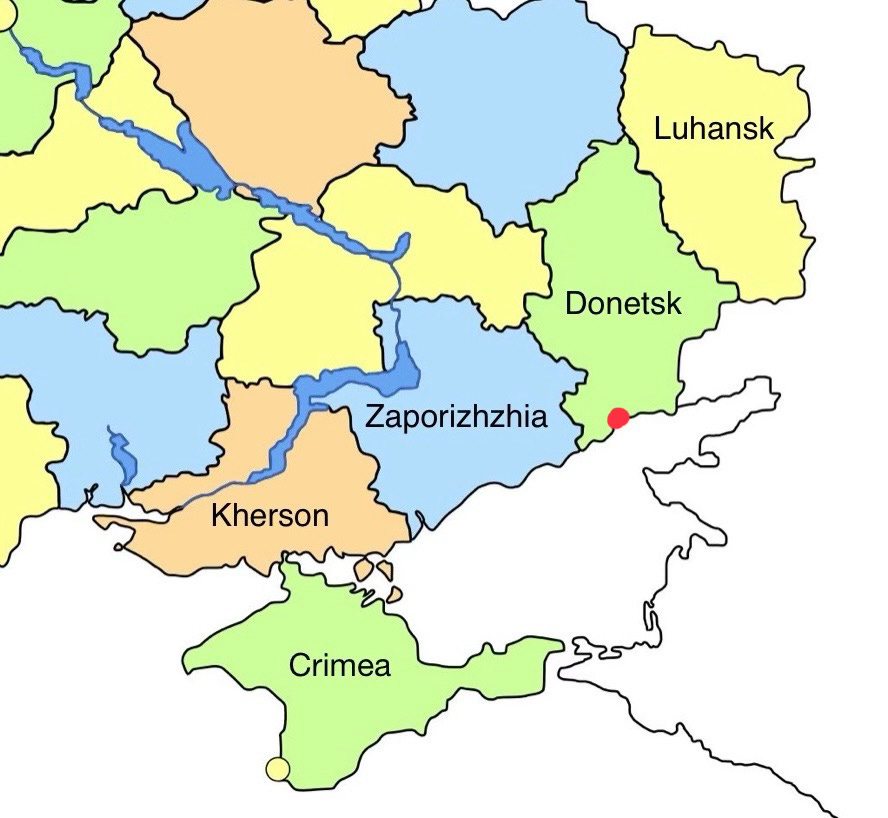
During the same weeks when fighting raged in the north for control of the capital, the south drew attention to strategically vital cities such as Mariupol.
Here, the Ukrainians did not enjoy the same fortune they had in Kyiv: while the capital was defended effectively, the country’s south suffered a steady occupation, taken kilometer by kilometer.
But let’s be clear: Donbas is made up of two oblasts — Donetsk and Luhansk.
The Russians seized most of Luhansk in the early weeks of the conflict, while much of Donetsk was, surprisingly, left behind.
Why?
In the initial phase of the war, in the south, Moscow focused not so much on Donetsk, but on two other oblasts: Zaporizhzhia and Kherson. At first glance, this choice seems at odds with the propaganda narrative of “liberating the Russian-speaking people” and even with the strategic aim of distancing Ukraine from NATO.
To be clear: the Zaporizhzhia region is not part of Donbas, nor does it inherently force Kyiv to distance itself from the Atlantic Alliance. So why target it right away?
Clearly, Russia’s military actions pointed to goals different from those officially declared.
Today, with three years of war behind us, we can clearly outline Moscow’s main actual objectives:
Regime change in Kyiv, replacing Zelenskyy with a pro-Russian (puppet) leader.
Pushing Ukraine away from NATO, the EU, and the West.
Strategic control of key territories — from east to west: Luhansk, Donetsk, Zaporizhzhia, and Kherson — to create a land corridor linking Crimea to mainland Russia.
Denying Ukraine access to the sea, ideally pushing as far as Odesa and occupying at least part of Mykolaiv and Odesa oblasts.
We have therefore laid out objectives consistent with both Putin’s words and the military moves undertaken since 2022.
Now the inevitable question arises: Has Russia achieved these objectives? Perhaps only partially?
Which Objectives Have the Russians Achieved?
Let’s examine them in the same order I listed earlier:
❌ Change the Ukrainian government: No — at least for now, the Russians have not managed to depose Zelenskyy.
❌ Push Ukraine away from the West: This goal also seems out of reach. In fact, the war has strengthened ties between Western nations and Ukraine. Many in the West now feel closer to the Ukrainian cause, and Ukrainians see themselves as more European than ever. NATO weapons are now present in Ukraine in greater numbers than four or five years ago.
✅ Link Crimea to mainland Russia: This was a clear and early success. Crimea is firmly in Russian hands, as are the territories connecting it to Russia. As a result, Moscow has strengthened its control over the Black Sea — particularly its eastern portion.
⚠️ Deny Ukraine access to the sea: A partial result. While it is true that Ukraine has been completely cut off from the Sea of Azov, it still retains full control of Odesa Oblast, thus ensuring access to the Black Sea.
Ukraine can continue trading by sea, attack Russian vessels with naval drones, and put the Russian navy under pressure. It is also fighting to retake and maintain control over offshore oil facilities in the Black Sea, which are vital to safeguarding and controlling maritime trade.
As of today, the situation for Russia is not particularly promising. Although it has crippled Ukraine by seizing important, productive territories and has solidified control over Crimea, this victory is meagre compared to its far more ambitious goals.
Driving Ukrainians away from the Western world is, with each passing day, looking more like an unattainable dream. The West maintains a firm grip on Ukraine and shows no intention of letting go. Weapons and economic aid keep flowing without pause, while Ukrainians force the Russians to pay a steep price for every square centimeter gained.
What the Russians have achieved is, ultimately, a Pyrrhic victory: a respectable outcome, but certainly insufficient.
🇺🇦 So? Is Ukraine Winning or Losing?
It depends on the parameters we consider.
It is winning if we look at its ability to hold out in the first weeks of the war, to keep its capital free, its government intact, and to forge strong ties with the West.
Back then, no one — myself included — would have bet a single euro (or dollar) that Ukraine would hold for more than a few days, a few weeks at most. From this perspective, Ukraine, simply by existing and maintaining its sovereignty, is not just winning — it is overachieving.
It is not winning, however, if we focus on other factors: it has lost significant territory, is economically crippled, survives solely thanks to European funds and U.S. weapons, has not — at least officially — joined either NATO or the European Union, its cities are constantly bombarded, and its people are forced to flee to other European cities in order to live with dignity. That, to me, does not fit the definition of “victory.”
As of today, we do not have a clear winner.
Nearly four years after that pivotal December 2021, Ukrainians are still resisting, the Russians have not achieved their most important goals, and the future remains unwritten.
Who will prevail?
Unfortunately, we still do not know. Both sides have much to gain by prolonging the conflict.
Alongside them, the European Union and the United States are also pushing for the war to continue, as this conflict greatly benefits both Europeans and Americans.
If you want to understand why everyone still has such a strong interest in keeping this brutal and bloody conflict alive, I leave you with my recent, updated article where I explore the issue in greater depth.
Russia, Ukraine, the US, and the EU Have No Real Interest in Ending the War

There are different kinds of citizens.
Per aspera ad astra.
If you found this analysis useful and appreciated the quality of my reasoning,
I invite you to follow me for free.
Your support — even with just a click — is what enables me to continue publishing independent, in-depth, and unfiltered content.
If you see value in what I write, you can contribute simply by applauding and leaving a comment with your thoughts.
I read every comment, and I encourage you to share your opinion — critiques, ideas, and reflections.
Every contribution enriches the discussion and helps build a broader, clearer, and more honest space for thought.
Thank you for reading. Until next time.
You can find all my channels here: → LINK
“That, to me, does not fit the definition of ‘victory.’”
IMO it is relatively rare for a war to end in way that can reasonably be considered a victory for either side.