
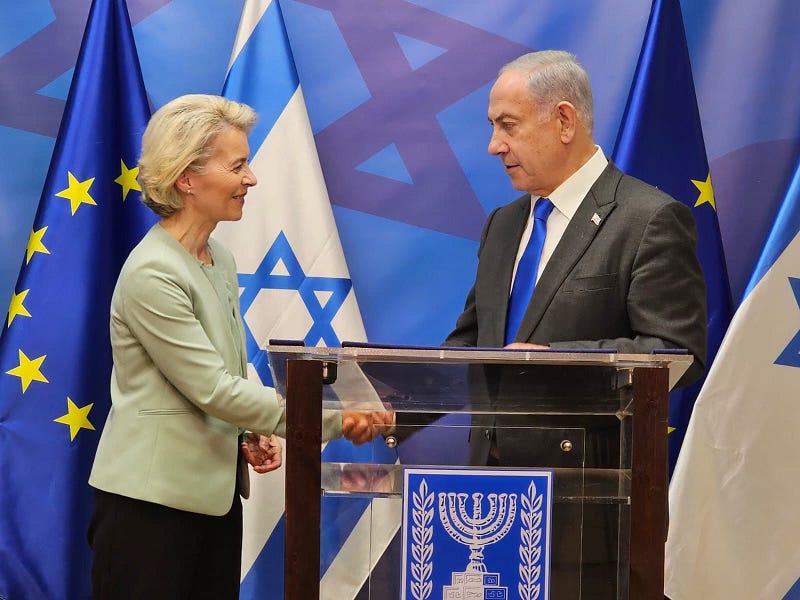
The Invisible Thread Between the Europe and Middle East
In this article, I talked about the West’s new enemies.
Russia, Iran, China and North Korea.
These aren’t just any rivals.
These are countries that are growing increasingly close.
Not through words, but through action.
They’ve been working in the shadows for years, trying to overturn the world order we live in.
Their goal is crystal clear: to weaken the West.
To strip us of power.
To bring us to our knees.
They haven’t openly declared war on us yet.
But just listen to what they’re saying—it’s all there.
Every single move they make points in the same direction: to take us down.
In my article, beyond explaining how they’re doing it, I also took a clear stance:
In my view, the war in Ukraine and what’s happening in the Middle East after October 7 are not two separate events.
They’re part of the same plan.
On one side, we see Russia pushing forward,
on the other, tensions erupt with Israel at the center.
Two different fronts, but deeply connected.
As if someone, behind the scenes, is pulling the strings.
But who? Them—or us?
And how are we responding to these threats?
Before we begin, I want to thank you for opening this article — it truly means a lot to me. If you find value in my analysis, I invite you to subscribe for free and support my work.
Thank you so much.
Now, let’s dive in.
Let’s start with the European Union.
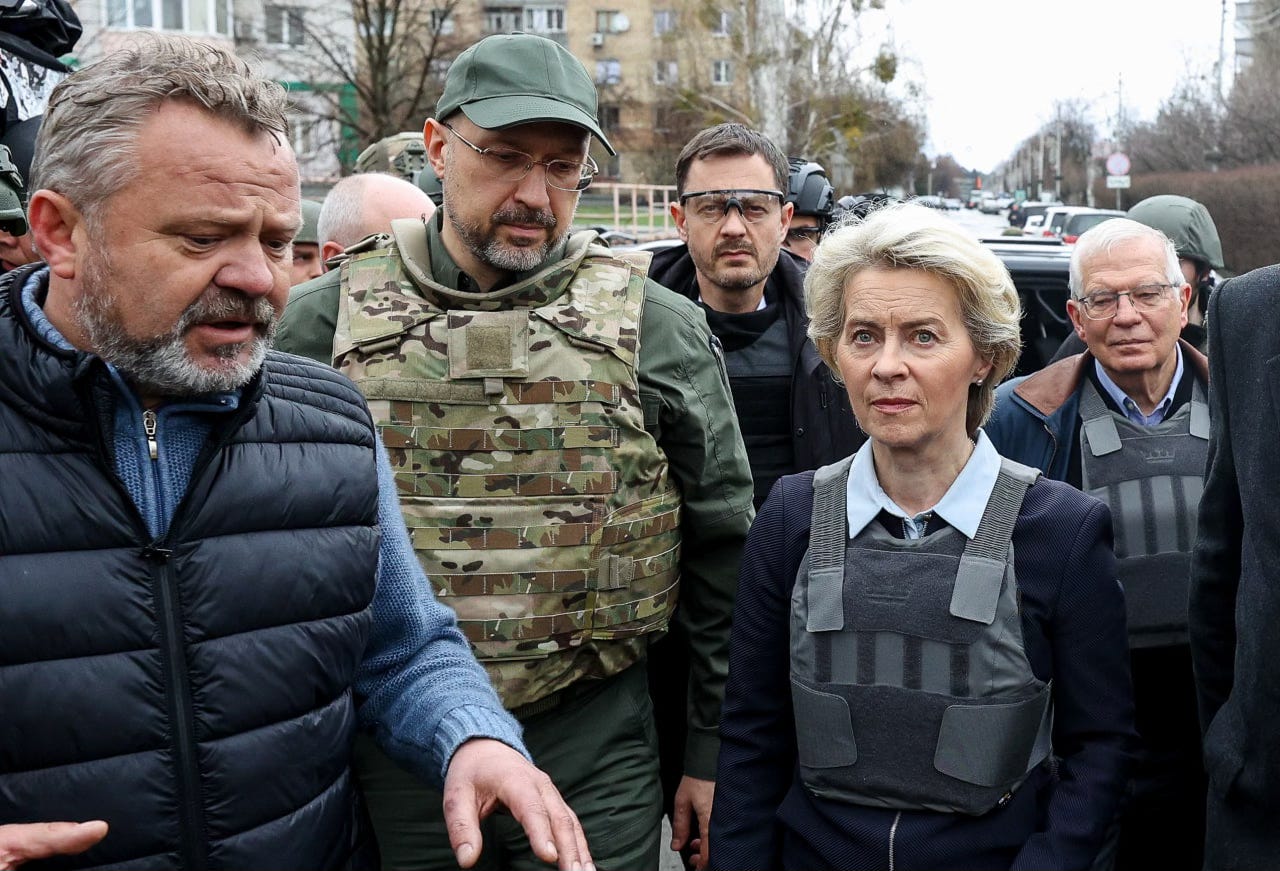
More than three years have passed since Russia launched its invasion of Ukraine.
Troops moved in from Belarus aiming for Kyiv.
Those stationed in the Donbas pushed toward Mariupol.
Much has been said about the motivations, the justifications.
Russia gave its own: liberate the Donbas, denazify Ukraine—whatever that’s supposed to mean.
But it doesn’t take much common sense to see these are just excuses.
Pro-Russians blame the West.
And to be honest, they’re not entirely wrong.
In my view, Russia invaded Ukraine for a much deeper reason:
It’s trying to become something it no longer is.
On the international stage, Moscow has mattered little over the past thirty years.
And that, for them, is unbearable.
They see themselves as an empire.
They act like an empire.
They want to be treated like an empire.
I’m Italian—we know we don’t carry that much global weight.
And that’s fine. We don’t dream of world domination.
But for Russians, it’s different. For them, it’s a wound.
They want to be feared again.
And it hurts them to see countries that once revolved in their orbit now freely choosing the West.
Estonia, Poland, Romania—they chose their side the moment they had the chance,
and the West didn’t hesitate to take them in.
We integrated them, brought them “into the system,” even militarily.
Today in Romania, the largest NATO base in Europe is being built—bigger even than Ramstein, the historic one in Germany.
These countries wanted to be like us, and we didn’t hold back.
Ukraine was next—its transformation had already begun,
and Russia simply couldn’t accept it.
Pride, strategy, imperial ambition.
They couldn’t afford to lose another one.
I don’t hate them for that—every major power looks out for its own interests.
And I respect the Russians for their boldness.
They made their move.
Took a risk.
Put themselves on the line.
From the start, the objective was clear: eliminate Zelenskyy, install a puppet,
drag Ukraine back into Russia’s sphere of influence,
and prove to the world that Moscow was back.
A global force.
An adversary to fear.
But now, three years later, one thing is clear: it didn’t go the way they hoped.
In my view, Russia is weaker today than it was before the invasion.
At first, they bet everything on Kyiv—but they never got there.
So they pivoted to the Donbas, and that’s when everything changed.
The West woke up.
We saw the colossal mistake they had made, and we acted.
We started sending weapons to Ukraine.
Not to win outright—but to wear them down.
To trap them in a war that’s long, slow, and expensive.
A war where, today, Moscow is just trying to save face.
The U.S. offloaded old weapons from storage.
Europe didn’t have much to send, but it put billions of euros on the table.
We are paying the price—true.
But it’s a price serving a clear purpose:
To drain Russia.
Force it to burn through resources.
To lose ground.
To grow weaker.
And let’s be honest—did we really have a choice?
Russia—and the whole CRINK group—is trying to overthrow the global order.
Could we really turn a blind eye?
Yes, we’re spending a lot.
But we’re also hitting an enemy who, with every move,
tries to undermine peace and prosperity in the free world.
The real question is whether this strategy is delivering.
The answer is yes.
Russia, though far from collapse—despite what some Western propagandists claim—is in a tight spot,
and even they admit it.
The EU, slowly but surely, is managing to turn Russia into a poorer nation than before.
A more isolated nation.
More heavily sanctioned.
…And more widely despised than ever.
Let’s go back to October 7, 2023.
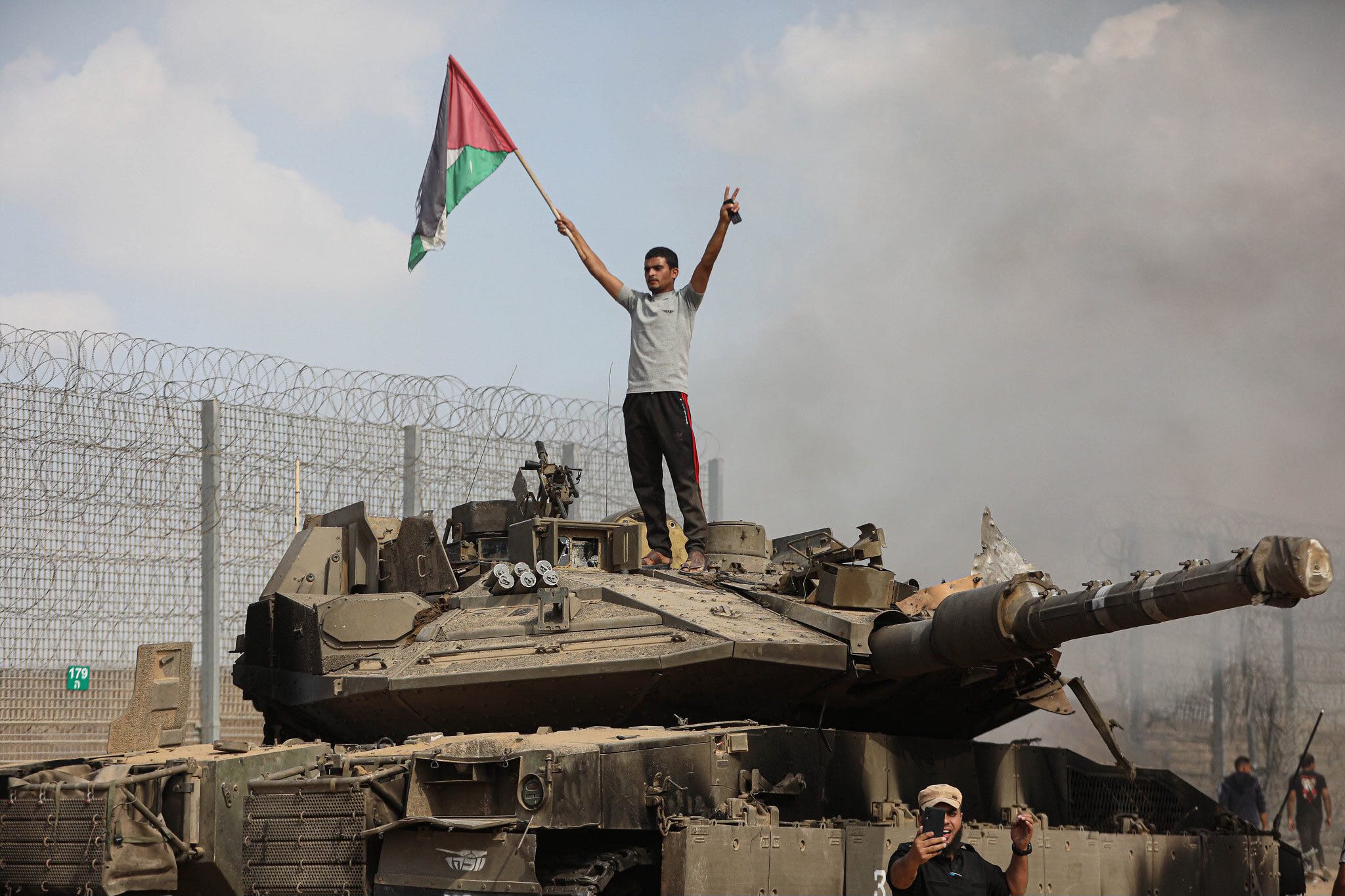
We’re in the Middle East, in the Gaza Strip.
Dawn breaks with the howl of sirens and the roar of violence.
Dozens upon dozens of militants breach the border.
This isn’t a raid — it’s a massacre.
Men, women, children: killed, butchered, kidnapped.
I’ll spare you the images of spilled blood,
Of flames engulfing homes,
Of mutilated bodies.
You can find it all on X, if you wish.
Some of them are still hostages in Hamas’ hands.
In the Strip, the war changed form within hours:
What, in the first days, felt like a celebration — rockets fired into the sky, cheers and singing — turned into a nightmare of rubble, hunger, and despair.
Civilians went from celebrating to fighting for survival.
I won’t open a debate here on the ethics of Israel’s military response, nor will I judge whether what Gaza has become is right or justifiable.
This article looks elsewhere.
It talks about how Israel — and with it, the European Union — is confronting the true puppet master of this conflict: Iran.
Because Hamas is not alone.
Behind the organization that controls Gaza, one can see the long reach of Iran.
Funding, supplies, training: Tehran is the beating heart of a network that includes Hezbollah in Lebanon and, in the past, Assad’s Syria.
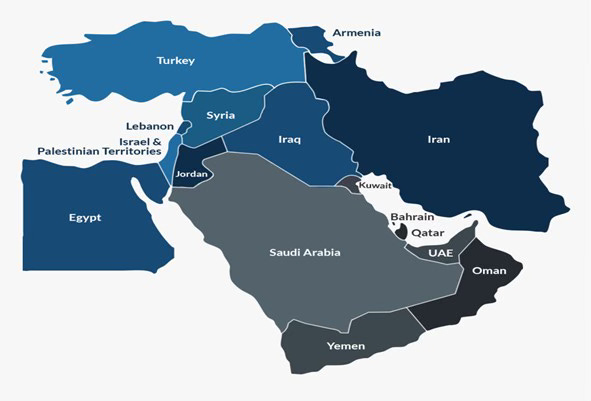
All declared enemies of Israel. All connected by an invisible thread leading eastward.
But time has passed.
More than a year has gone by since that infamous October 7, and the picture has changed dramatically.
Hamas is now a shadow of its former self.
Hezbollah is on its knees.
Assad has abandoned Syria, taking refuge in Russia after Ankara forged alliances with local groups to reclaim portions of territory.
What did Iran and Hamas expect after that attack?
Perhaps they thought Israel would simply watch, or that the international community would limit itself to condemnation and debate.
But that didn’t happen.
Israel saw the crack — and drove straight through it.
Just like the European Union did with Russia after the invasion of Ukraine, Israel seized the opportunity to eliminate its enemies.
First Hamas.
Then Hezbollah.
The Houthis in Yemen remain, but they’re more of a nuisance than a threat.
The real loss is elsewhere: Iran has lost its two most powerful proxies and, with them, its control over Syria — once a vital corridor to supply Hezbollah in Lebanon.
That corridor is now sealed off.
Or at the very least, severely narrowed.
And Israel shows no sign of stopping.
Unlike Trump, who favored caution in this arena, Tel Aviv wants to keep striking.
Because it knows the Iranian threat well.
Because it knows Tehran has never hidden its darkest ambition: to acquire nuclear weapons.
We don’t know what’s next.
Perhaps Israel will stop.
Or perhaps, alongside the United States, it will find a way to strike again — harder.
But one thing is certain: Iran will be Israel’s problem, just as Russia has become Europe’s.
And then there’s something bigger.
Quieter. Further away.
Across the Pacific, China watches.
It doesn’t speak. It doesn’t move. But it sees.
And in its gaze is something ancient — the old Chinese Empire.
Like Russia, it sees itself as an empire.
But unlike Russia, it’s in no hurry.
It is a giant that remembers.
It remembers the humiliation dealt by European powers in the 1800s.
It remembers the pain of crushed pride.
And now, it prepares. Silently. Ruthlessly.
Trump was clear with the Europeans:
“You must arm yourselves. You must stand on your own.”
Because when that giant rises, the United States will have eyes only for it.
And Israel will be left alone to deal with Iran.
…Because America will have bigger things to worry about.
Thank you for reading. I’d love to hear your thoughts, so feel free to leave a comment and share your perspective.
If you enjoyed this piece, consider subscribing for free — and if you feel like it, share the article with others.
Thanks for your time, and see you next time.
what an amazing insight, Simone. Thanks for sharing!