
Is Israel Trying to Save the Druze—or Just Expand Its Territory?
Are Israeli Airstrikes on Damascus a Humanitarian Move—or Just a Pretext?

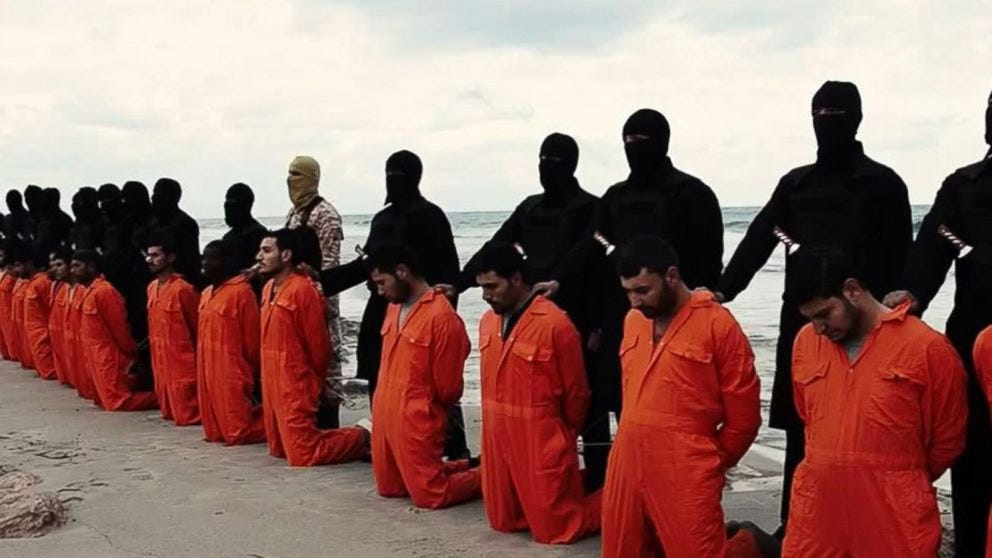
Remember those grim images we had sadly grown used to a few years ago from ISIS-controlled territories?
Men dressed in black, armed and expressionless, standing behind kneeling prisoners in orange jumpsuits, moments away from execution.
Brutal, unforgettable scenes.
Yesterday, watching footage from southern Syria—where affiliates of the new Syrian government, which emerged after Assad’s fall, were publicly humiliating Druze men by ripping off their mustaches in a sign of contempt—those ISIS images came flooding back to mind.
But let’s take a step back.
Who are the Druze?
Who holds power in Syria today?
And most importantly:
Is Israel truly trying to protect a persecuted minority, or is it exploiting the chaos to strengthen its territorial grip?
Let’s try to sort things out.
Without delving into academic detail, we’ll briefly define the key players—then tackle the central question:
Humanitarian intervention or expansionist strategy?
Who Are the Druze, and Why Are They Being Persecuted?
The Druze are an ethno-religious community, historically linked to Islam, but now entirely independent from any Islamic denomination.
They are scattered across several Middle Eastern countries, particularly:
🇮🇱 Israel
🇸🇾 Syria
🇱🇧 Lebanon
In Israel, the Druze community is historically well-integrated.
They are full citizens, serve in the military, speak Hebrew, and despite being Arabs, they are not in conflict with the Jewish majority.
On the contrary: they live in a state of peaceful and productive coexistence, actively contributing to Israeli society.
The situation is starkly different in Syria.
There, the Druze live mostly in the south, near the Israeli border, but are marginalized and lack a coherent national identity.
The Syria we see on maps no longer exists:
it’s a broken mosaic, fragmented among at least two major powers and a host of smaller ethnic and religious groups often locked in conflict.
In this unstable environment, the Druze—like many other minorities—find themselves at the center of ethnic, religious, and territorial strife.
And they are far from passive observers.
They have their own well-organized armed militia, actively fighting to protect their communities.
This militia, according to various sources, is said to be in alignment with (if not outright allied to) Israel.
They’re not innocent bystanders in this orchestra of violence—they play their part. They are not mere spectators.
The New Syrian Government: Former Terrorists in Power
This isn’t the place for a full biography of Syria’s new president and his inner circle.
Perhaps we’ll return to that one day.
For now, here’s what you need to know.
Before becoming “head of state,” Syria’s new leader was anything but a politician:
as a young man, he joined al-Qaeda and fought in Iraq in 2003, during the U.S. occupation.
He was arrested by the United States and imprisoned from 2006 to 2011.
Then, right as the Syrian civil war erupted, he was released.
From that point on, he joined the armed resistance against Bashar al-Assad, quickly rising to prominence.
A symbolic yet telling detail:
the current “president” of Syria—known for his crimes against Christians and Druze—now appears smiling next to Trump, the representative of the very country that once imprisoned him.
A strained smile and a trade of interests.
Once again, the 21st century outdoes dystopian fiction, serving up plot twists few would believe.
And just take a close look at the official photographs:

the former jihadist, now a supposed “institutional leader,” is welcomed with enthusiasm by the American administration.
Trump, in the images, looks pleased.
Smiling like someone who’s successfully installed a strategic ally right where he wanted him.
Because now, with this new face in power, Russia and Iran can no longer move freely in Syria.
But let’s continue.
We’ve clarified who the Druze are.
We’ve identified the man currently leading the Syrian government.
His name is al-Shara’a.
Among his credentials: the founding of Jabhat al-Nusra in 2012, a jihadist group directly affiliated with al-Qaeda, created to overthrow Assad.
And under his leadership, some of the darkest chapters of the Syrian war unfolded:
Under al-Shara'a's leadership, al-Nusra Front and Jabhat Fateh al-Sham perpetrated a series of war crimes, suicide bombings, forced conversions, ethnic cleansing and sectarian massacres against Syria's Christian, Alawite, Shia and Druze minorities.
An impressive résumé, wouldn’t you say?
“He may be a son of a bitch, but he’s our son of a bitch.”
The Druze Massacre and Israel’s Response
In recent days, southern Syria—specifically in areas inhabited by the Druze community—has been shaken by violent clashes between Druze and Bedouin populations.
These weren’t just minor ethnic tensions: it was a true case of urban warfare, marked by combat, raids, and retaliatory violence.
The so-called “central government” stepped in to quell the unrest.
“Central government”—in quotes—because until recently, these were little more than cutthroats.
And how did they choose to “restore order”?
By actively participating in the massacre.
The testimonies are clear:
summary executions and public humiliation.
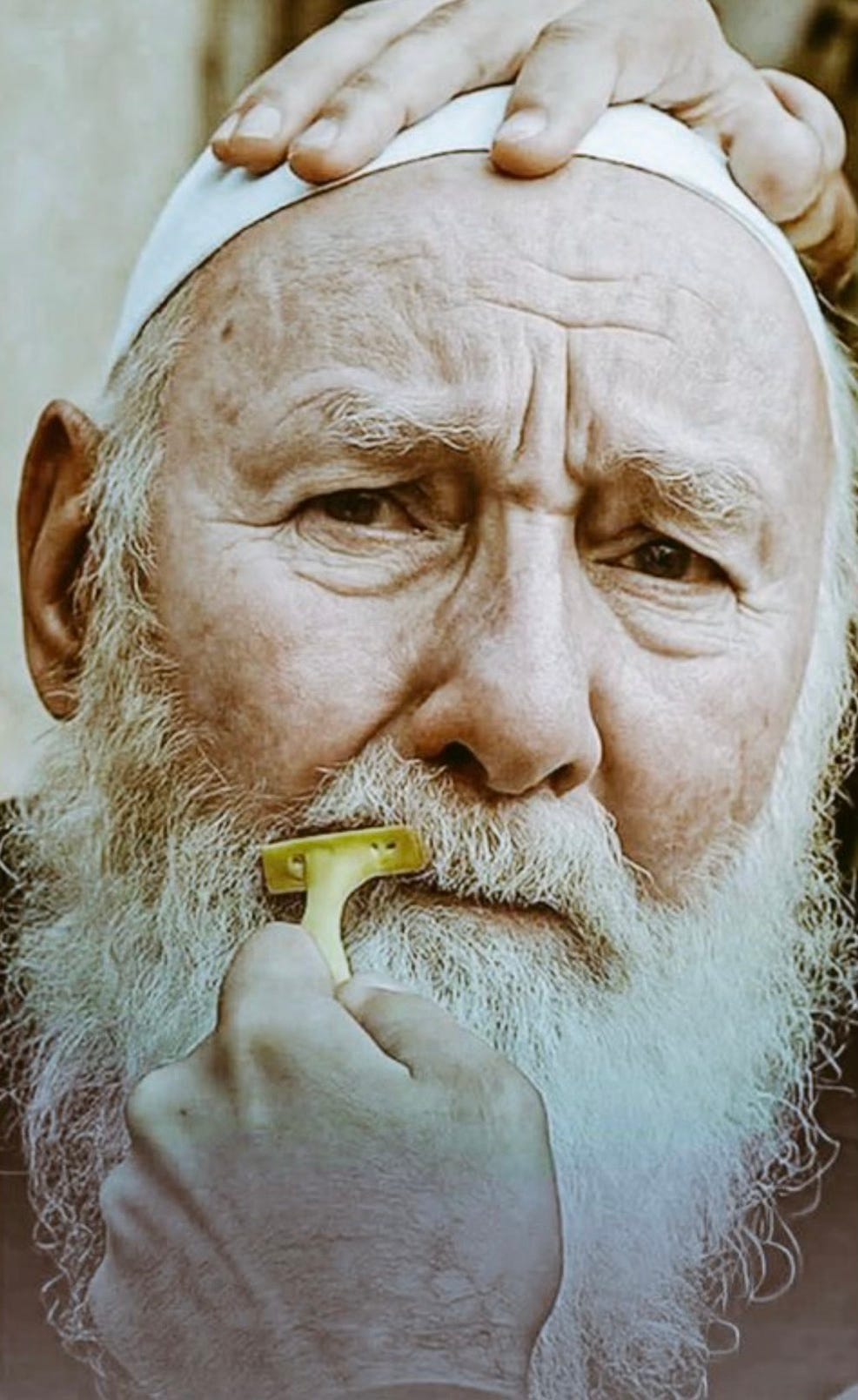
In one of the most shocking incidents, members of the new regime shaved the mustaches of elderly Druze men—a gesture that, in that culture, represents deep humiliation and a loss of honor.
Photos of the corpses?
You won’t find them here. Not because they don’t exist—but out of respect.
I’ll show you just one symbolic image:
a “policeman”—or rather, a former militant now wearing a government uniform—cutting off a seated, helpless Druze elder’s mustache with visible contempt.
It’s within this atmosphere of tension, violence, and public degradation that Israel decides to intervene.
It’s worth remembering:
Israel is not an exclusively Jewish state. It is also home to a significant number of Christian, Muslim, and Druze citizens, who—so long as they follow the law—are fully integrated into society.
Many serve in the military, hold public office, and contribute meaningfully to the country.
Israel’s response was swift:
government buildings in Damascus and Syrian military convoys were targeted, accompanied by a clear statement:
retaliation will continue until hostilities against the Druze cease and Syrian troops withdraw from the south of the country.
One detail is particularly telling:
Israel wants no Syrian military presence in the southern regions.
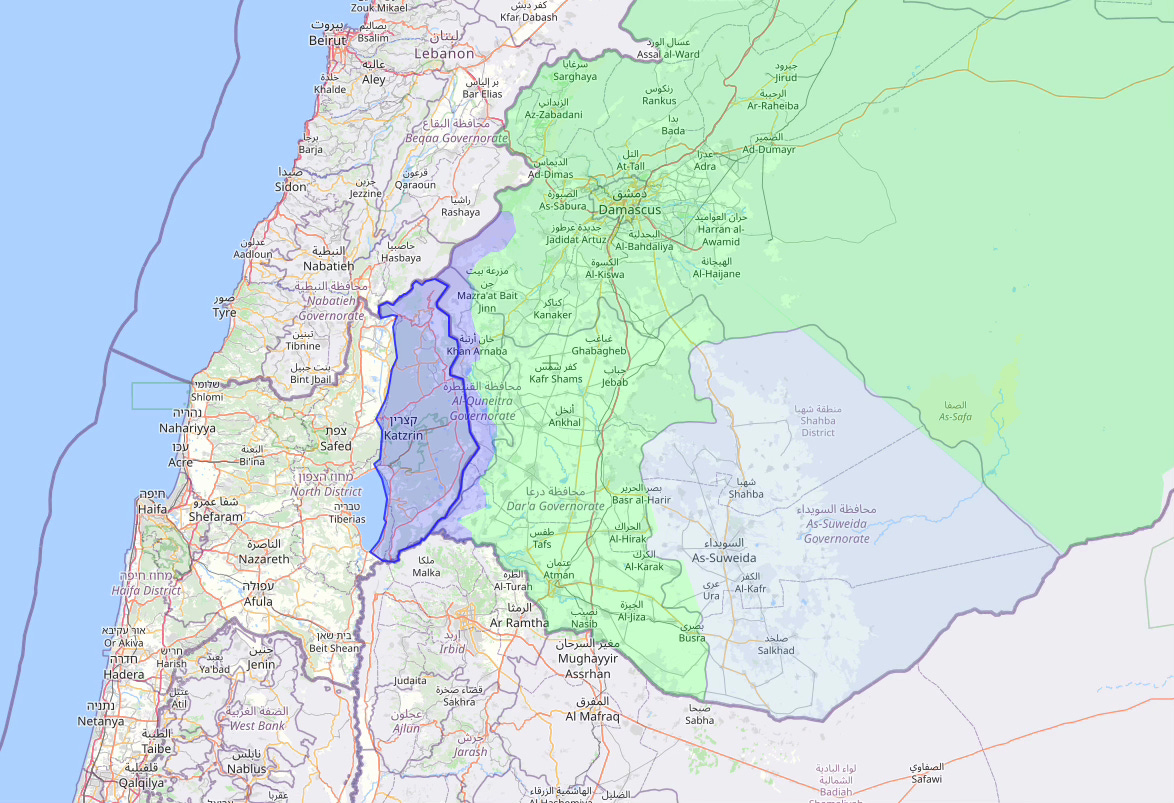
Take a look at the map:
Southern Syria is marked in green.
In white, the Druze-inhabited territories.
In blue, areas under Israeli control:
west of the blue line are the Golan Heights;
east of the blue line are zones that fell under Israeli influence after Assad’s fall and the rise of the new government formed by former jihadists.
It’s precisely in that corridor—between Damascus and the Israeli border—that Israel wants to block any Syrian military presence.
So let’s return to the original question:
Is Israel truly defending a persecuted minority, or is it using the crisis to strike at an enemy government and expand its territorial influence?
The Short Answer?
Both things are true.
The Long Answer?
Israel is home to a Druze community that is loyal, integrated, and militarily active.
A community that poses no problems—in fact, it plays a vital role in the functioning of the state.
Many Israeli citizens, Jewish and non-Jewish alike, feel both a moral and political obligation to intervene in defense of their “brothers” across the border.
But it would be naïve to think it ends there.
Israel does not trust the new Syrian government, born from jihadist militias with a past marked by war crimes.
And even though a diplomatic normalization effort is underway between Syria and Israel—modeled on existing relations with Egypt and Jordan—there’s still a strong sense that Israel envisions a different future for Syria.
One shaped by the classic strategy of “divide and rule”:
keep potential enemies divided, weakened, and in constant conflict.
In this context, the Druze may represent the perfect opportunity to stir chaos, strike at adversaries, and intervene militarily—all under the banner of a seemingly noble cause.
A “pretext”? Perhaps.
Or a convenient cover.
Because let’s be honest: Israel doesn’t need an excuse to act.
But if one’s available, all the better.
What Should We Expect?
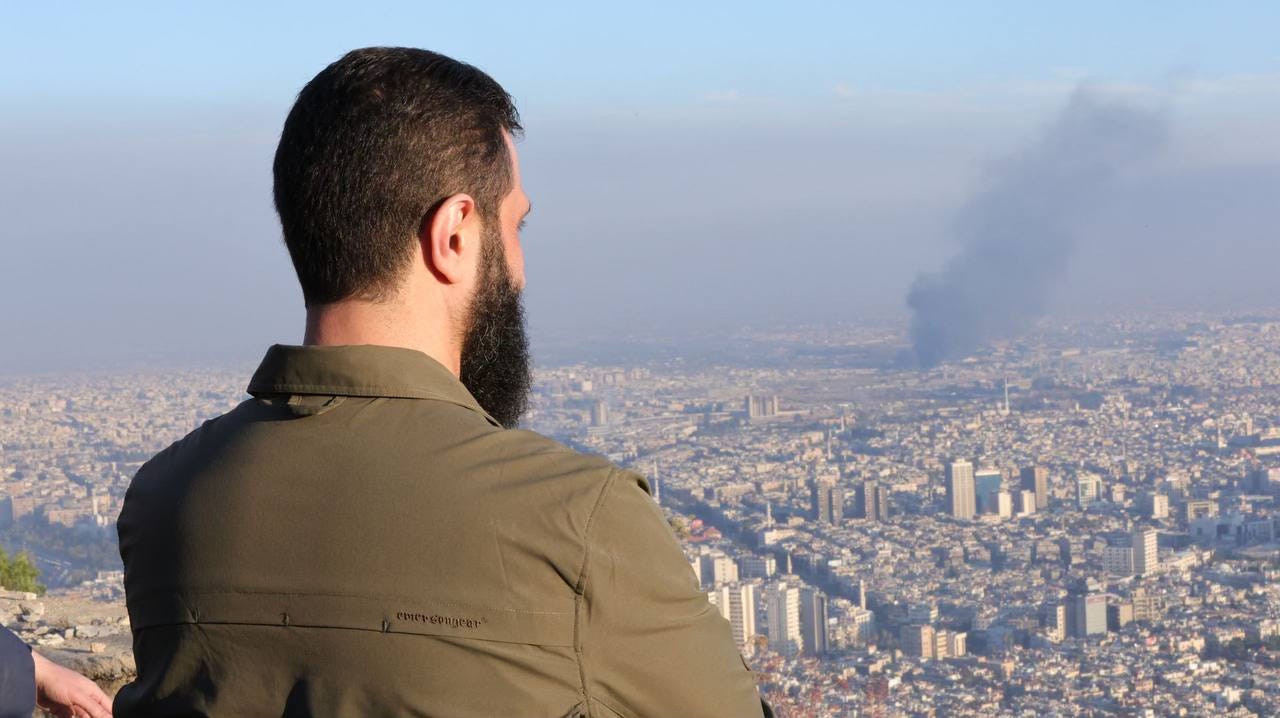
Just yesterday, we were talking about 🇮🇷 Iran.
Today, our gaze shifts slightly westward—but still within the turbulent heart of the Middle East.
Once again, we’re at a crossroads.
If an agreement is reached, if the Druze, the Syrian government, and Israel manage—even temporarily—to contain hostilities, then perhaps we can file this away as yet another flare-up extinguished just in time.
But if diplomacy fails... these clashes, which today seem “minor”—compared to the bombings in Tehran or Tel Aviv—could escalate.
And we’d no longer be talking about localized tensions, but about a new warfront along one of the most unstable borders on the planet.
I don’t want to sound like a prophet of doom.
But the reality today suggests that Israel and Druze leadership share a vested interest in keeping the pressure high, until they achieve what appears to be the real strategic objective:
the full expulsion of militias from southern Syria and the consolidation of stable, long-term control over the area.
A demilitarized zone.
Only then, perhaps, can we begin to speak of normalization between Israel and the new Syria.
But it will be a peace built on a balance of power—not on genuine reconciliation.
I could be wrong, of course.
History is written hour by hour, and in these shifting scenarios, every prediction is a gamble.
But one thing is certain:
what happens there affects us all.
Even if these seem like far-off lands, with unpronounceable names and blurred-out maps, it is precisely these places that often foreshadow what may one day knock on our own doors.
Staying informed isn’t a luxury, it’s a necessity.
Because the future doesn’t send warnings.
It slips through the cracks of History, grows in the silence of diplomacy and explodes when no one expects it.
Today it’s southern Syria, tomorrow—who knows.
Stay vigilant.
Per aspera ad astra.
Video purports to show ISIS beheading Christians