
Economist Explains How Sanctions Are Driving Russia Toward Poverty
With autarky we're killing Russia, but we're next…

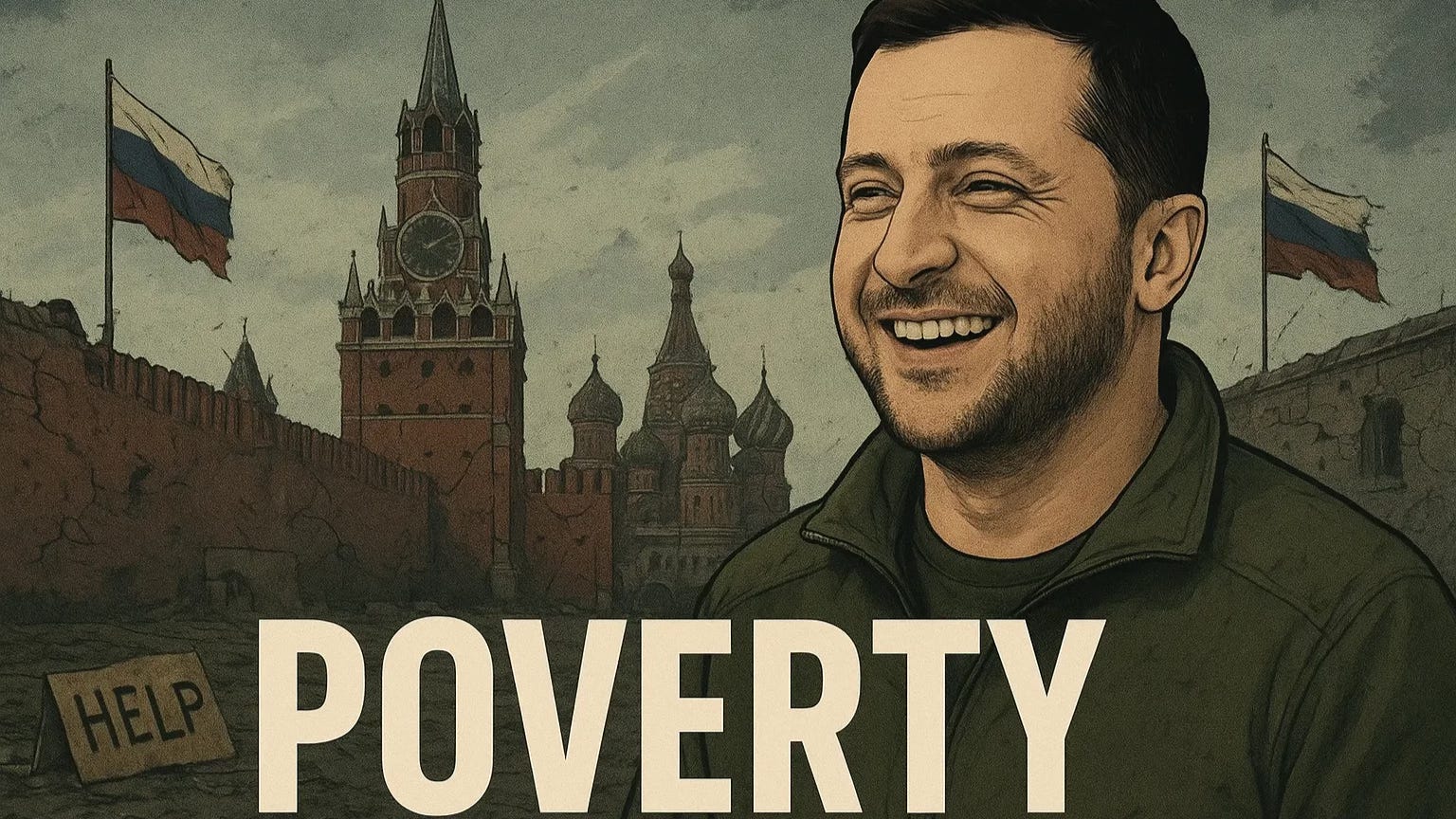
If you consider yourselves citizens of the world, sooner or later you’ve probably heard that the greatest social injustice of our time lies in the economic disparity between the rich and the poor.
Everyone seems eager to lament how sad it is to see the super-rich living alongside the desperately poor.
But have we ever truly asked ourselves whether the real social divide is really about money?
How many times have we read in history books—or heard from nostalgic voices—the word “redistribution”?
And yet, if you ask me, what truly splits society into two groups is not wealth, but knowledge.
We shouldn’t be divided into rich and poor, but into educated and ignorant.
When a wealthy person, unfortunately, loses everything, their education and culture often allow them to rebuild much of what they had within a few years.
Conversely, when a poor person wins the lottery, within months or years they often end up poor again.
Isn’t that almost an inevitable pattern?
Being educated doesn’t just mean having better economic prospects—it means possessing the tools to analyze the world around us, to understand what happens to us, to defend ourselves from what threatens us, and, most importantly, to avoid being manipulated or deceived by lies.
Years after the first sanctions came into effect, the debate on the effectiveness of sanctions against Russia remains fiercely alive.
I often hear people say things like, “By preventing Russians from buying European goods, we’re forcing them to produce everything themselves—that’s actually an advantage for them. We’re the fools here.” Or, “Sanctions only hurt us.”
Can we really believe it’s that simple?
Today, I’ll explain why that idea is profoundly mistaken. We’ll talk about autarky, and how the West is progressively isolating Russia from the free market, from globalization, and from free trade.
In other words, we’re forcing Russia to turn back the clock—to become a poor imitation of North Korea.
Is Russia truly managing to circumvent Western sanctions effectively, or will autarky eventually devour its entire economy?
Let’s bridge the gap between those who know and those who don’t.
Today, let’s try to build a few antibodies against propaganda.
Sanctions Imposed on Russia
Let’s start by examining which sanctions have been imposed on Russia and why they are so significant.
As of October 17, 2025, the Russian Federation is subject to a wide range of economic sanctions targeting several strategic sectors. These measures, introduced in response to the invasion of Ukraine and later expanded, aim to weaken the Kremlin’s ability to finance the war and sustain its industrial machinery.
The most well-known sanction — the one you’ve probably heard about on the news — is Russia’s exclusion from the SWIFT interbank communication system.
This system enables banks around the world to carry out international transactions quickly and securely. Being cut off from SWIFT means that it becomes extremely difficult for Russian banks to send and receive money from abroad. In practice, Russia can still trade, but with far more obstacles, delays, and additional costs.
Another key measure is the price cap on Russian oil, set below market value. This limit was introduced to reduce the profits Moscow earns from energy exports — one of its main sources of state revenue — effectively forcing Russia to sell its crude under unfavorable conditions.
To this, we can add the blockade of over 440 Russian ships in European ports. These vessels, used to transport oil and gas, have been banned, forcing Russia to rely on the so-called shadow fleet — ships of uncertain ownership, often lacking international insurance coverage. It’s a risky and expensive workaround that increases both environmental and logistical hazards.
Perhaps the most severe measure, however, is the freezing of roughly 300 billion dollars in Russian assets. These consist of bonds, government securities, and financial reserves held abroad.
For a state, losing access to such funds means drastically reducing its ability to respond to economic or military crises. In difficult times, that amount can literally make the difference between survival and collapse.
So far, we’ve covered financial and macroeconomic sanctions.
However, the most relevant ones — those that reveal the tangible impact on Russia’s real economy — concern the export of Western technological and industrial products.
In other words, Russia has been prevented from purchasing a range of essential goods that, until just a few years ago, came from Europe or the United States. Let’s go through them one by one — because without these products, the country is, quite literally, stepping back into the Middle Ages.
