
Does It Make Sense to Send European Soldiers to Ukraine?
Probably not. But the temptation is strong…

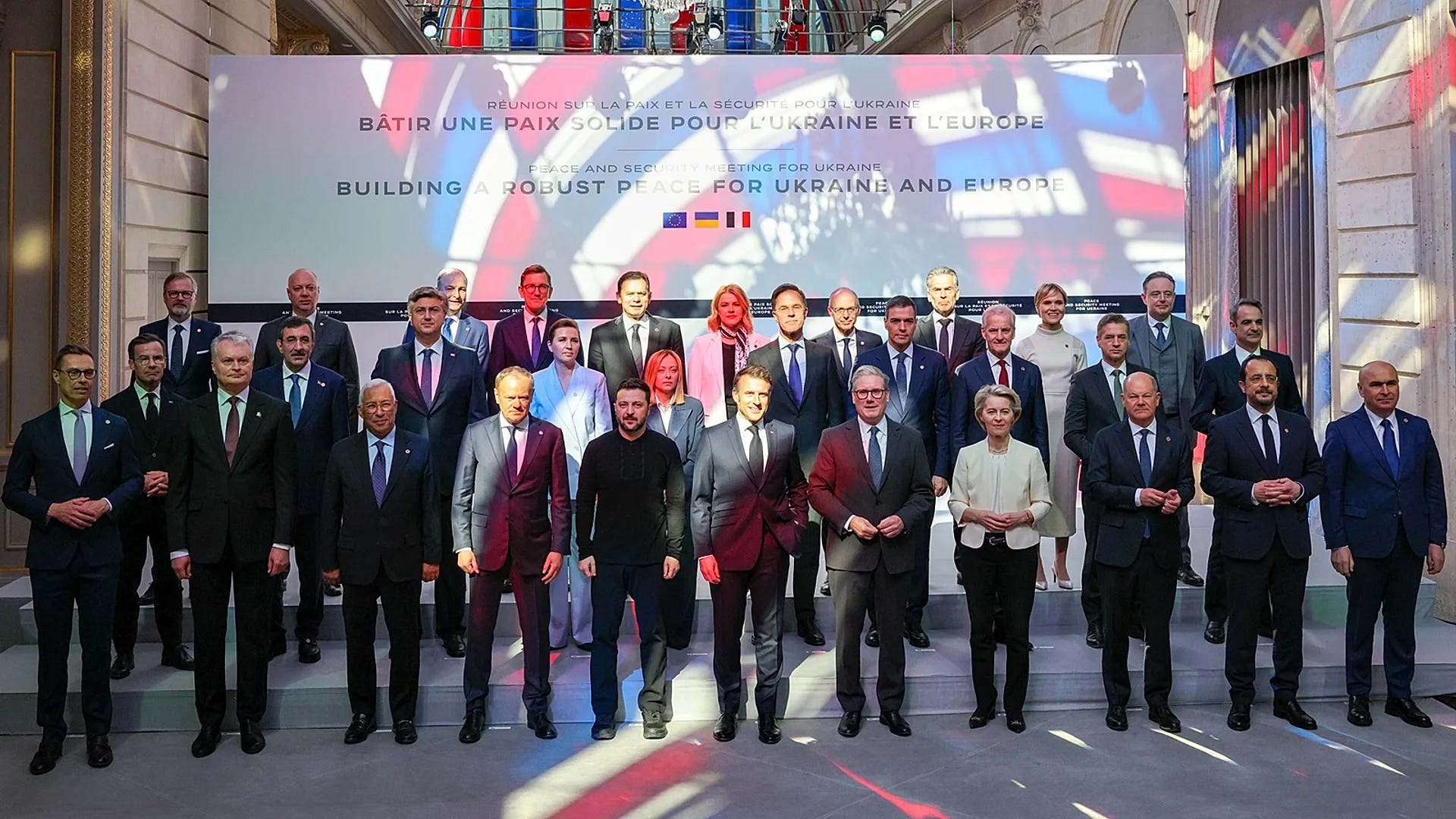
It has now been about a year and a half since President Emmanuel Macron first proposed sending European troops to Ukraine.
The announcement provoked outrage and anxiety. Many were alarmed, responding with anger and firm opposition. Yet, over the months, the context has shifted: what seemed unthinkable a year and a half ago now appears more plausible.
In recent days, the issue has returned to the forefront of public debate. Macron is no longer the sole advocate: the so-called “willing coalition,” diverse in its composition, seems to have received the proposal with a degree of favor.
In particular, the United Kingdom under Keir Starmer has expressed openness. Conversely, other countries, such as Poland and Italy, have declared themselves opposed, while Germany remains skeptical, favoring greater involvement from the United States—as always.
This is not a matter to be underestimated: the potential repercussions could be catastrophic.
History offers a warning: World War I, triggered by a single assassination, led to devastating consequences—including the rise of Adolf Hitler, who in 1933 exploited the widespread discontent of a devastated Germany through a populist campaign steeped in antisemitism.
Is this not a striking example of the butterfly effect applied to geopolitics?
So, does it really make sense to deploy troops to Ukraine?
Could stationing them in peacetime genuinely deter Russia from further future aggression?
Or, on the contrary, do we risk opening the doors to a Third World War?
Troop Deployment Options
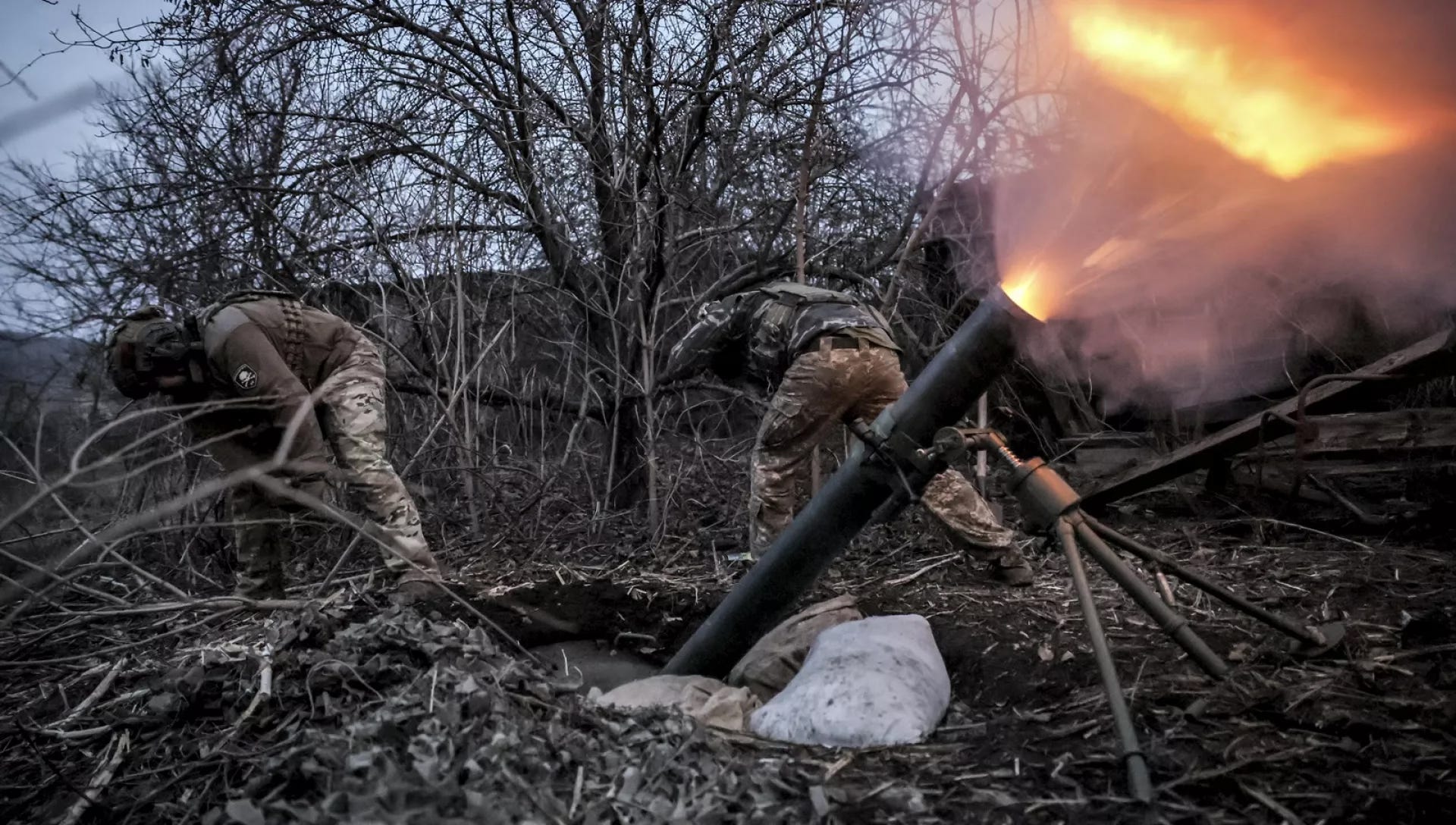
“Deploying troops on the ground” is an expression as evocative as it is vague. But what does it really mean? And what scenarios would unfold from such a decision?
Personally, I tend to rule out the most catastrophic possibility: European troops fighting in Donetsk side by side with Ukrainian forces. It hardly needs emphasizing: this would be a direct declaration of war on Russia, and no one in Europe seems willing to take such a radical leap into the void.
As Macron himself has suggested, a more realistic scenario could involve stationing European contingents in certain Ukrainian cities with the aim of defending them. But defending them from what, exactly?
Does it really make sense to send, for instance, 1,000 French soldiers to Lviv—a city that requires air defenses more than infantry? The same logic applies to Kyiv: while in 2022 the capital faced a direct threat, today a similar scenario appears highly unlikely.
If the goal were truly to make the deployment “useful,” troops would need to be positioned much closer to the front line. Otherwise, what strategic impact could they have? It is clear that stationing even 10,000 soldiers a thousand kilometers from the front would achieve virtually nothing—neither today, with the war ongoing, nor tomorrow, in a hypothetical peacetime scenario.
There is another aspect that is often overlooked: soldiers do not spend all their time fighting. In fact, most of the time, they don’t fight at all. They handle logistics, the silent backbone of every war.
Behind the front lines operate thousands of “invisible” roles: couriers, cooks, mechanics, nurses and doctors, drone technicians, ammunition distributors, men digging trenches and constructing defensive lines.
This is why employing European troops in logistical roles could make sense: providing support without directly confronting Russian forces. But is it truly a feasible solution?
One must ask: how would the Kremlin react? Knowing President Putin, it is plausible he would interpret such a move as a hostile act, if not an outright military provocation, then do everything in his power to annihilate those contingents.
In short, if European countries do not have the explicit and definitive intention to go to war with Russia, what is the real point of deploying troops in Ukraine—whether far from or close to the front? Might we not risk making the worst choice: exposing ourselves without achieving any meaningful impact?
And in Peacetime?
In peacetime, the scenario changes—at least superficially. When this war ends—because, one way or another, it will—Ukraine will demand security guarantees. This is nothing new: it has been discussed for years, and Zelenskyy repeats it incessantly, as do Europe’s main leaders.
Among these guarantees could be the deployment of European troops on Ukrainian soil. But what would this actually mean? Would it be a concrete act of deterrence, or yet another diplomatic illusion?
At this point, the comparison with the UNIFIL mission in Lebanon becomes inevitable. For years, international contingents were stationed in the southern part of the country, near the border with Israel, with a clear objective: to discourage clashes. In theory, their presence was meant to restrain both Israel and Hezbollah.
Yet we know how that turned out. The violence never truly stopped. In fact, after the events of October 7, clashes erupted again with intensity. The mission? Reduced to a powerless spectator.
The reason is simple: extremely rigid rules of engagement. In practice, the UN peacekeepers could hardly intervene at all. The result: systematically ignored by both Hezbollah and Israel.
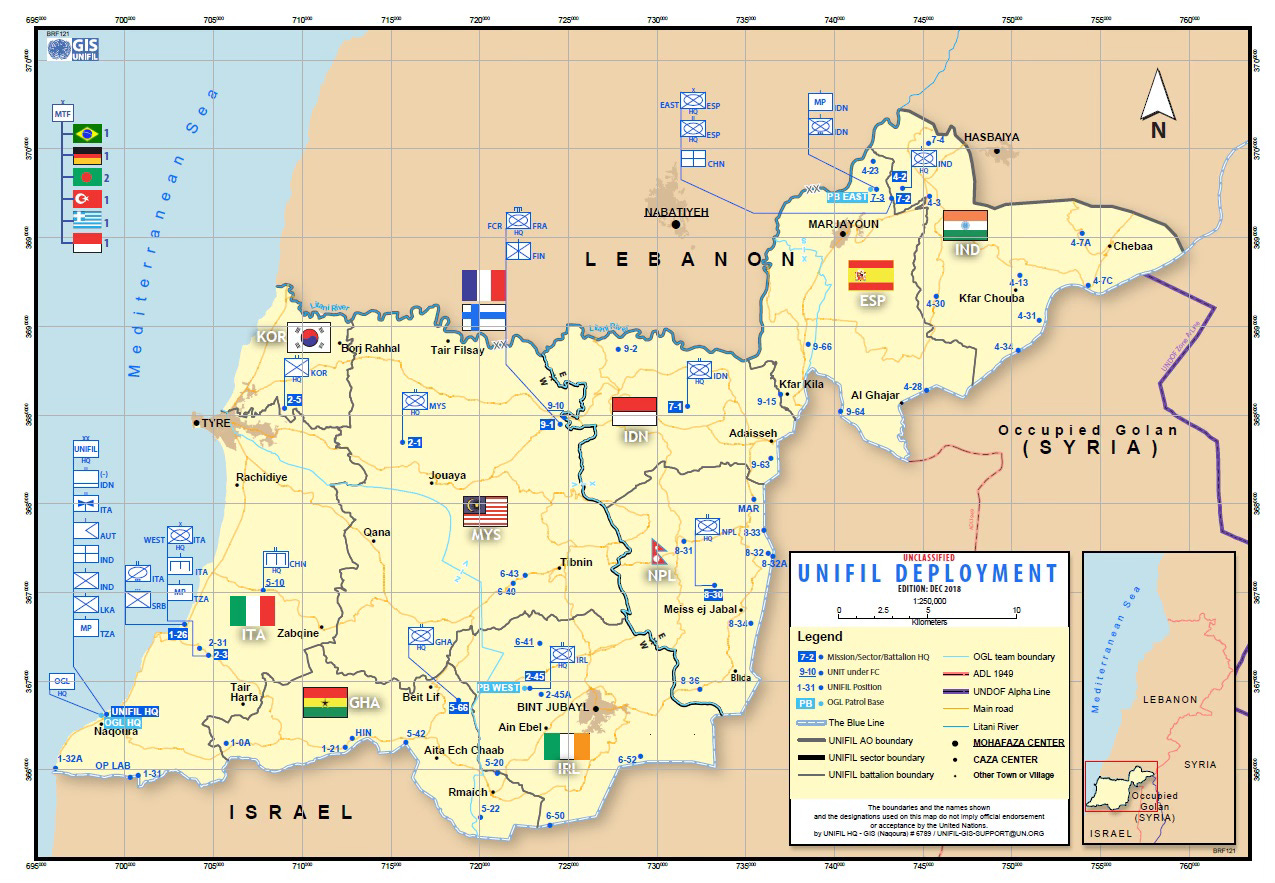
Is it not legitimate, then, to ask whether the same scenario might occur in Ukraine? Could European troops, stationed here and there across the country, really deter Russia? Or would they end up as silent extras, condemned to irrelevance?
And above all: what would their rules of engagement be? Could they open fire on Russian soldiers in the event of a new invasion? Or, as in Lebanon, would they be hamstrung by international bureaucracy, becoming little more than targets in uniform?
These questions may seem obvious, yet they are far from it. History, when truly studied, warns us: what presents itself as a guarantee of peace often turns out to be a fragile house of cards.
How Does This Information Fit into the Constellation of Knowledge?
No piece of news can be fully understood in isolation. It must be placed within a constellation of information, observed in its connections and evaluated in its interactions with the broader context. Only then can the true significance of events be grasped.
I have long argued that the United States, since the days of Joe Biden, has progressively left Europeans with the responsibility of managing the Ukrainian dossier.
It is now clear how the U.S. has been pushing Europeans toward greater engagement. With Trump’s arrival, this process accelerated sharply, but the truth is that even Biden never guaranteed Kyiv total and unconditional support.
The reasons for this “delegation” are straightforward, and I have explained them in this article.
But the point is clear: the potential deployment of European troops on Ukrainian soil would mark the definitive transfer of responsibility from the United States to the European Union.
Boots on the ground means direct engagement—military, economic, and logistical—on Europe’s part. Maintaining troops on the ground is not just about their presence: it means taking responsibility for the territory, infrastructure, and reconstruction, ensuring the safety of one’s own personnel, and indirectly, that of Ukraine.
It is a binding commitment of both hands and destiny, not a mere “temporary mission.”
So here is the real question: are we ready for this leap of responsibility?
In several articles, I have shown how strongly Ukraine is pursuing integration with the West, and how the EU and the U.S. have welcomed this choice, just as they have consistently done over the past decades with all Eastern European nations.
But sending European troops would represent far more than a political gesture: it would be an irreversible act of integration, a pact of steel between Kyiv and Brussels.
Possible Russian Reactions
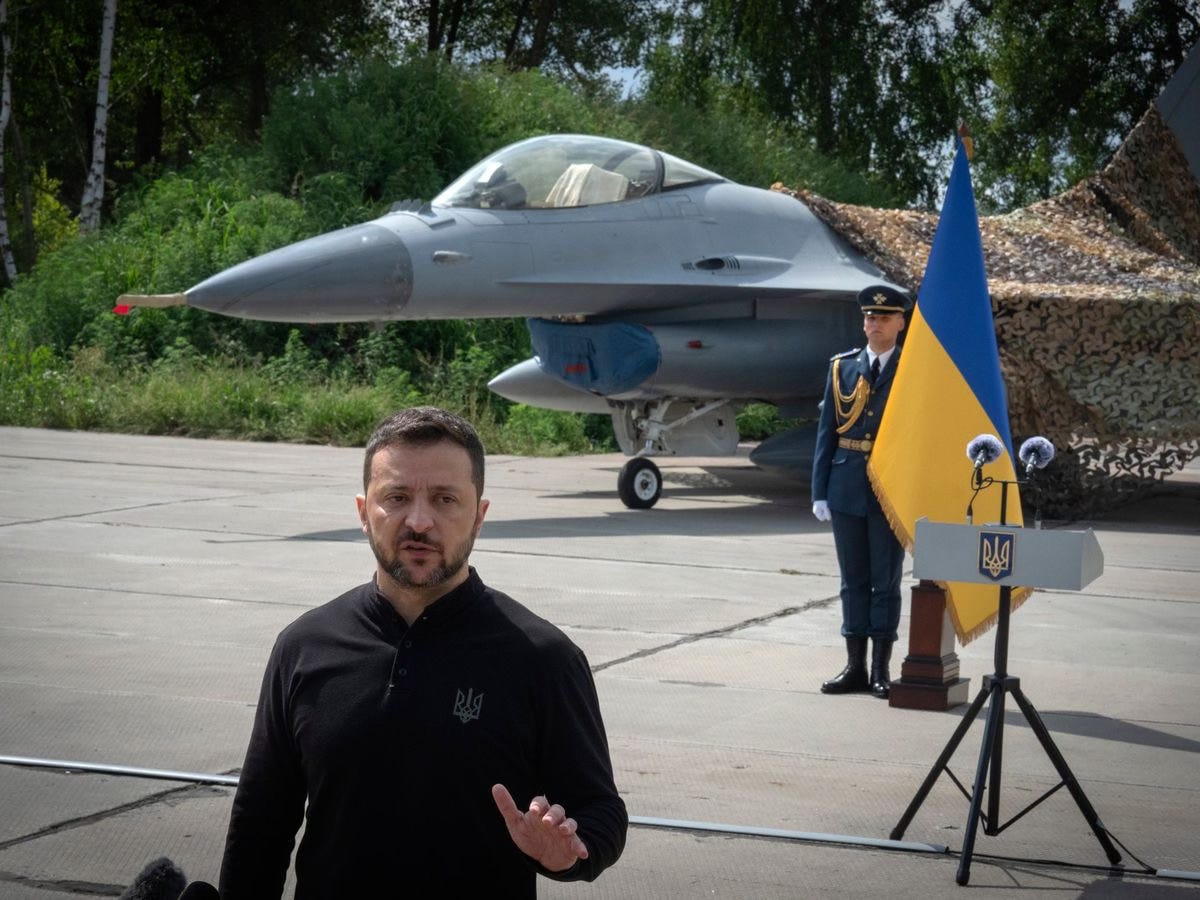
As the concept of risk-reward teaches us, the bolder one is in taking risks, the higher the potential payoff. But inevitably, the chances of success diminish. Is it worth taking such a risk?
Are we Europeans truly ready for a possible direct conflict with Russia?
It is an uncomfortable question, but that does not mean it should be avoided.
I do not intend to frighten anyone, nor to suggest that deploying troops automatically equals open war with Moscow. Yet the question remains:
are we prepared to face the worst?
Those who have followed my work for some time know my position well. If the goal of this war—as many observers see it—is to wear down Russia, forcing it to expend economic and military resources to the brink, then one must ask: does it make sense to deploy European troops to Ukraine in peacetime?
Or would it not be more rational and strategic to continue arming the Ukrainians, providing them with increasingly advanced technologies, more effective offensive and defensive systems, in order to strike at the core of Russia’s military capabilities?
Indeed, after more than three years of war, we still have not committed to supplying the most sophisticated weapons at our disposal, and instead waste time on purely propagandistic news like the Spider Web operation or the Flamingo missile:
The Ukrainian Flamingo Is Complete Nonsense — And Here’s Why:

About fifteen days ago, a new Ukrainian weapon was presented — more or less officially: a cruise missile — or perhaps a drone, as we’ll see later — with characteristics that calling them “astonishing” would be an understatement.
What are we waiting for to support the Ukrainians more seriously?
The real challenge, then, is not so much whether to put soldiers on the ground, but how to make the most effective use of our support.
And here arises the most provocative question of all: do we really want to sacrifice European lives, or would we rather leverage our ingenuity, technology, and economic resources to keep the Ukrainian resistance alive, without turning it into a war fought not with money, but with men?
Too Many Things Could Go Wrong
I have been reflecting on this topic for days, and I must admit: I do not hold a firm position, neither for nor against. Military intervention would be the definitive step toward assimilating Ukraine into Europe and the West, but it carries far too many risks.
There are too many variables at play, and when one hypothesis is based on another, the probability of error grows exponentially.
Another often overlooked aspect is that, despite the European Union being perceived as a political monolith, each country actually has different interests, fears, and priorities.
Poland, for example, is today one of the most militarized states and has provided massive support to Ukraine. Yet it rejects the idea of sending troops: Warsaw needs to keep them for itself in case of a direct threat from Belarus or the Kaliningrad enclave.
Italy, the country I come from, opposes it for different reasons. First, geographical distance: we do not share direct borders with Ukraine or Russia, unlike Romania or Lithuania, and thus we are less apprehensive.
But above all, a cultural and political factor weighs heavily: the population, across the spectrum—from left to right, including the center—rejects the idea of military involvement. No one wants to see Italian troops engaged in war or even just stationed along distant borders in peacetime.
So here is the uncomfortable truth: we have little information, very few certainties, and perhaps we are discussing cosmic nothingness. At the moment, this debate seems more like noise than signal.
For now, this news is just a distraction. I invite you to read one of my articles that is signal. Enjoy the reading.
Per aspera ad astra.
Ukraine Is Not the Real Target: They’re Distracting You

Have we ever stopped to ask ourselves what we’re really watching when we follow the latest headlines from the front every single day? The advances in Kursk, the breakthrough above Pokrovsk, the so-called Ukrainian flamingo, Operation Spiderweb. Headlines designed to grab attention,…
North Korea sends troops to Ukraine without hesitation. EU is dead if it doesn’t wake up
We’ve just had word of Russian drones in Polish airspace & NATO planes scrambling.
Does that change your calculation or just something to watch?
I am alarmed, particularly at the thought that Poland could eventually invoke Art 5 & my country just blows off its duty.