
Destroying Iran Is the Inevitable Outcome of Israel’s War Against Hamas and Hezbollah
Nuclear weapons are just a pretext: the real goal may be to overthrow the regime.

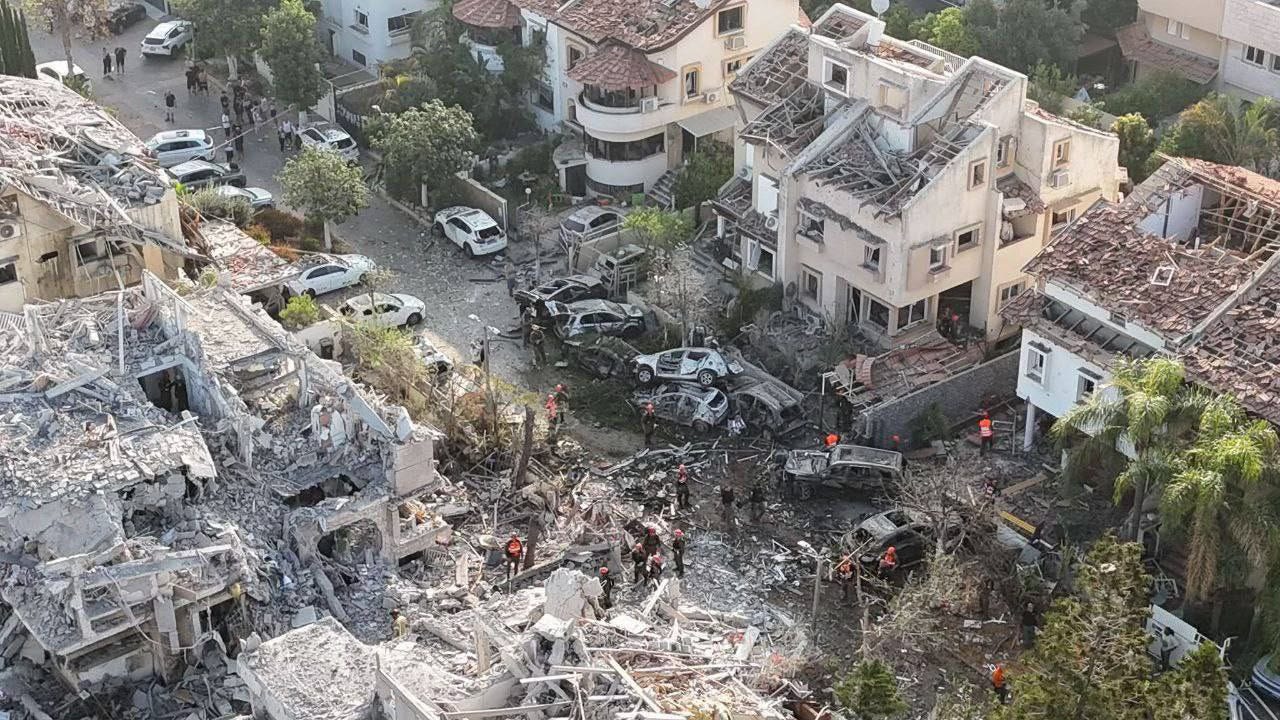
Over the past few days, we’ve all seen the images coming out of Tel Aviv.
Every night, for four nights now, I go to bed knowing that in the morning I’ll wake up to new videos on X.
New photographs.
New buildings gutted, blackened by flames.
New nights of fire.
Wars, almost always, begin at night.
I learned that a few years ago, when the war in Ukraine broke out.
And this one too — the war now igniting between Israel and Iran — is no exception.
I’ve been in a bad mood for four days. And yet I’m neither in Tehran nor in Tel Aviv.
I’m in Italy. Safe.
The buildings in my city are still intact, the sirens aren’t wailing, there are no ambulances, no bodies lying on the asphalt.
But something has changed forever.
Social media.
Today, wars are no longer followed on the evening news.
Wars are experienced — moment by moment — on our smartphones.
They’ve become a spectacle. Macabre and dehumanizing.
A tragic theater in real time, for those living under the bombs.
And knowing that all this pain is being reduced to a global “show”... it’s monstrous.
And then there are them.
The keyboard warriors.
The ones who celebrate, who cheer.
Who share videos of explosions in Tehran as if it were a football match.
Or who rejoice at the rain of ballistic missiles over Tel Aviv’s dark skies.
No, this is not a game.
But we’re forced to witness this too.
I deliberately chose to wait a few days before writing this article.
I know that means fewer views, but I don’t want to chase pain.
I don’t want to be the commentator of a tragedy.
And above all, during a war, words must be chosen carefully.
Information must be verified with care, and slowly.
No nonsense, no hot takes.
Only reflections, weighed one by one.
In these three or four days of silence, I tried to think.
Not just write that war is terrible, or that one side is the villain and the other the hero — depending on your fanbase.
No.
I asked myself some questions. And I looked for real answers. Honest ones. Uncomfortable ones, if necessary.
Here are the questions I asked:
Why this attack?
Is Iran really building a nuclear weapon? Or is it just a pretext?
What is Israel’s ultimate goal?
To force Tehran to negotiate? Or attempt to topple the regime?
What should we expect now?
Where will this war take us?
I’ll answer in good faith, with no slogans, no cheering, no propaganda.
I have no pretty words for either Israel or Iran.
I’ll be honest, even if that means being uncomfortable.
And above all: I’ll stick to the facts — no fake news.
If you appreciate the way I approach topics like this, I invite you to subscribe for free. It’s a small gesture, but it means a lot to me. Thank you.
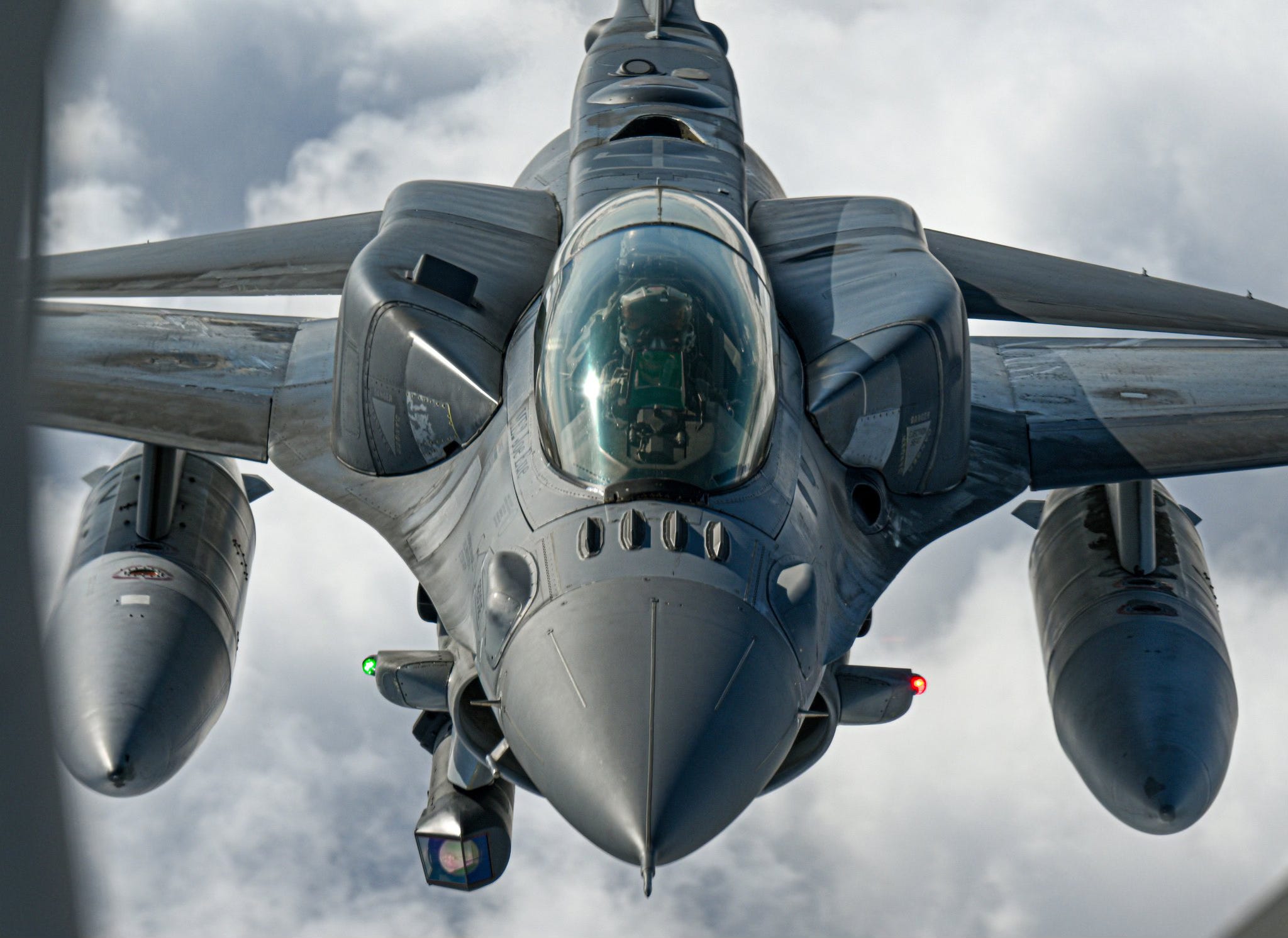
The morning after the first strike — the Israeli one on Iranian soil — I didn’t ask myself how.
I asked why.
There’s no longer any doubt about Israel’s extraordinary technological and intelligence capabilities.
The most striking demonstration? The pager operation.
You’ll surely remember when, in Lebanon, several senior Hezbollah leaders had their devices explode simultaneously. Surgical precision. A message no one could misinterpret.
But let’s get back to the present.
Asking why this happened is more than reasonable — especially in moments like these.
The official explanation is straightforward: Iran is dangerously close to building its own nuclear bomb.
Now, I’m not the best person to explain the technicalities of how an atomic weapon is built — I don't have the expertise, and even if I did, I’d rather not have legal issues.
All you need to know is this: the key element is enriched uranium.
And it seems Iran is now just about capable of enriching it to weapons-grade levels.
Is that alone enough to wipe Tel Aviv off the map?
Of course not.
Raw material isn’t enough: it must be assembled into a functioning device, require extremely advanced tech, and finally — it needs a delivery system.
And in that regard, the Iranians have already shown they have more than one arrow in their quiver.
So yes, it’s reasonable to think that within a couple of years, Iran could have a nuclear warhead capable of hitting Israel.
And yet...
I believe this is only part of the picture.
A pretext.
Or rather, a justifiable excuse in the eyes of the world.
Another reason — more direct and instinctive — is the desire for revenge over the October 7 attacks.
Those unfamiliar with the international landscape might assume Hamas and Hezbollah are independent, maybe even spontaneous groups.
But that’s not the case.
They are funded, armed, and directed by Iran.
So yes, ultimately — to simplify things — the October 7 attacks were, at least partially, an Iranian operation.
That might seem obvious to those who follow foreign policy.
But not everyone does.
Hamas and Hezbollah don’t have nuclear weapons — yet Israel hit them with full force.
That proves something important: conventional weapons are enough to pose a serious threat.
Iran, bomb or no bomb, is perceived by Israel as an existential threat.
And today, Tel Aviv is determined to neutralize it.
Let’s say it clearly, no sugarcoating:
for Israel, this is a once-in-a-lifetime opportunity.
What better geopolitical moment to strike a devastating blow to its long-time enemy?
Since the October 7 attacks, Israel has been relentless.
Gaza, essentially, no longer exists.
Hamas leadership has been wiped out.
Hezbollah has been reduced to a shadow of itself.
Meanwhile, Iran has seen its entire network of alliances and infrastructure collapse piece by piece, the result of years of strategic investment.
And it knew — we all knew — sooner or later, it would be next.
Israel is riding the momentum.
It’s seizing the opportunity of a weakened Iran to try and deliver a final blow.
Or at least, it’s trying.
Because no, nothing is set in stone.
Thinking the outcome is guaranteed would be naive. Foolish, even.
We’re talking about a nation of 90 million people, with deep-rooted history and a strong national identity.
Look at the other war — the one in Europe.
Russia continues to bomb Ukrainian infrastructure.
Ukraine, with its drones, hits back at Russian targets.
But neither side has collapsed.
The lesson is clear: material destruction is not enough to break a nation.
Something more is needed.
Something deeper.
As we’ve seen, Israel still has plenty of cards to play.
And now, all that’s left is to watch, day by day,
how many bombs will be dropped,
and how long it will take for Israel to achieve its goals.
Goals. Yes, let’s talk now about Israel’s goals.
It’s not easy to say with certainty what they are.
We know very well that states almost never openly declare their true goals.
They usually hide behind an acceptable pretext, but rarely do they publicly reveal what they’re really aiming for.
Still, we can try to imagine them by closely observing what Israel is doing.
Assuming that actions are aligned with strategic goals, we can form a hypothesis.
From the very first night, Israel moved to eliminate all key Iranian military leaders.
A lightning-fast, surgical operation, designed to slow down — or prevent — any possible retaliation.
But that’s not all.
Israel hasn’t just targeted nuclear infrastructure: it has struck refineries, fuel depots, airports, military aircraft.
It has crippled — or at least attempted to cripple — the entire logistical and defensive apparatus.
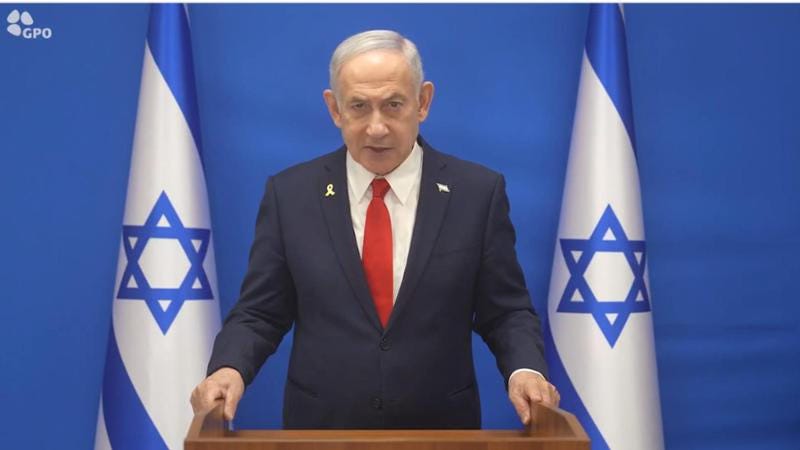
And as the bombs were falling, Netanyahu issued a direct appeal to the Iranian people, urging them to speak out.
To rise up.
To rebel against what he bluntly calls the oppressor: the government.
It may be too early to say for certain, but the ultimate goal might be exactly this:
to topple the current Islamic leadership and put an end to the revolution that began in 1979.
A historic, shocking move.
But one that would raise massive questions.
What would become of an Iran without the Ayatollahs?
Would the Shah return?
Would the country turn into a new powder keg, like Libya after Gaddafi’s fall?
Or does Israel have in mind a puppet government, serving its own interests?
Valid questions — but for now, without answers.
This is the realm of speculation.
There’s also another possibility — more sober, but no less strategic.
Israel may not aim to overthrow the regime, but rather to force an agreement.
A deal imposed through threat and destruction.
More surrender than negotiation.
Personally, between these two scenarios, I currently find the second more plausible.
To weaken Iran to the point where it is forced to accept terms dictated by Israel.
An asymmetric compromise — a diktat.
And yet, if in the coming days the situation were to radically change, I wouldn’t be surprised at all.
If Israel really managed to depose or kill the Ayatollah and rewrite the history of modern Iran, I wouldn’t be surprised — not in the slightest.
So, what should we expect from the future?
Nothing good.
Especially for those who live — or survive — in the Middle East.
For them, dark, heavy clouds are gathering, like smoke after an explosion.
The sky tightens. Breathing gets harder.
And for us?
For those of us living in the so-called free world?
What should we hope for?
Let me be blunt.
If the Iranian regime were to fall, I’d sleep more peacefully.
I wouldn’t miss it.
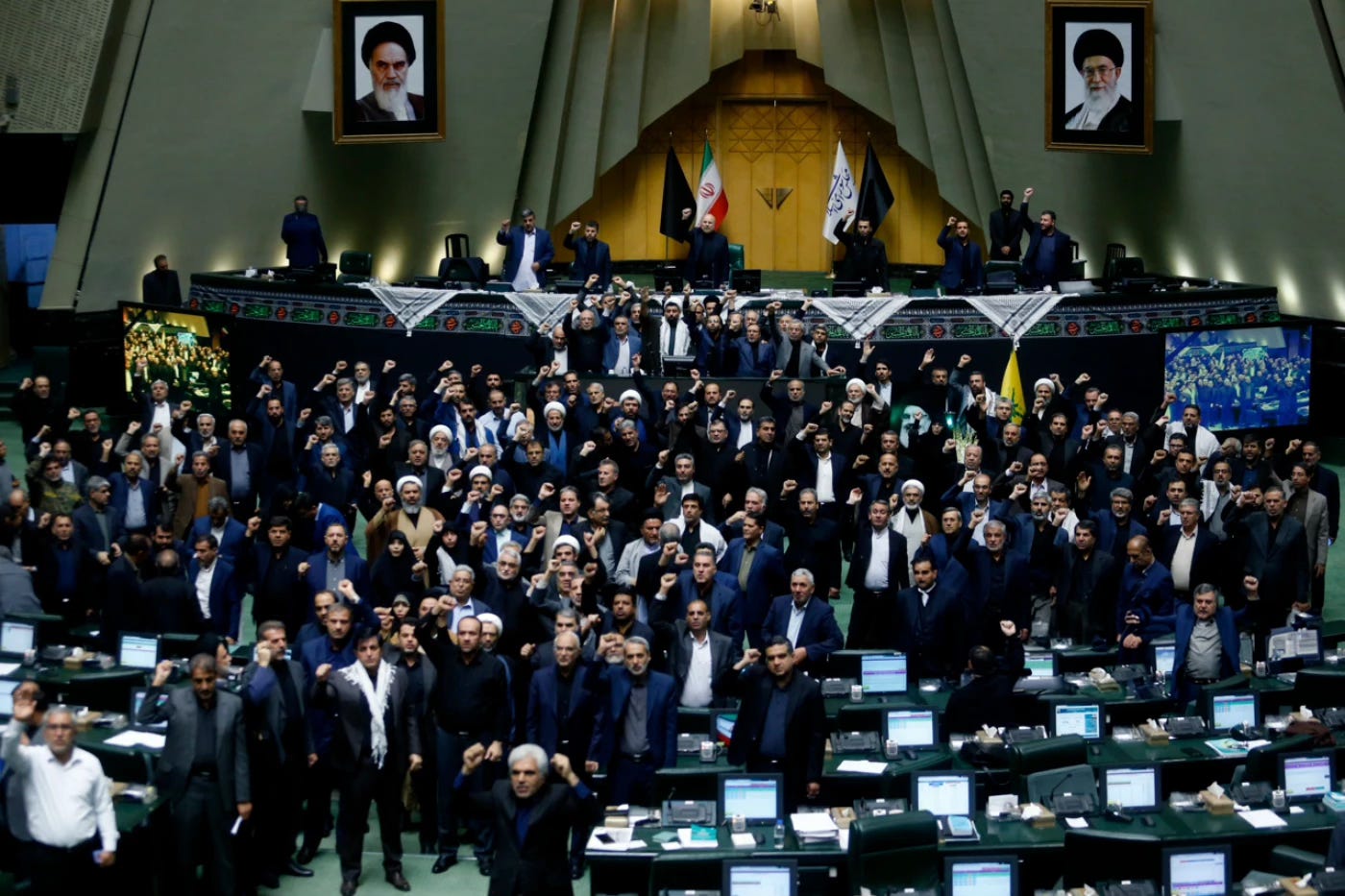
I wouldn’t shed a tear for a power built on repression, fanaticism, censorship, and violence.
Israel is far from innocent — no one is, when it comes to power — but between the two, it’s Iran that makes no secretof its mission: to destroy the West. To erase it.
Us.
Iran is allied with Russia, China, North Korea.
The bloc of so-called CRINK countries — those four nations actively trying to overturn the global order.
If one of them were to weaken, if one of those pillars were to break, I wouldn’t be sorry.
I feel no nostalgia for totalitarianism, especially not for the kind draped in the sacred and the eternal.
When religion takes a state hostage, it suffocates it. Cages it. Turns it to ashes.
These days, we hear worried talk of escalation, of a possible third world war.
The truth is: we are already at war.
It just doesn’t look like the wars we studied in school.
No one writes formal declarations to hand over to ambassadors anymore.
There are no solemn speeches from balconies.
Today’s war is silent, insidious, disguised.
It creeps into words, slips between the lines, moves through the corridors of information and the code of drones.
Every era had its hegemon.
The British Empire. Before that, the Dutch.
Further back, Rome. The Mongols.
History is a never-ending passing of the scepter.
But if today’s hegemon were to fall — if the West, with all its flaws but also all its freedoms, were to be defeated —
the world could change forever.
It could become something dark.
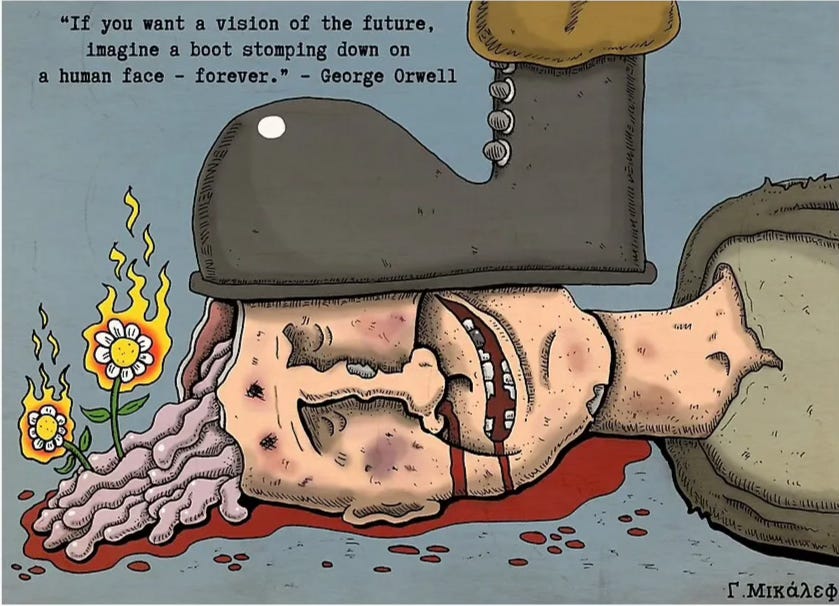
An Orwellian nightmare, where truth is rewritten daily, freedom is a crime, and conscience is an offense.
So I’ll take advantage of this freedom — fragile, precious — to say thank you.
Thank you for making it this far.
For choosing to read, to reflect, to think.
As we await the fate of the rule of law, I invite you to subscribe for free if you appreciated the way I tell stories.
Never let yourselves be dragged into simplifications.
Don’t give in to propaganda.
Stay sharp, aware, uncomfortable.
Until next time — all the best.
And tell me your thoughts in the comments,
while you still can.
Per aspera ad astra.
“If the Iranian regime were to fall, I’d sleep more peacefully.”
I’d find it much easier to sleep more peacefully if the current regime in Iran were to fall in a way that did not involve creating so much additional anger among ordinary and radicalizing people in Iran against Israel and the US and by extension the West as a whole.